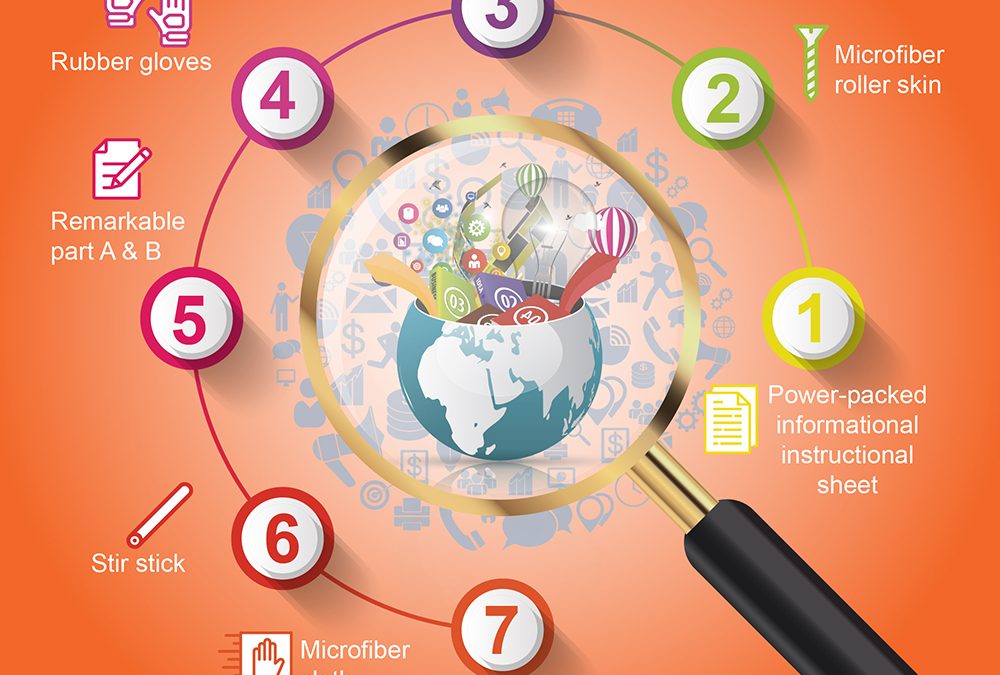
What’s inside a 50 or 100-Square-Foot Whiteboard Paint Kit?
What’s inside a 50- or 100-Square-Foot Whiteboard Paint Kit? Power-Packed Informational Instruction Sheet You can be assured that premium ReMARKable whiteboard paint is the highest quality product among all the coatings of its kind on the market today. And the... read more
How to Make Your Meetings More Productive with a Whiteboard Wall
How to Make Your Meetings More Productive with a Whiteboard Wall Enjoy a Collaborative Space with a Whiteboard wall A room featuring whiteboard walls makes for highly productive meetings, as the environment is a naturally collaborative space where people feel... read more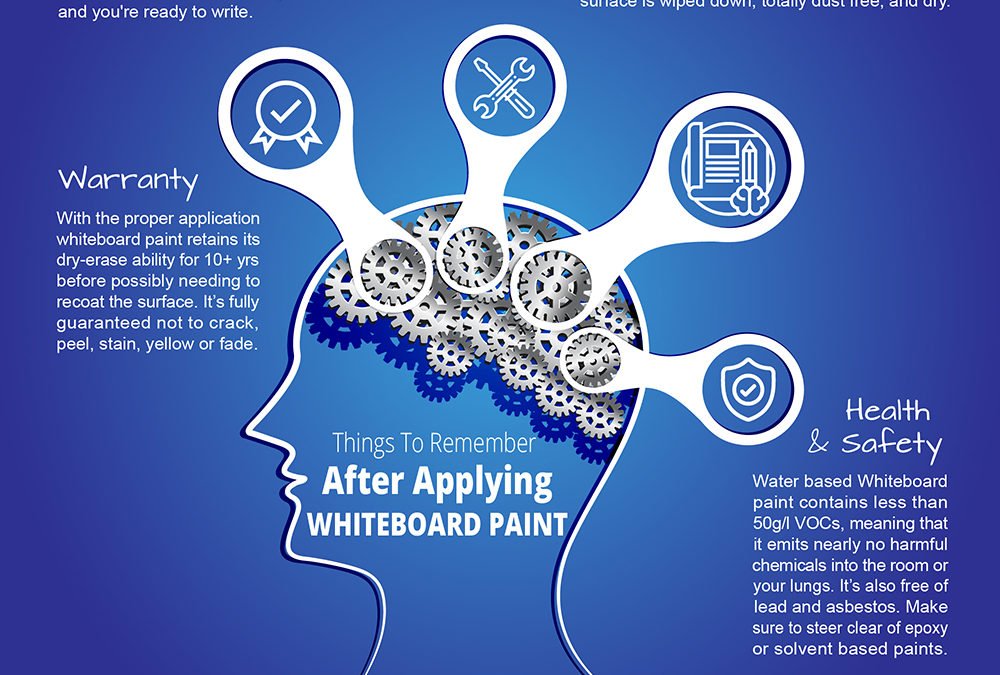
Things to Remember After Applying Whiteboard Paint
Things to Remember After Applying Whiteboard Paint Once the recommended single layer of top-quality whiteboard paint has been installed, it’s important that you remember the following key points: (1) possible application of a second layer of the coating (2) proper... read more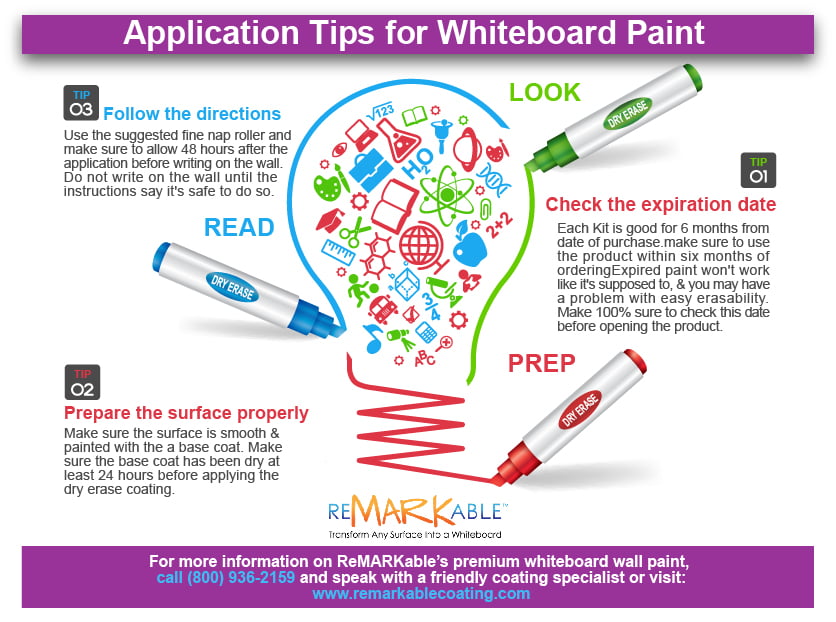
More Application Tips for Whiteboard Paint
More Application Tips for Whiteboard Paint Use Within Six Months Of Purchase One of the application tips for whiteboard paint it to use each premium whiteboard kit within six months of the purchase date. Whiteboard paint that is older than six months will not work as... read more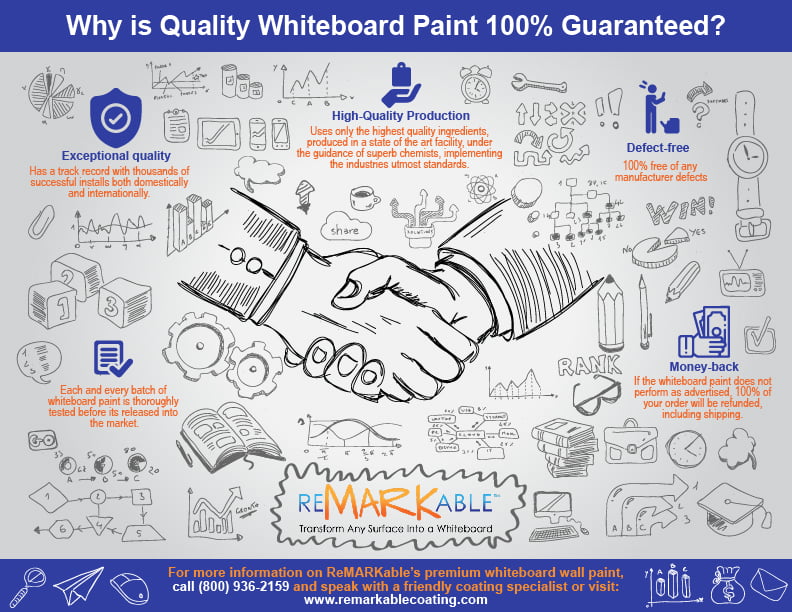
Why is Quality Whiteboard Paint Guaranteed?
Why is Quality Whiteboard Paint Guaranteed? Introduction: The highest quality whiteboard coatings on the market are manufactured with eco-friendly ingredients, combined to create water-based paints applied around the world, and consistently recognized for their ease... read more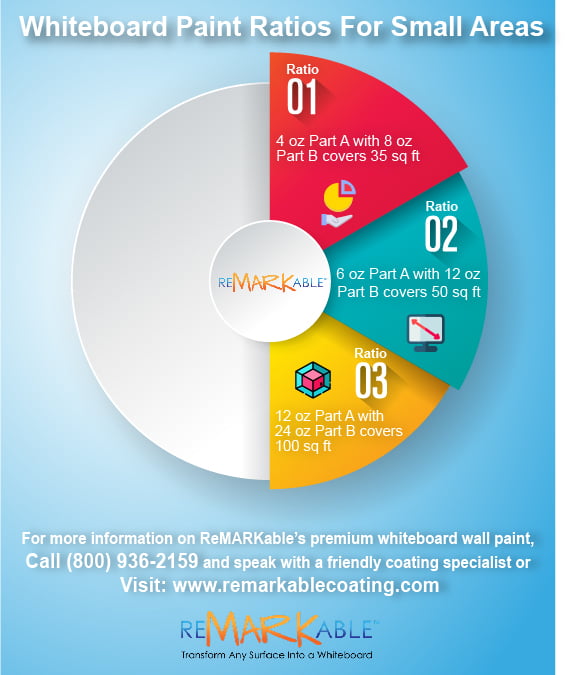
Whiteboard Paint Ratios For Small Areas
Whiteboard Paint Ratios for Small Areas Many high-quality industrial-grade coatings such as premium ReMARKable Whiteboard Paint are multi-component products in which a chemical reaction that occurs between the components produces a durable and long-lasting coating... read more