
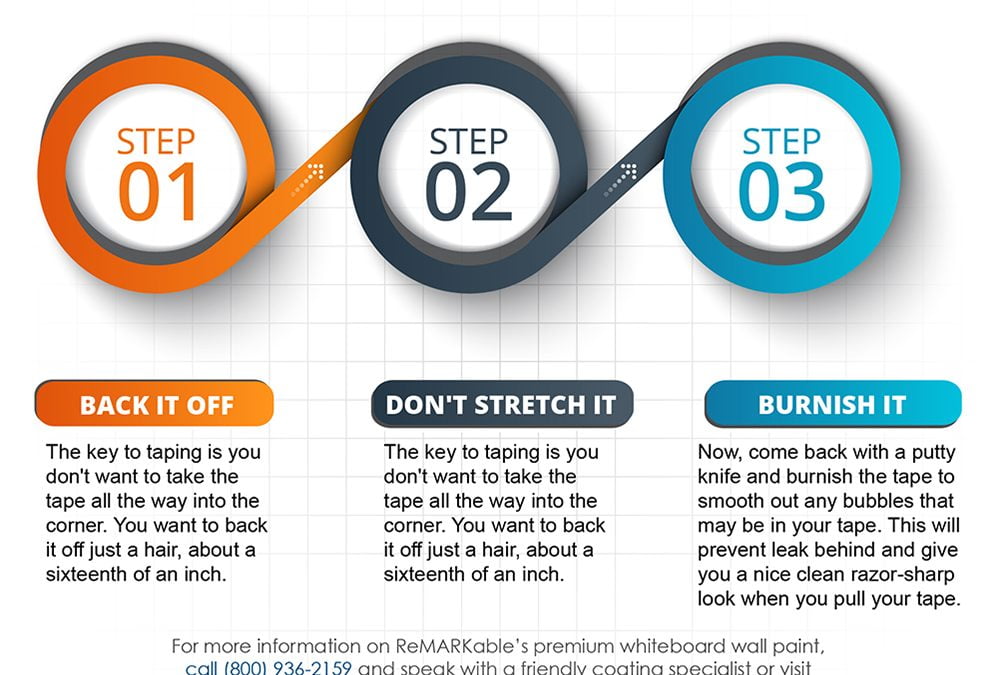
Proper Taping and Masking Techniques for Whiteboard Paint Application
Proper Taping and Masking Techniques for Whiteboard Paint Before applying quality whiteboard coating, it’s important to make sure that the surface where you’ll be doing the installation is precisely taped off on all the necessary sides with low-tack tape,... read more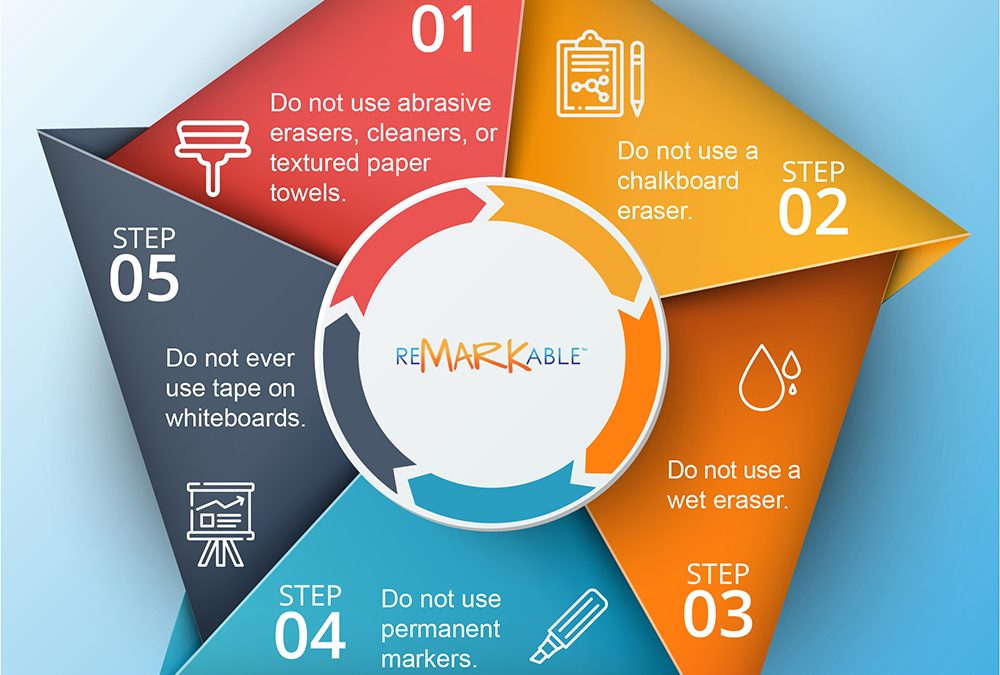
The Don’ts When Using Whiteboard Paint
The Don’ts When Using Whiteboard Paint Do not use abrasive dry ink erasers or coarse, granular materials such as textured paper towels or toilet paper Doing so will cause minute scratches and imperfections on the surface that can make thorough erasing difficult... read more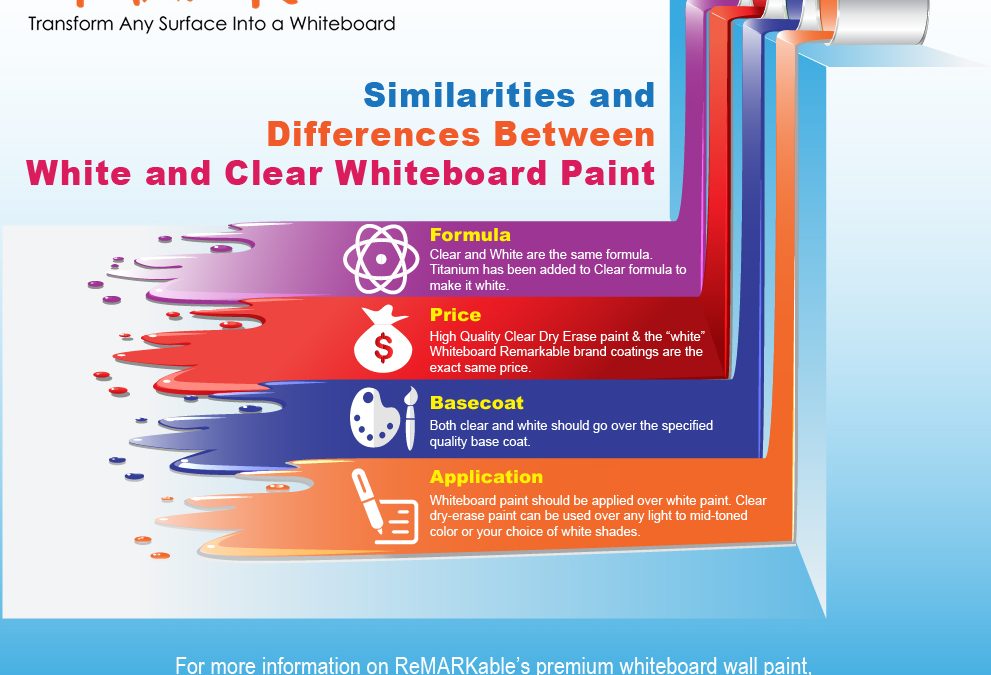
Similarities and Differences between White and Clear Whiteboard Paint
Quality Whiteboard Paint Formula Both the clear and white versions of quality whiteboard paint are made with exactly the same formula in a state-of-the-art production facility under the close supervision of highly skilled chemists and engineers. The only difference... read more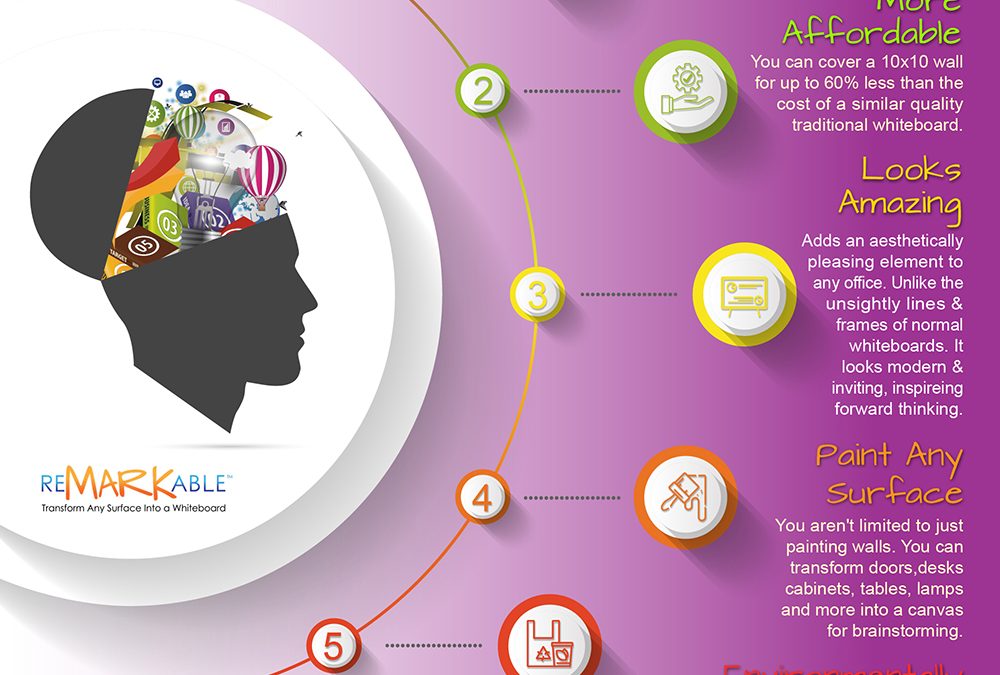
The Advantages of Quality Whiteboard Paint
The Advantages of Quality Whiteboard Paint A Boundless Canvas Your most significant ideas have room to grow with a wall-to-wall whiteboard covering that lets you think far beyond the limits of a traditional whiteboard frame. Because of their great size and easy... read more
Proper Technique When Rolling Whiteboard Paint
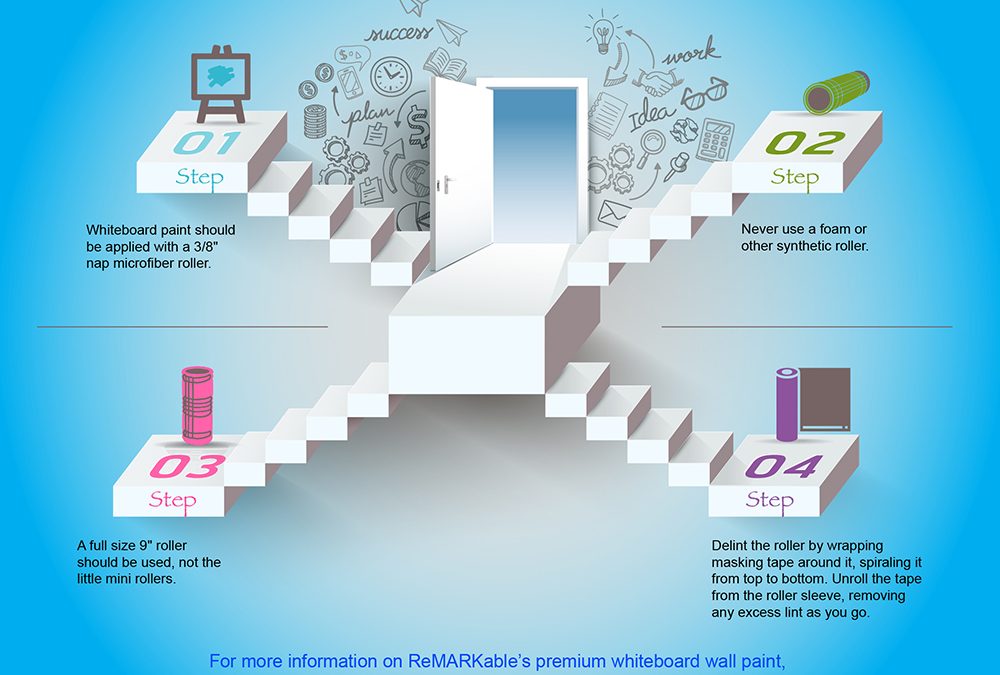
Proper Technique When Rolling Whiteboard Paint Premium whiteboard coating should be installed using a good-quality nine-inch microfiber paint roller sleeve with a 1/4″ or 3/8″ nap. When rolling whiteboard paint, It’s a good idea to de-lint the sleeve... read more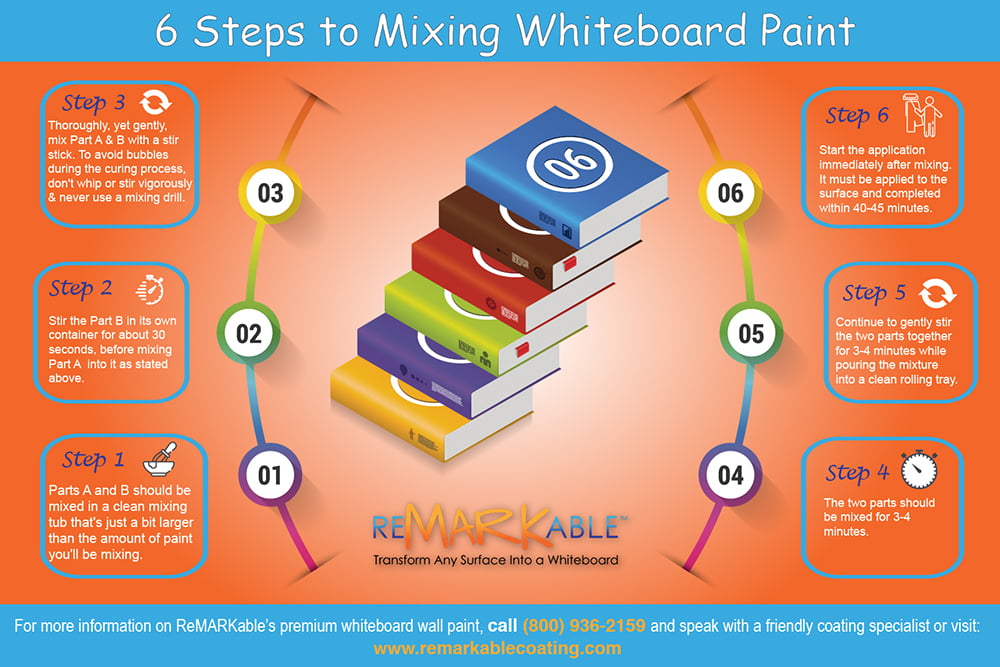
Six Steps to Mixing Whiteboard Paint
Six Steps to Mixing Whiteboard Paint A number of key characteristics distinguish both the clear and white versions of high-quality whiteboard coating from conventional types of paint, such as interior and exterior house paint. First, the whiteboard coating consists of... read more