
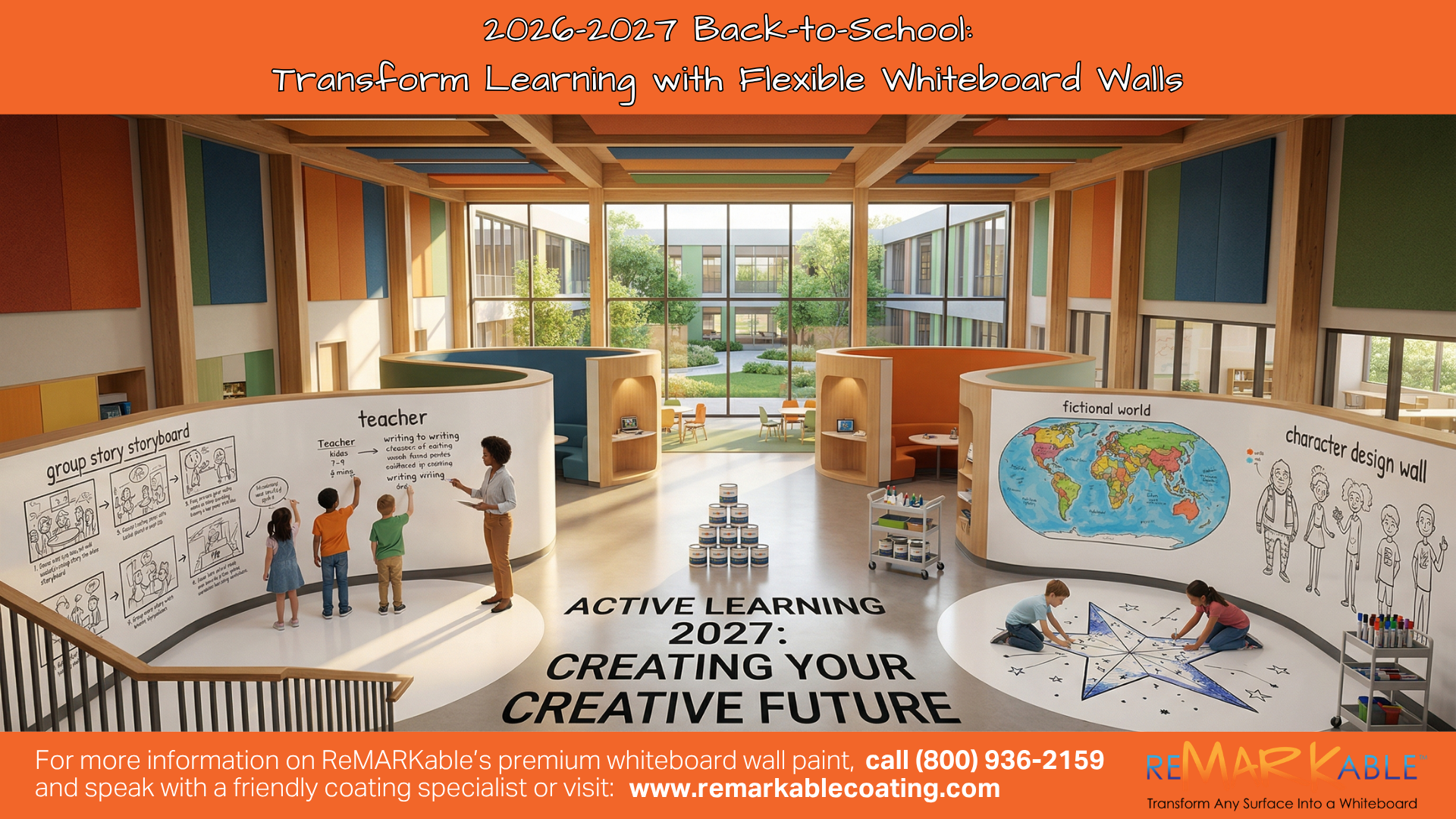
The Strategic Impact of Whiteboard Walls on Modern Pedagogy
Introduction to the Modern Educational Ecosystem
The annual back-to-school transition represents a critical period of spatial, psychological, and pedagogical realignment for students, educators, and families, a shift increasingly facilitated by the integration of whiteboard paint and whiteboard walls. As the educational landscape advances into the 2026-2027 academic year, the paradigm of instruction has definitively shifted from passive consumption to active, student-centered learning. Within this evolution, the physical environment is no longer viewed as a static container for educational activities, but rather as an active participant in the cognitive and developmental process. Institutions and households alike are increasingly recognizing that the architectural and interior design of a learning space profoundly dictates the behavioral and academic outcomes of its inhabitants.
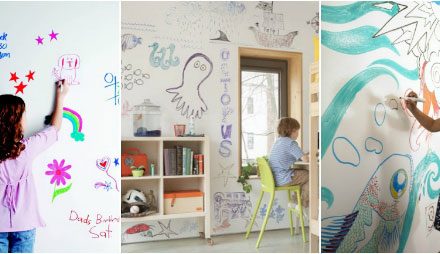
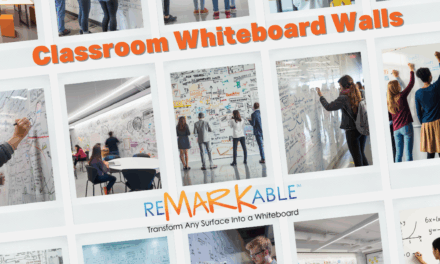
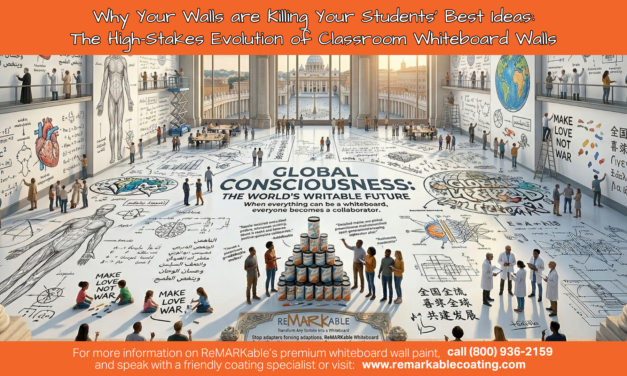
Central to this spatial revolution is the integration of expansive writable surfaces, most notably achieved through the application of premium whiteboard paint. The transition from confined, framed traditional dry-erase boards to borderless whiteboard walls represents a fundamental democratization of the learning environment. By removing the physical boundaries on where ideas can be visualized, educators and parents can foster dynamic, 360-degree learning spaces that encourage kinesthetic movement, collaborative problem-solving, and heightened student engagement.
This comprehensive analysis examines the multifaceted benefits of integrating whiteboard paint and whiteboard walls into K-12 classrooms, higher education active learning centers, and home study spaces during the back-to-school season. By analyzing current pedagogical frameworks, environmental psychology, 2026-2027 ergonomic design trends, and the material science behind advanced dry-erase coatings, the report provides a detailed blueprint for optimizing physical spaces to support student well-being and academic excellence. The findings underscore the efficacy of solutions provided by industry leaders like ReMARKable Coating in transforming traditional environments into highly adaptive, inclusive, and forward-thinking educational hubs.
The Pedagogical Framework: Vertical Non-Permanent Surfaces (VNPS)
The foundational theory driving the widespread adoption of whiteboard walls in modern education is rooted in the concept of Vertical Non-Permanent Surfaces (VNPS). Popularized by Dr. Peter Liljedahl in his extensive research framework, Building Thinking Classrooms, the utilization of VNPS has been empirically shown to transform passive learning environments into highly active hubs of cognitive engagement. The methodology fundamentally alters how students interact with the curriculum, with their peers, and with the physical space itself.
The Cognitive Mechanics of Standing and Visualizing
Traditional seated learning often induces a state of passive compliance, where students mimic procedures rather than engaging in authentic problem-solving. The simple act of relocating students from their desks to a standing position at a whiteboard wall alters their physiological and cognitive state. Standing increases physical arousal, improves blood flow, and elevates alertness, thereby reducing off-task behaviors. When students are confronted with the vast, open surface of a whiteboard wall, the physical expansiveness mirrors a cognitive openness, allowing them to externalize complex thoughts without the spatial constraints of a standard piece of paper or a small desktop board.
The “non-permanent” nature of dry-erase whiteboard paint is critical to its pedagogical success. Because the medium is inherently erasable, it drastically lowers the psychological threshold for risk-taking. Students who may suffer from academic anxiety or the fear of failure are far more likely to attempt a complex mathematical equation or draft a preliminary thesis statement when they know that any error can be obliterated with a simple swipe of a microfiber cloth. This freedom to experiment and fail safely encourages a continuous cycle of iteration and peer-supported learning, shifting the focus from producing a perfect final answer to exploring the messy process of critical thinking.
Empirical Evidence Supporting Vertical Work
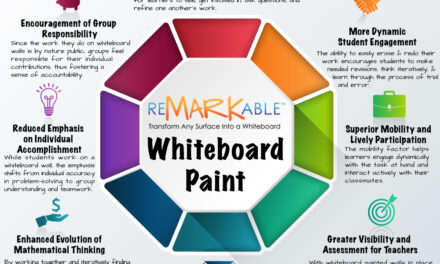
Recent educational analyses have systematically documented the transformational effects of vertical whiteboard walls. Observations indicate that transitioning to expansive writable surfaces increases active student participation by up to 60%. A comprehensive review of ten distinct studies further clarifies the specific mechanisms by which whiteboard walls elevate the educational experience.
|
Cognitive Activation (Study 1 & 2)
|
Students think more actively and transition from mimicking the teacher to authentic problem-solving when utilizing vertical surfaces. |
|
Behavioral Management (Study 3)
|
The physical engagement of standing and writing vertically drastically reduces off-task behavior. |
|
Peer Collaboration (Study 4 & 5)
|
Collaboration occurs naturally without teacher prompting; making work visible improves the quality of academic discussions. |
|
Psychological Safety (Study 6)
|
Students learn from their mistakes with less fear due to the non-permanent nature of the medium. |
|
Academic Retention (Study 7)
|
Engaging with material on vertical surfaces improves long-term retention and deeper conceptual understanding. |
|
Instructional Efficiency (Study 8)
|
Teacher facilitation becomes significantly easier as educators can visually assess the progress of the entire room simultaneously. |
|
Scalability (Study 9 & 10)
|
The approach is highly effective across all grade levels, yielding profound social and emotional benefits that support continuous learning. |
Democratizing the Classroom Community
The integration of whiteboard walls facilitates what educational researchers term “equitable collaboration”. In a standard seated arrangement, classroom hierarchies naturally form; certain students dominate discussions while others recede. However, when educators utilize visibly random grouping and assign teams to different sections of a continuous whiteboard wall, these entrenched power dynamics are disrupted. Every student is granted equal access to the writing surface, giving all participants a literal and figurative voice in the action.
This decentralized approach ensures that the work of every group is publicly visible. Visual accessibility allows group members to see the work simultaneously, preventing individuals from disengaging or hiding within the group. It also allows students to cross-pollinate ideas; a group struggling with a specific concept can simply look across the room to observe the strategies employed by their peers on other whiteboard walls, fostering a highly collaborative and interconnected classroom community. For the educator, the 360-degree visibility of student work transforms assessment. Instead of waiting to collect and grade papers at the end of the day, the teacher can scan the room, identify misconceptions in real-time, and provide immediate, targeted feedback.
Spatial Design and Student Outcomes: The 2026-2027 Shift to Active Learning
The architectural configuration of an educational facility is a critical determinant of student success. Recent analyses have confirmed that the holistic design of a classroom—encompassing lighting, acoustics, flexibility, and visual elements—directly impacts a pupil’s learning progress. As schools plan their 2026-2027 back-to-school capital improvements, retrofitting traditional spaces with active learning infrastructure is a primary objective. In 2026, modern design for K-12 schools heavily prioritizes flexible, future-ready environments that integrate natural light to regulate circadian rhythms and calming color palettes to reduce cortisol levels, proving that spatial design distinctly alters brain chemistry.
Deconstructing the “Front” of the Room
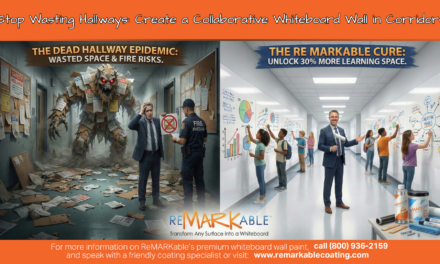
Historically, classrooms were designed with a distinct front and back, dictated by the placement of a single chalkboard or interactive digital board. This layout inherently promotes a one-way transfer of information, which often leaves students feeling pressured or anxious when called to the front to perform before the judging eyes of their peers. Transitioning to a 360-degree learning environment dismantles this restrictive architecture. By applying premium whiteboard paint to multiple walls, schools can generate four times more brainstorming space, inherently signaling to students that learning can occur anywhere in the room. In 2026, design frameworks also emphasize “invisible technology,” where screens and connectivity are organically integrated without visually invading the physical space, allowing whiteboard walls to take center stage for active, analog collaboration.
This architectural shift has yielded profound empirical results. In Bulgaria, teachers at the 125th Middle School “Boyan Penev” recognized the anxiety caused by traditional front-of-room testing. By utilizing eco-friendly whiteboard paint, the school transformed its side walls into clear dry-erase spaces. The pedagogical results were immediate; educators reported that mathematics suddenly stopped intimidating the students, who instead became eager to take turns utilizing the new, decentralized writing surfaces.
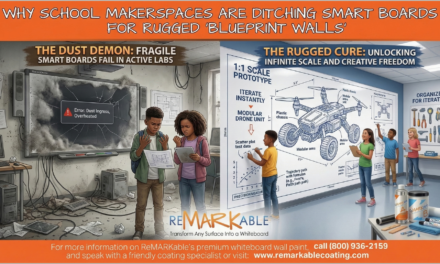
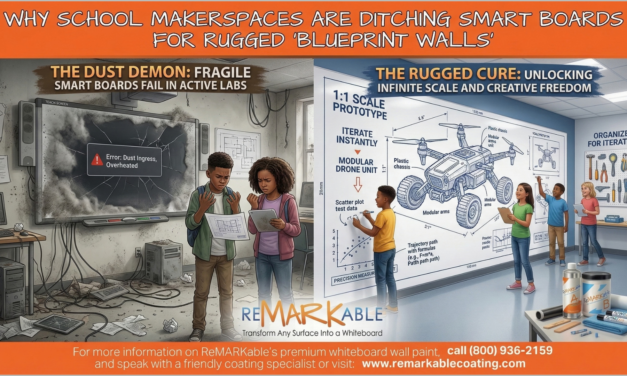
Similarly, the Fresno Unified School District fundamentally altered classroom dynamics by strategically placing mobile interactive displays in the center of the room rather than the front. This spatial disruption encouraged teachers to redesign their layouts, utilizing the boards for diverse, active learning configurations rather than static lectures. While digital boards offer technological advantages, they are frequently constrained by size and fragility. In disciplines such as STEM, where complex equations, flowcharts, and architectural blueprints require vast spatial canvases, traditional or digital boards are often inadequate. Whiteboard painted walls accommodate these massive visualizations, ensuring that the context of a prolonged engineering problem is not erased prematurely. This phenomenon, referred to as the “Persistence of Memory,” allows project outlines to remain visible for days, providing a continuous cognitive anchor for students across multiple class sessions.
Higher Education and Active Learning Centers (ALCs)
The demand for interactive, writable spaces is not confined to K-12 education. Higher education institutions are rapidly abandoning the traditional tiered lecture hall in favor of Active Learning Classrooms (ALCs). Modern university students, having been exposed to interactive protocols in their earlier schooling, expect environments that offer constant engagement and manipulation of materials.
Case studies from prominent institutions illustrate this trend. Washington State’s Carson College successfully transitioned to active learning by eliminating large lecture sections, educating faculty in new pedagogies, and physically redesigning spaces to be conducive to interactive methodologies, resulting in higher attendance and engagement. At Florida International University’s Herbert Wertheim College of Medicine (HWCOM), Dr. Stephanie Tadal and instructional designers retrofitted a tiered auditorium into a 2,840-square-foot ALC. By replacing front-facing desks with triangular tables designed for groups of five to seven students, the space minimized necessary circulation room while maximizing interpersonal interaction. In these ALCs, the instructor’s role shifts from a primary lecturer to a roving facilitator, guiding students as they map out diagnostic strategies on expansive whiteboard walls.
The utility of these surfaces in higher education is further supported by the work of Dr. Padhu Seshaiyer, a University Teaching Excellence Award Winner at George Mason University, who emphasizes that utilizing dry erase boards provides an unobtrusive method to engage students in inquiry-based problem solving, transforming them from passive consumers of education into active producers of information.
The 2026-2027 Home Study and Dormitory Ecosystem
As the back-to-school season approaches, the principles of optimal learning environments must be translated into the domestic sphere. The ongoing prevalence of hybrid learning and remote work has necessitated the creation of dedicated, highly functional home study spaces. For the 2026-2027 academic year, interior design trends for student housing and home learning nooks heavily emphasize multi-functional layouts, biophilic elements, and the maximization of vertical space.
Optimizing the College Dormitory
College dormitories are notoriously confined, requiring ingenious organizational strategies to prevent the space from becoming chaotic and detrimental to study habits. Professional organizers emphasize that without a robust system, students waste critical cognitive energy searching for items instead of focusing on their academics. The modern dorm room strategy relies heavily on exploiting vertical real estate and integrating dual-purpose furniture. Heading into 2026-2027, student housing interior design is pivoting away from sterile minimalism toward rich, personalized spaces characterized by sustainable materials, deep colors, daring accent pillows, and heavy textual layering.
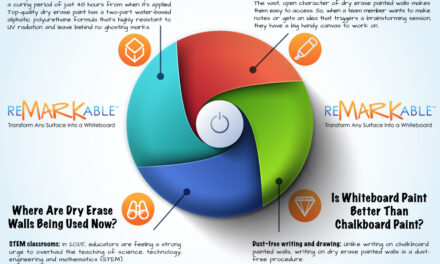
Whiteboard paint and temporary dry-erase solutions are emerging as essential tools for dorm optimization within these aesthetic trends. Because university policies generally prohibit painting the actual walls, innovative students and parents are utilizing clear whiteboard paint to transform personally owned furniture into functional command centers. An ordinary end table, a bed tray, or the surface of a rolling utility cart can be coated with a transparent dry-erase layer, allowing students to jot down assignment deadlines, sketch out essay structures, or leave messages for roommates without consuming additional square footage or violating housing policies. For the walls, specialized foam whiteboards or transparent adhesive sheets that remove cleanly offer the benefits of a large visual planner while preserving the integrity of the university’s property.
The Collaborative Home Learning Haven and Homeschooling Trends
For younger students and the growing demographic of homeschoolers, the home environment must strike a delicate balance between comfort and academic rigor. Homeschooling trends for the 2026-2027 cycle highlight an increasing reliance on artificial intelligence tools for personalized tutoring, project-based learning paradigms, and virtual labs. To accommodate these dynamic methodologies, the establishment of a defined, routine-oriented study zone is paramount for focus and motivation.
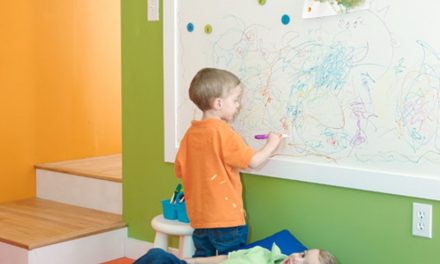
When multiple siblings share a home learning space, the environment can quickly become a site of friction and distraction. To mitigate this, parents are increasingly utilizing whiteboard paint to construct highly structured, collaborative home hubs. By applying whiteboard paint coatings to kitchen tables, dedicated study desks, or playroom walls, parents can create distinct “whiteboard wall zones” or interactive surfaces that clearly define where learning happens.
Furthermore, the design trends of 2026 are shifting aggressively away from “sterile white” rooms. Parents and educators are opting for neuro-aesthetic whiteboard walls by utilizing transparent whiteboard paint over deep, calming wall colors, allowing siblings to work together on math problems or spelling exercises without the clutter of excessive scrap paper, turning standard spaces into interactive, beautifully designed canvases.
The physical attributes of the home study space require careful regulation. Research analyzing indoor air quality indicates that high concentrations of CO2 drastically reduce attention and productivity, while temperature fluctuations outside the optimal range of 20 to 25 degrees Celsius cause cognitive attrition and physical discomfort. Furthermore, excessive ambient noise significantly impairs student performance in controlled settings. A well-regulated environment, augmented with natural light—which has been shown to improve test scores by up to 25%—and ergonomic furniture, is foundational to student success.
The ability to visualize a daily routine on a large, central whiteboard wall provides young children with a comforting sense of structure. Visual schedules that map out the day’s tasks, interspersed with necessary physical breaks, allow children to self-regulate and navigate their responsibilities with greater independence. This visual externalization of the daily plan reduces cognitive load and anxiety, resulting in a more harmonious and productive home learning environment.
Cognitive, Ergonomic, and Mental Health Impacts for 2026-2027
The intersection of physical space and student mental health is a focal point for educators and families planning the back-to-school transition. The Healthy Minds Study, encompassing data from over 100,000 college students across 200 U.S. universities, indicated promising trends in the destigmatization of mental health and increased treatment-seeking behaviors. However, the study also highlighted that overall psychological “flourishing”—defined as encompassing self-esteem, purpose, and optimism—dropped to 36% from a previous high of 38%. This indicates that while students are managing acute crises better, their overall well-being requires continuous, holistic institutional support.
Combating Digital Fatigue and Screen Isolation in an AI Era
Remote and hybrid learning models, alongside rapid technological advancements, have precipitated a crisis of digital fatigue. Furthermore, looking at 2026 K-12 education trends, 40% of K-12 employees report their school or district lacks an official artificial intelligence (AI) policy, and only 19% of students say their teachers have taught them how to use AI for schoolwork. In this landscape of digital uncertainty, the integration of analog, no-tech writable surfaces offers a vital, controllable cognitive respite. Engaging with a physical whiteboard wall stimulates the imagination and allows students to focus their attention without the glare and neurological stimulation of a glowing screen.
Furthermore, working collaboratively at a wall creates an inherently social experience. The physical proximity required to share a writing surface fosters spontaneous interaction, eye contact, and interpersonal connection that cannot be replicated in a digital chat room or virtual document. By creating designated zones for offline collaboration, educational institutions and homes actively counteract the isolating effects of digital saturation, promoting a stronger sense of belonging and community well-being.
Kinesthetic Learning and Inclusivity
Whiteboard walls also serve as a powerful tool for inclusivity, particularly for neurodivergent students or those who experience severe social anxiety. Introverted learners who hesitate to raise their hands or speak out in a large group setting often find comfort in the alternative communication channel provided by a writable surface. Working in smaller groups at the board allows these students to demonstrate their knowledge visually, raising their self-confidence and providing a tangible sense of achievement.
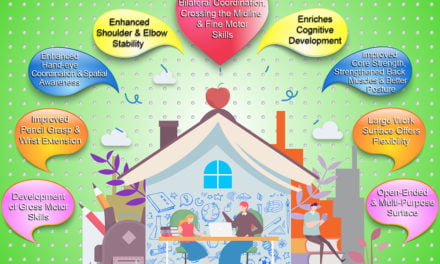
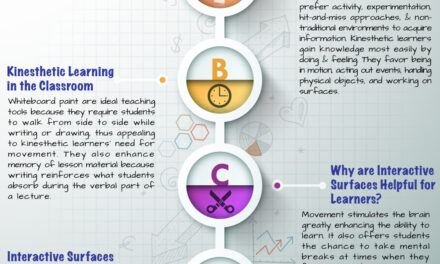
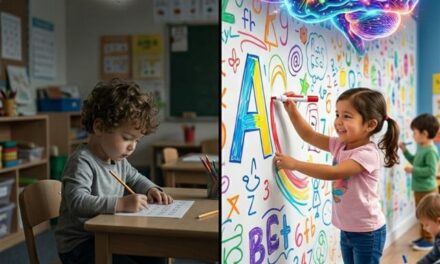
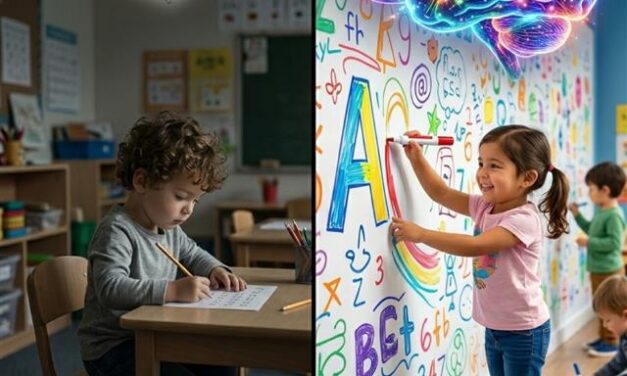
Moreover, for students with fine-motor challenges, traditional writing instruments and small paper confines can be frustrating. The large-scale format of a whiteboard wall, which can even accommodate the use of adapted tools like tennis balls to manipulate digital screens or large-grip dry-erase markers on painted walls, removes significant physical barriers to expression. Occupational therapists frequently advocate for vertical surface work to support the development of fine and gross motor skills. When young children write or draw on a floor-to-waist whiteboard wall, they are required to engage their core muscles to maintain balance and posture. The sweeping motions required to write on a large scale strengthen the wrist and arm joints, while navigating a large vertical plane forces children to cross the midline of their bodies—a vital neurological process connecting the brain’s hemispheres. By incorporating whiteboard paint into early childhood settings, educators seamlessly blend academic instruction with essential physical therapy principles.
Material Science and Comparative Analysis: Paint vs. Traditional Boards
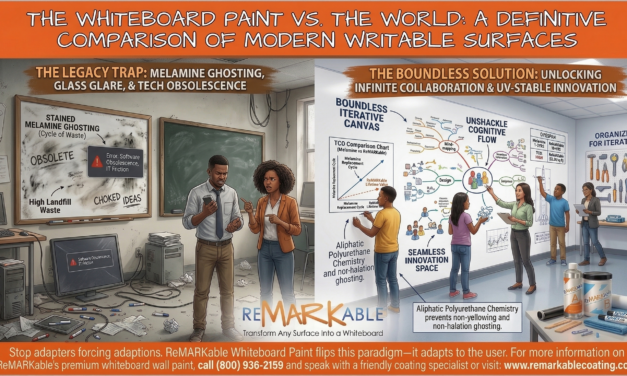
The rapid adoption of expansive writable surfaces is heavily reliant on advancements in material science. For decades, the standard was the traditional framed whiteboard or chalkboard. However, these legacy products present significant limitations in the context of modern spatial design and environmental sustainability.
The Limitations of Traditional Whiteboards
Traditional whiteboards are inherently constrained by their manufacturing processes. They require heavy aluminum frames and are typically limited to standard dimensions (e.g., four-by-six feet), preventing the creation of seamless, floor-to-ceiling writing expanses. Architecturally, these framed boards break up the visual flow of a room and consume valuable physical space, especially when mounted on clunky, wheeled mobile stands.
Furthermore, traditional boards have a high environmental cost. When the melamine or porcelain surface degrades—resulting in permanent “ghosting” or staining—the entire unit, including its metal and plastic framing, is typically discarded into a landfill. In high-traffic K-12 environments, the lifecycle of a standard, budget-tier whiteboard can be frustratingly short, leading to continuous capital expenditures.
The Advantages of Premium Whiteboard Paint
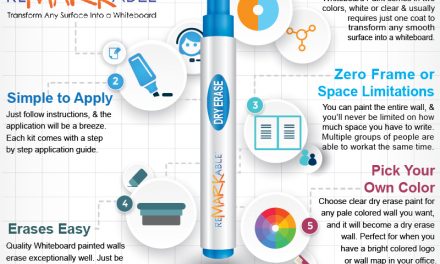
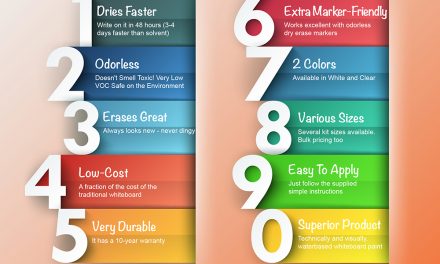
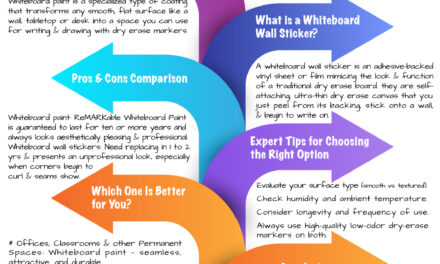
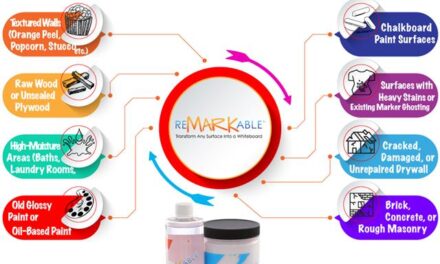
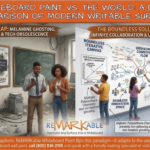
In contrast, professional-grade whiteboard paints, such as the formulations developed by ReMARKable Coating, represent a significant technological leap. These liquid whiteboard paint coatings can transform virtually any smooth, paintable surface—drywall, plaster, metal, or wood—into a highly durable dry-erase canvas with unlimited sizing.
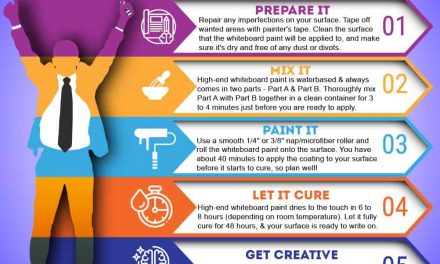
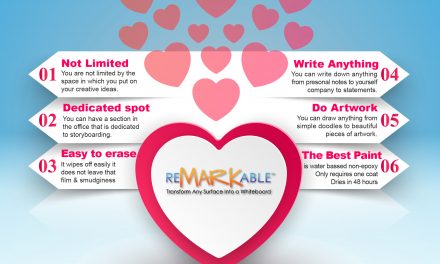
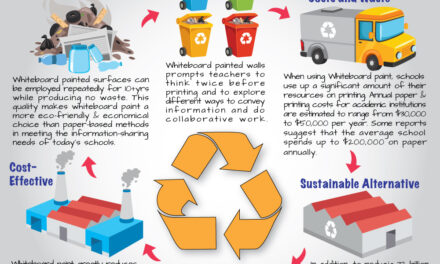
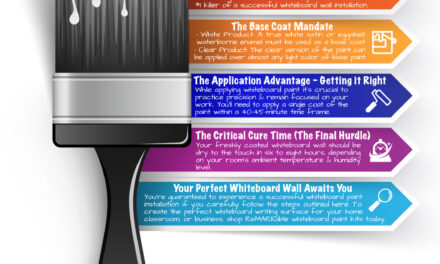
From an economic perspective, a whiteboard-painted wall is exceptionally cost-effective, typically costing approximately one-third the price of a comparably sized traditional whiteboard. The installation process has also been streamlined; advanced DIY-friendly kits require only a single coat application over a proper base, reducing installation effort by 50% and boasting a rapid 48-hour cure time before the surface can be utilized.
Safety and environmental sustainability are critical factors for interior applications in schools and homes. Inferior epoxy-based paints historically suffered from harsh odors and high levels of toxic volatile organic compounds (VOCs), rendering them unsuitable for occupied classrooms or residential spaces. However, top-tier formulations are now 100% water-based, non-epoxy, and virtually odorless, complying with stringent environmental safety guidelines and ensuring that users do not experience headaches or dizziness during or after application.
|
Spatial Limitations
|
Confined by factory sizing and aluminum frames. | Unlimited scalability; covers entire walls, corners, and curved surfaces. |
|
Cost Efficiency
|
High initial cost per square foot; replacement requires purchasing a new unit. | Approximately 1/3 the cost of traditional boards; highly economical for large areas. |
|
Environmental Impact
|
Generates significant landfill waste when discarded. | Eco-friendly, low-VOC, water-based formula; eliminates framing waste. |
|
Aesthetic Integration
|
Distinctly institutional appearance; creates visual clutter. | Seamless integration into existing architecture; available in clear formulas to preserve wall color. |
|
Durability & Longevity
|
Prone to ghosting and surface degradation over time. | Pro-grade formulations are warranted against cracking, peeling, or yellowing for 10+ years. |
These advanced coatings are also engineered to be highly glare-resistant, a crucial feature in classrooms flooded with natural light or harsh overhead LEDs. By minimizing the glossy reflection common to cheap plastics, the painted surfaces ensure that students sitting at various angles can clearly read the information displayed without eye strain.
Creative Applications and Unconventional Surfaces
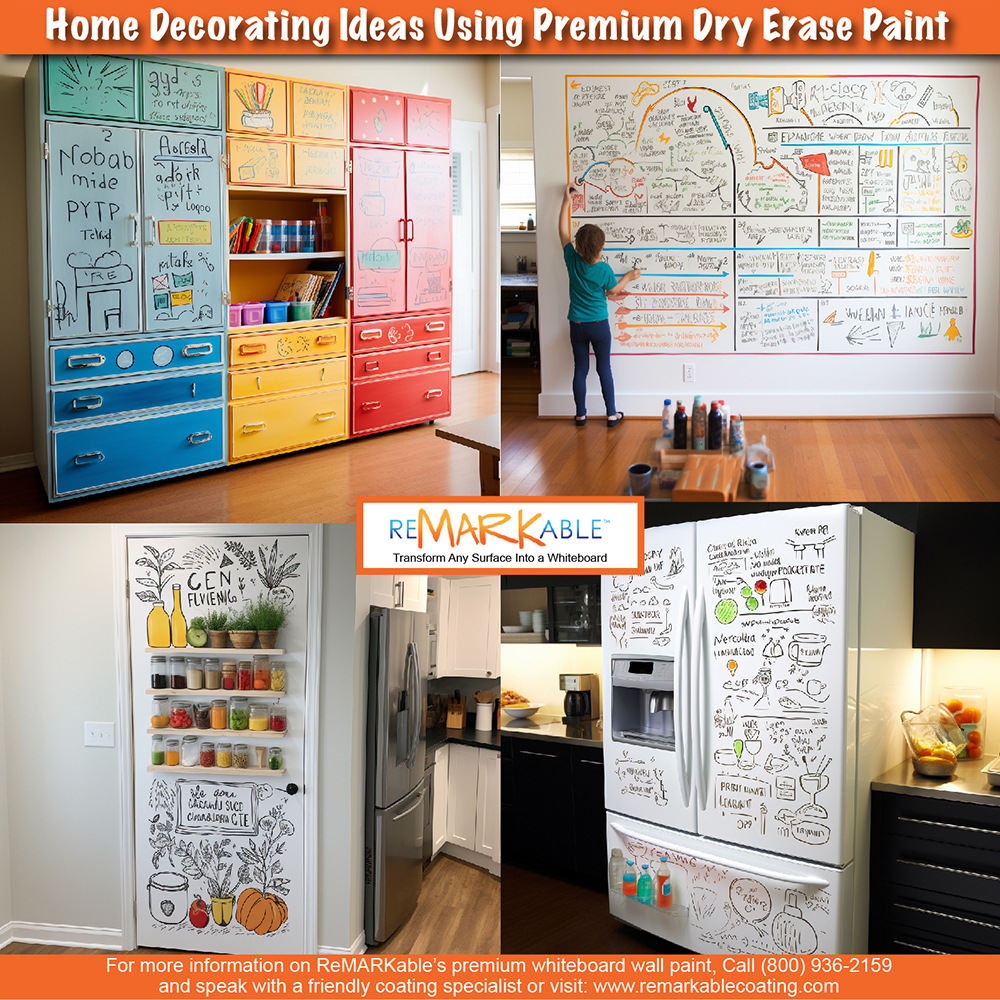
The flexibility of whiteboard paint allows educators and interior designers to rethink the utility of every surface within a facility. The philosophy of making learning visible dictates that surfaces all over a school building—tables, room dividers, doors, and cabinets—are heavily underutilized real estate.
Transforming Furniture and Casework
Applying whiteboard film or paint to the exterior of classroom storage cabinets and doors instantly reclaims dead space, converting it into active brainstorming zones. During small group instruction, students can be dispersed around the perimeter of the room, utilizing these painted cabinets to map out ideas, leaving the primary whiteboard walls available for whole-class instruction.
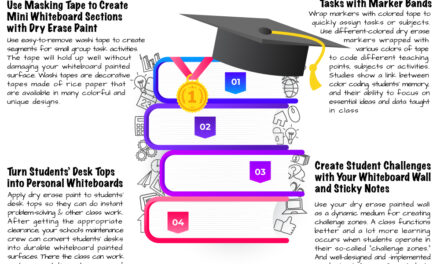
In the realm of school furniture, the concept of the “whiteboard desk” is gaining substantial traction. With appropriate maintenance clearance, facilities teams are coating the tops of student desks with dry-erase paint. This allows students to conduct instant problem-solving, work through messy math equations, or quickly jot down homework assignments directly on their primary work surface. The novelty of writing on a desk captures student attention and provides a sustainable alternative to the endless consumption of scratch paper.
Innovative Solutions for Event Engagement and Active Learning
The application of active learning principles extends beyond the traditional classroom. Innovative schools are utilizing technology and interactive concepts to turn passive events into dynamic experiences. For instance, at Setauket Elementary, facing budget shortfalls for a field trip, a teacher utilized the Goosechase platform to host an interactive Family Game Night. By setting up missions that required families to actively engage, hunt for objects, and record challenges, the school successfully turned a passive audience into active participants, ultimately surpassing fundraising goals. When these digital scavenger hunts are paired with large whiteboard walls in the school gymnasium or cafeteria acting as a central command center or live scoreboard, the physical space becomes the anchor for community-wide engagement.
Strategic Implementation, Maintenance, and Back-to-School Readiness
For manufacturers and retailers of premium whiteboard coatings, the back-to-school season represents the apex of consumer demand. Effectively positioning these products requires a nuanced understanding of the distinct pain points experienced by educational administrators, teachers, college students, and parents. A brand voice that emphasizes empowerment, environmental responsibility, and limitless creativity resonates deeply within this market.
Back-to-School Organizational Hacks for Teachers
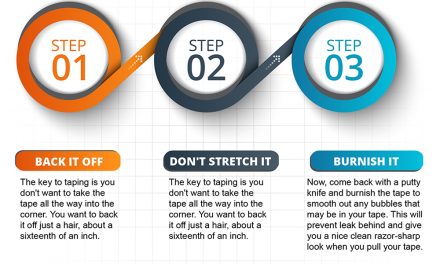
Teachers are inherently resourceful, frequently developing DIY methods to maximize the utility of their whiteboard walls on tight budgets. Educators utilize masking tape to delineate specific sections on a large wall, creating designated areas for daily schedules, learning objectives, and student challenges. To manage writing instruments, teachers apply colored tape or “marker bands” to dry-erase markers to quickly color-code student tasks and group assignments. Because premium whiteboard markers can be expensive to replace, resourceful art teachers create low-cost erasers by hot-gluing felt scraps to wooden blocks, or attaching small pompoms directly to the caps of the dry-erase markers, providing every student with a personal erasing tool.
Brands like ReMARKable Coating successfully leverage seasonal transitions by promoting the use of their whiteboard walls as canvases for large-scale, motivational quotes. Encouraging users to write inspiring thoughts large and proud on a frameless, floor-to-ceiling wall transforms a functional surface into a communal anchor and a potent conversation starter. Timely promotional strategies, including back-to-school discount codes, bundled starter kits (incorporating base paint, rollers, specialized low-odor markers, and microfiber cleaning cloths), and monthly square-footage giveaways, effectively drive conversion during this high-stakes purchasing window.
Long-Term Surface Viability and Maintenance
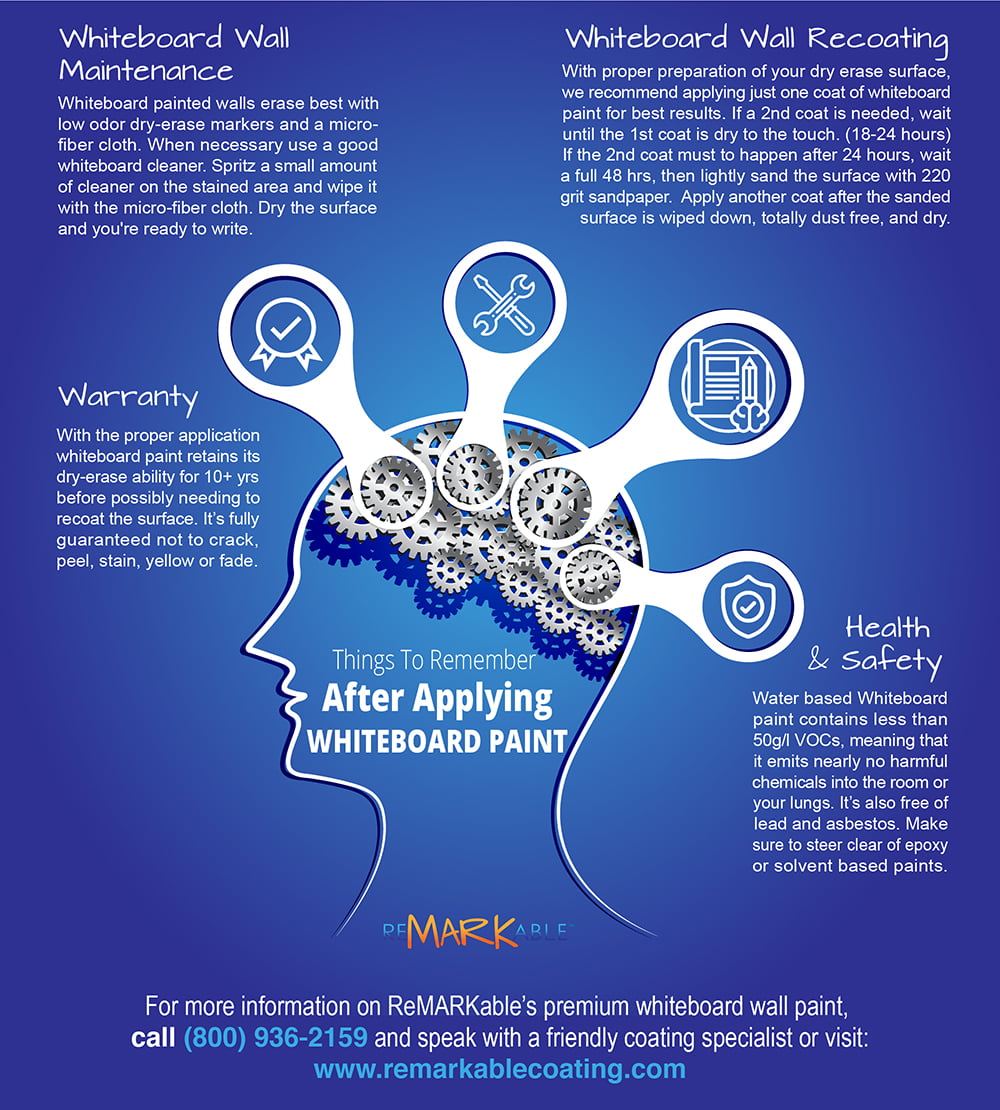
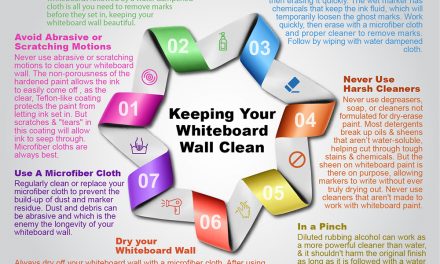
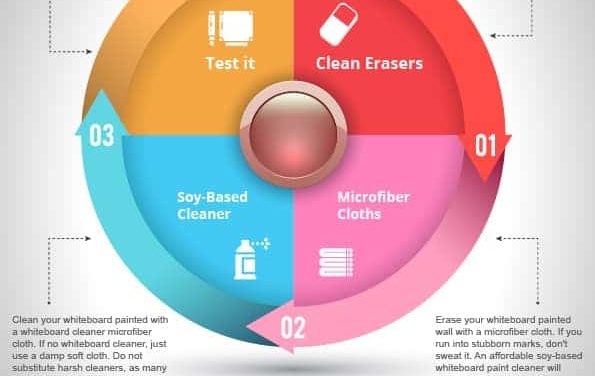
To ensure the ten-plus year viability of a whiteboard-painted wall, adherence to specific maintenance protocols is essential. Unlike traditional chalkboards that require heavy dusting, or low-quality whiteboards that demand harsh chemical scrubbing, premium dry-erase coatings thrive on a minimalist cleaning regimen.
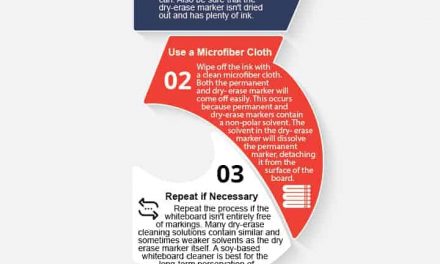
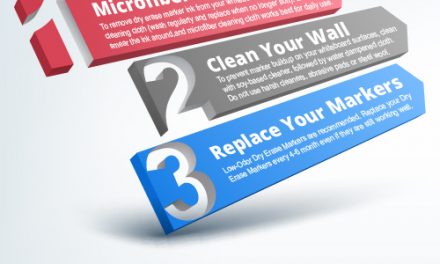
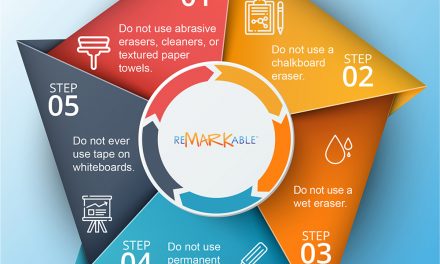
Daily maintenance necessitates nothing more than a simple wipe-down with a clean microfiber cloth, which safely traps the dry-erase pigment without abrading the surface. For periodic deep cleaning, solvent-based cleaners, abrasive pads, and steel wool must be strictly avoided, as these materials micro-scratch the coating, creating tiny fissures where ink can become permanently embedded. Instead, a specialized, non-toxic dry-erase cleaner followed by a water-dampened cloth restores the surface to its original, pristine condition. Even in the event of accidental permanent marker usage, the surface is not ruined; applying the approved cleaner and wiping thoroughly can lift the permanent ink without compromising the wall’s integrity. This low-friction maintenance profile is highly attractive to overworked school custodial staffs and busy parents alike, ensuring that the collaborative spaces remain functional and aesthetically pleasing for a decade or more.
Strategic Outlook and Recommendations
The trajectory of modern education is inextricably linked to the design of the spaces in which it occurs. As the pedagogical consensus coalesces around the necessity of active, student-centered learning driven by standard-aligned instruction, the physical constraints of the traditional classroom and the improvised home study nook are being dismantled. The widespread implementation of vertical non-permanent surfaces (VNPS) stands as one of the most effective, evidence-based strategies for enhancing cognitive engagement, democratizing classroom participation, and reducing the pervasive anxieties associated with performance and failure.
Premium whiteboard paint serves as the material foundation for this spatial revolution. By liberating the writable surface from the confines of an aluminum frame and expanding it to cover entire walls, desks, and architectural features, institutions and families provide students with an immersive, 360-degree canvas for their intellectual development. The material advantages of these modern coatings—specifically their cost-effectiveness, environmental safety, and durability over decades—make them vastly superior to legacy dry-erase boards.
As the 2026-2027 back-to-school season initiates a renewed focus on academic preparation, the strategic deployment of whiteboard walls offers a high-yield intervention. Whether utilized to facilitate a medical school simulation, support the gross motor development of a preschooler, optimize the footprint of a cramped college dormitory, or bring visual harmony to a bustling home learning environment, expansive whiteboard walls are an essential component of the 2026-2027 educational landscape. Investing in these dynamic spaces, supported by robust products like ReMARKable whiteboard paint, is fundamentally an investment in the collaborative, creative, and psychological flourishing of the next generation of learners.


![Giant Leaps Forward Require Big Spaces. [Leap Year Sale Event!]](https://www.remarkablecoating.com/wp-content/uploads/2016/02/Giant-Leaps-ForwardRequire-Big-Spaces-440x264.jpg)



![30% Off St Patrick’s Day Sale! [Details Inside]](https://www.remarkablecoating.com/wp-content/uploads/2016/03/Glorious-1-440x264.png)

![Drive Your Organization Into Openness and Watch it Expand [20% Off Whiteboard Paint]](https://www.remarkablecoating.com/wp-content/uploads/2016/04/Drive-Your-Organization-Into-Openness-and-Watch-It-Expand.-1-440x264.jpg)













![ReMARKable’s Winter Sale is Here! [25% Off + Free Shipping]](https://www.remarkablecoating.com/wp-content/uploads/2018/01/Red-Tag-Winter-Fashion-Facebook-Post-1-440x264.png)



![ReMARKable Summer Sale 2018 [28% Off Whiteboard Paint]](https://www.remarkablecoating.com/wp-content/uploads/2018/06/Blue-Simple-Line-Beach-Facebook-Post-1-440x264.png)





































































































































0 Comments