
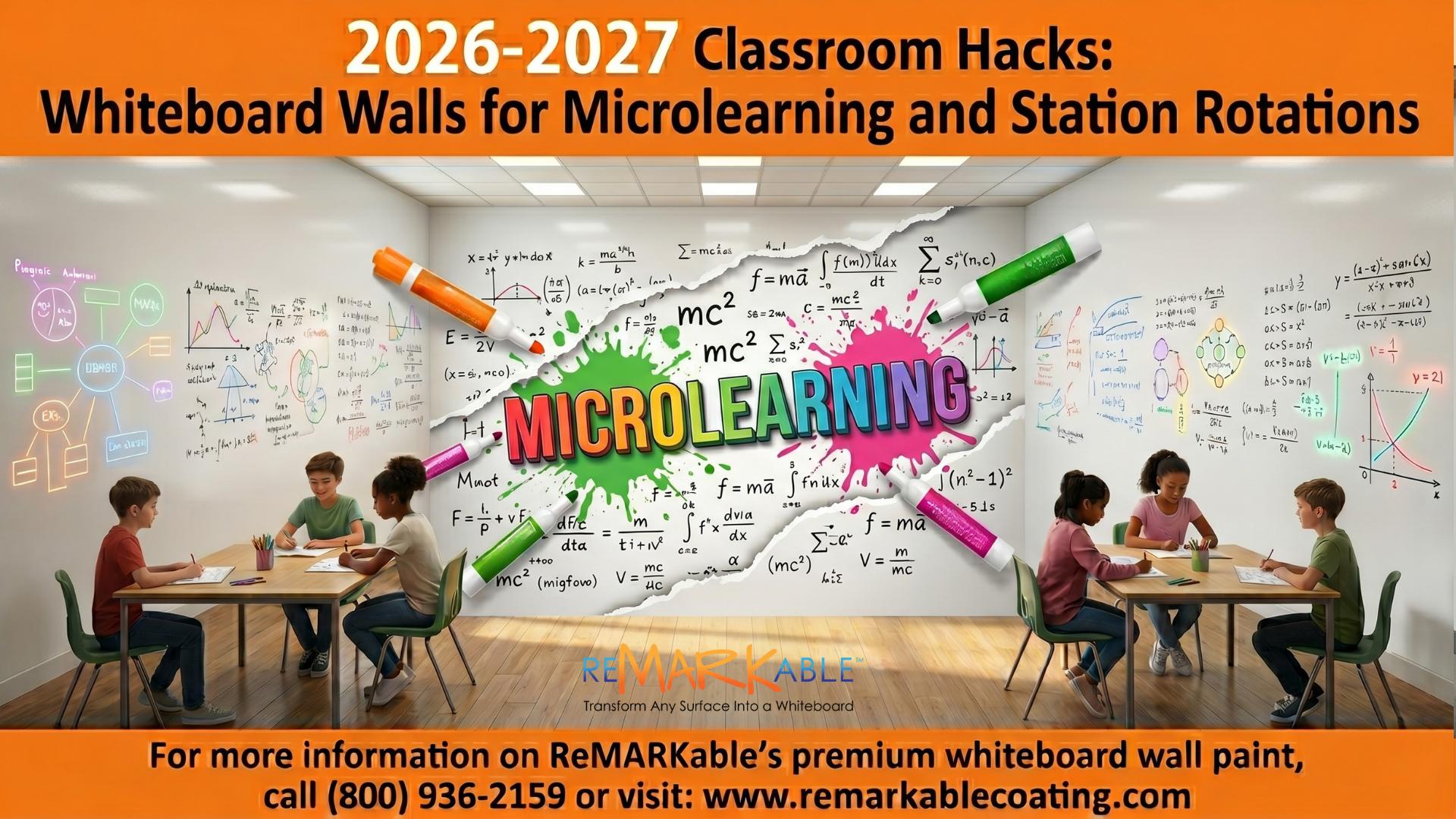
2026-2027 Classroom Hacks: Using Whiteboard Walls for Microlearning and Station Rotations
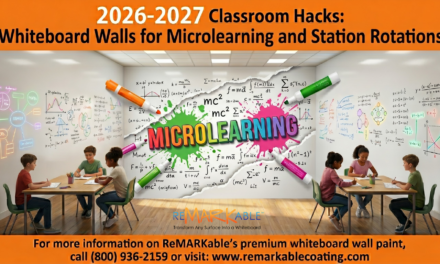
When preparing for the 2026-2027 academic year, integrating premium whiteboard paint is the most effective way to transform a traditional classroom into a highly engaging, active-learning environment. The educational landscape is undergoing a profound and necessary transformation. We are moving decisively away from the industrial-era “cells and bells” model of education, where students sat in static rows and passively received information from a teacher standing at the front of the room. Today’s students—comprised of Generation Z and the rapidly growing Generation Alpha cohort—interact with the world in fundamentally different ways than previous generations. As digital natives, they process information rapidly, crave visual stimulation, and expect their learning environments to be highly interactive, adaptable, and engaging. To meet these evolving expectations, teachers and administrators must rethink how classroom space is used, recognizing that an environment that restricts movement and limits collaboration will inevitably stifle student progress.
Designing the World’s Writable Future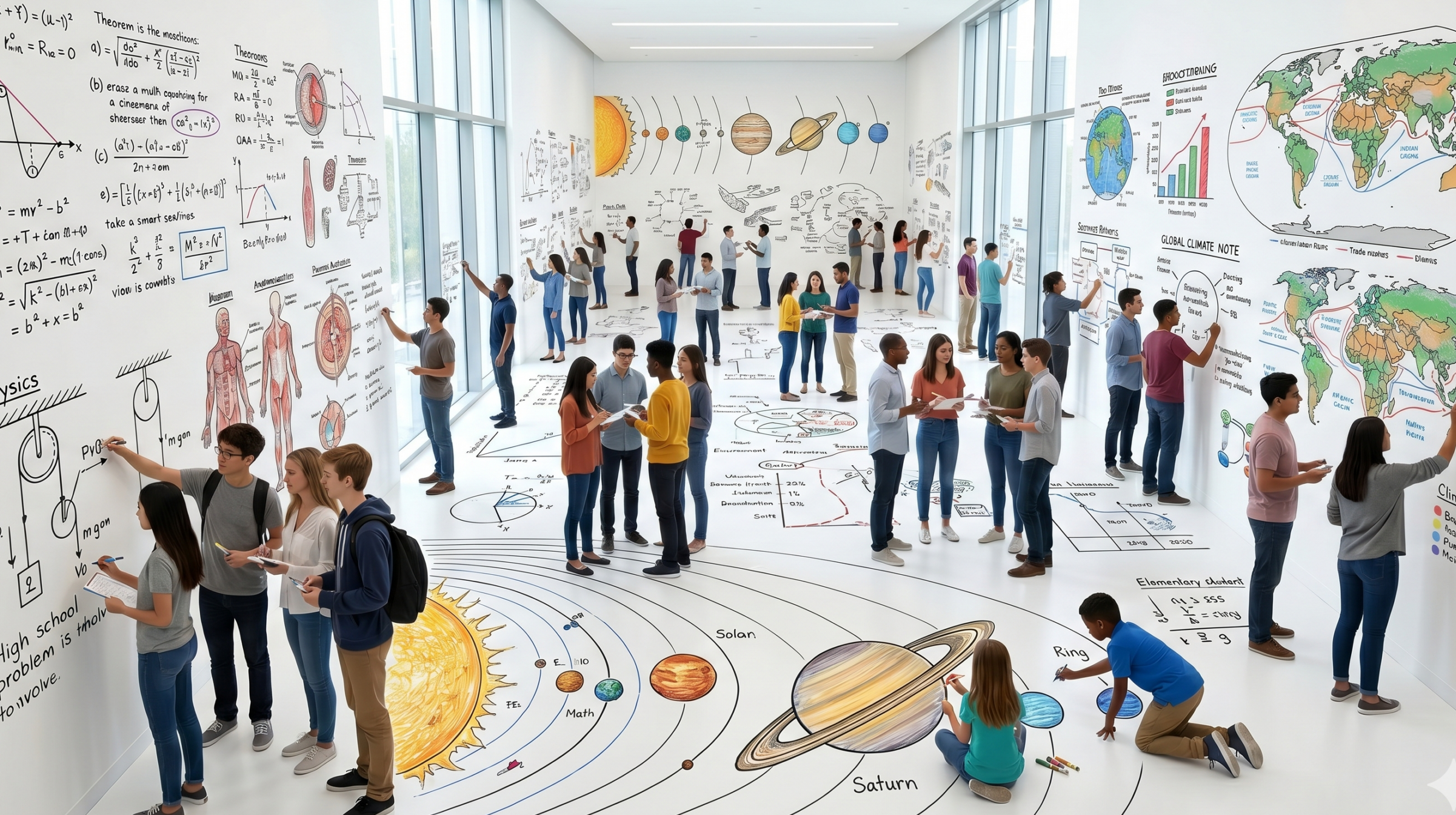
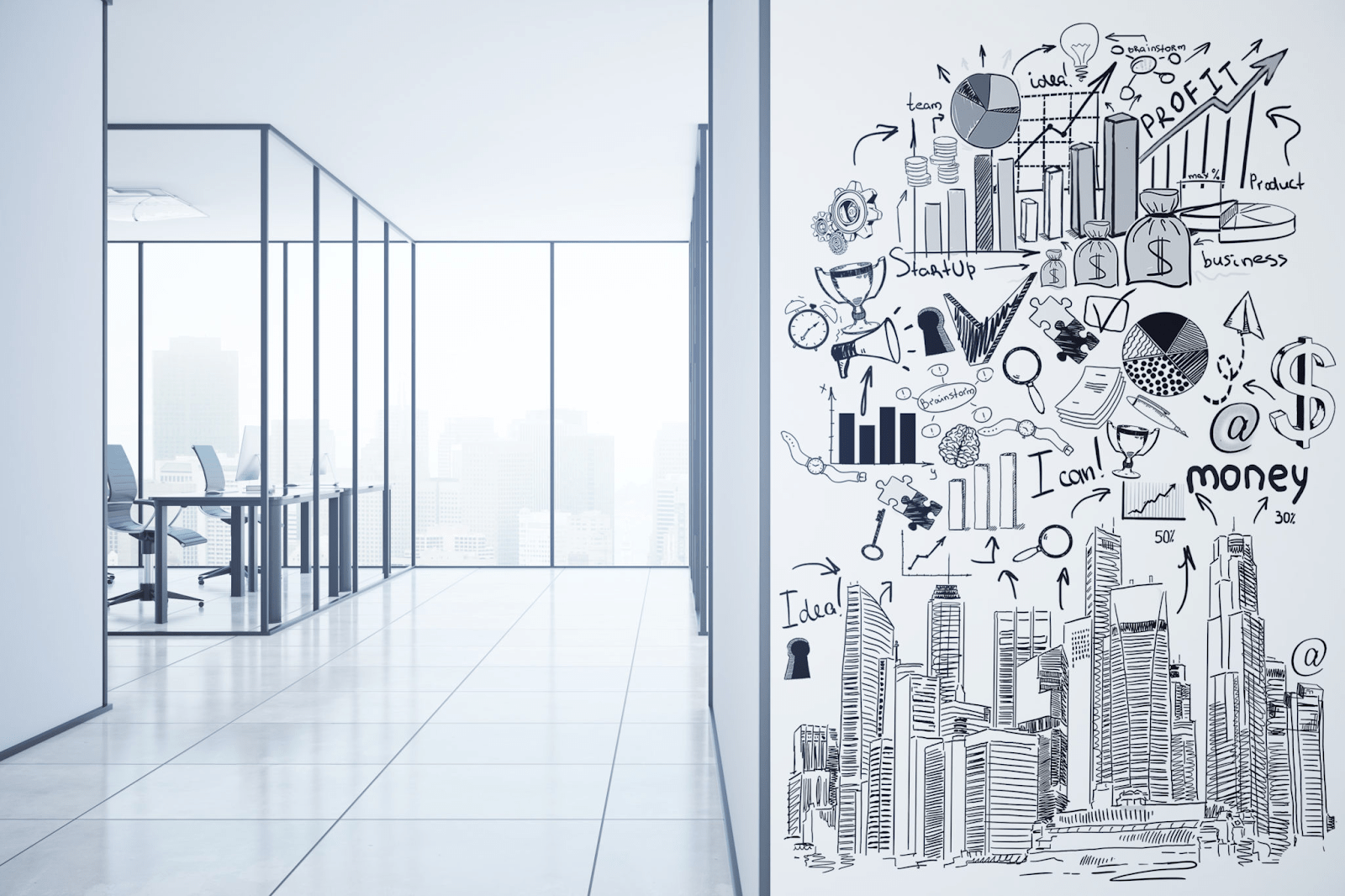
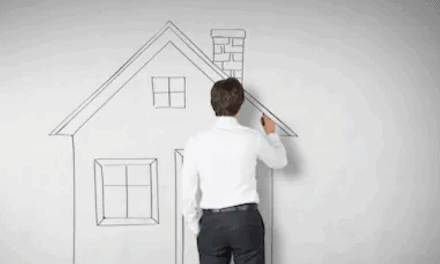
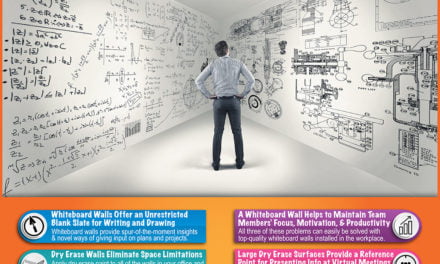
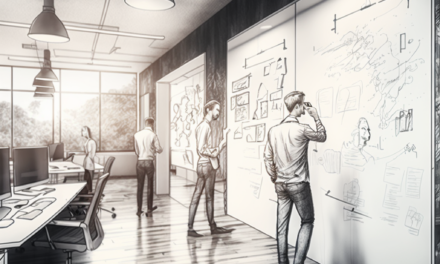
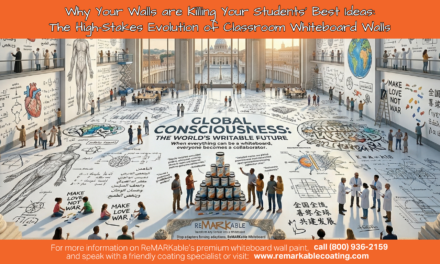
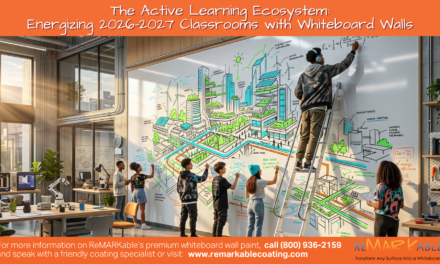
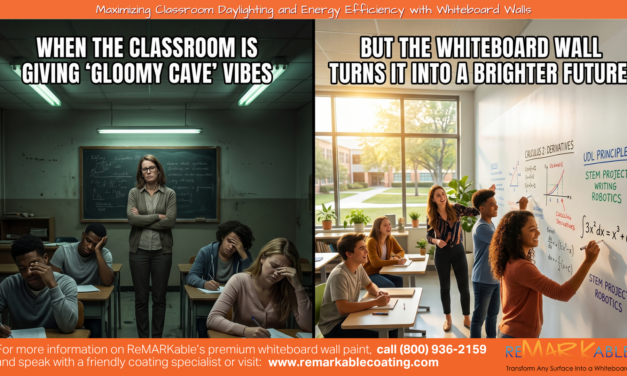
To understand the ultimate goal of the 2026 classroom, one only needs to visualize the concept of a “writable future.” Imagine a grand, expansive architectural hall flooded with natural light, where the physical boundaries of learning have been completely removed. In this visionary space, the entire floor and all the walls are pristine, completely covered in intricate drawings made with dry-erase markers—ranging from complex math equations and anatomical diagrams to solar systems and global maps. Scattered throughout this vast room are dozens of diverse students, teachers, and professionals actively collaborating, standing, and writing directly on the walls.
This visual concept represents a shift toward “Global Consciousness” in education—the idea that when everything can be a writable surface, everyone becomes an active collaborator. By bringing this grand aesthetic into the everyday classroom, schools can dismantle the restrictive, one-sided conversation of traditional learning. Turning an ordinary classroom into a 360-degree interactive canvas empowers students to share their ideas openly, fostering a highly collaborative community where knowledge mobility flows freely from one peer to another.
Understanding Microlearning in the 2026 Classroom
Harnessing this writable future is essential for supporting modern pedagogical trends, most notably the rise of microlearning. Microlearning is an instructional approach that delivers educational content in short, highly focused, and bite-sized bursts, typically lasting between ten to fifteen minutes. This methodology directly aligns with the cognitive habits of modern students. Having grown up in a media ecosystem defined by rapid-fire digital content, today’s learners are accustomed to rapidly digesting concentrated information. While some critics argue that this represents a shortening of attention spans, progressive educators recognize it as a brilliant opportunity to deliver instruction more efficiently. When lessons are broken down into manageable chunks, students experience far less cognitive overload and are significantly better equipped to retain core concepts.
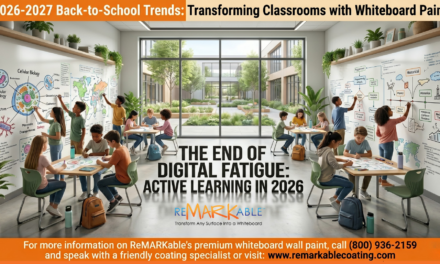
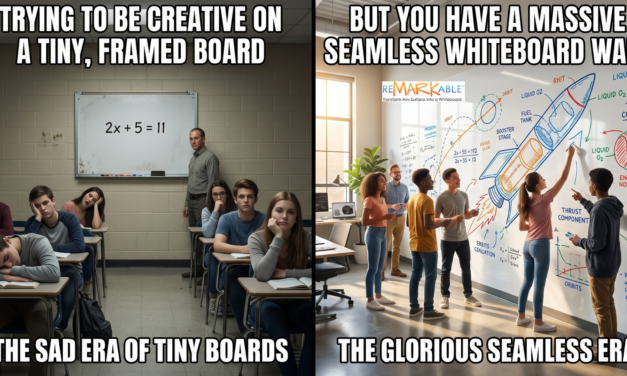
However, executing a successful microlearning strategy requires a physical classroom that supports rapid, fluid transitions. If a teacher delivers a ten-minute micro-lesson, students must be able to immediately pivot to an active task to apply what they have just learned. A traditional classroom with a single, small framed board at the front creates a frustrating bottleneck, forcing students to wait their turn or work in isolation on scratch paper at their desks. In contrast, an environment equipped with expansive whiteboard walls allows the entire class to instantly jump into action, seamlessly transitioning from listening to doing without losing crucial academic momentum.
The Pedagogical Power of Station Rotations
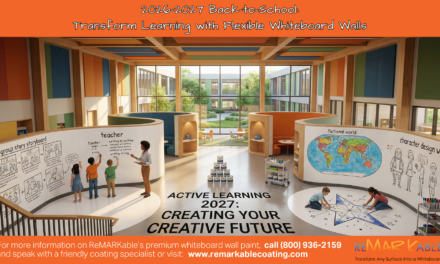
This leads directly into the pedagogical power of station rotations, a teaching method that is perfectly suited for the microlearning era. In a station rotation model, the teacher divides the classroom into distinct, targeted learning zones. Students rotate through these stations in small groups, engaging in different types of activities at each stop. One station might involve direct, small-group instruction with the teacher, another might focus on independent digital research using school-provided tablets, and a third might be dedicated entirely to collaborative, hands-on problem-solving.
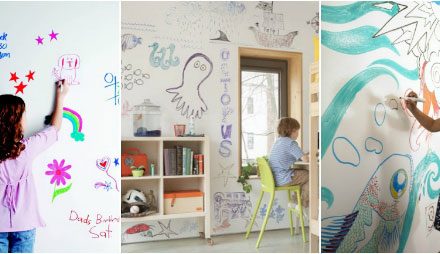
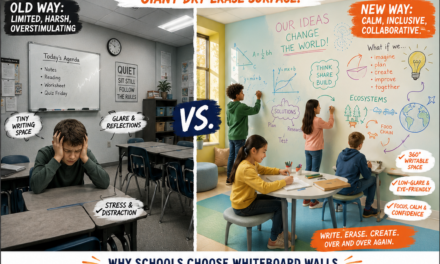
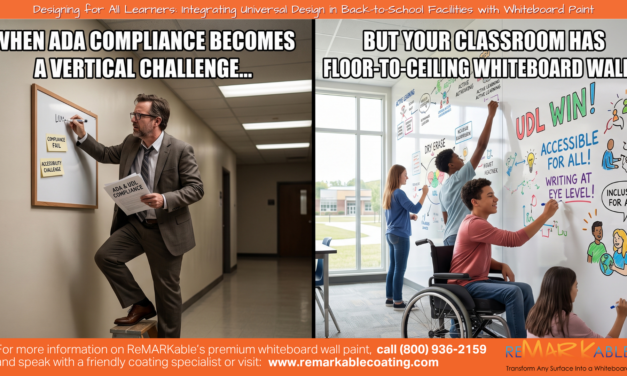
A massive whiteboard painted wall is the absolute ideal infrastructure for the collaborative station. Instead of crowding around a tiny desk and arguing over a single piece of notebook paper, students can stand together at the wall and map out their ideas on a grand, highly visible scale. This layout allows educators to easily differentiate instruction based on grade level and ability. For early childhood learners, a floor-to-waist section of the wall could be used to manipulate magnetic letters or practice gross-motor handwriting skills. Meanwhile, high school students can use the exact same surface to solve complex algebraic equations, balance chemical formulas, or diagram a physics experiment. By utilizing dry erase paint to coat multiple walls around the room, teachers can create several distinct stations, preventing traffic jams and ensuring that every single group has dedicated space to collaborate simultaneously.
Vertical Non-Permanent Surfaces (VNPS) and the Thinking Classroom
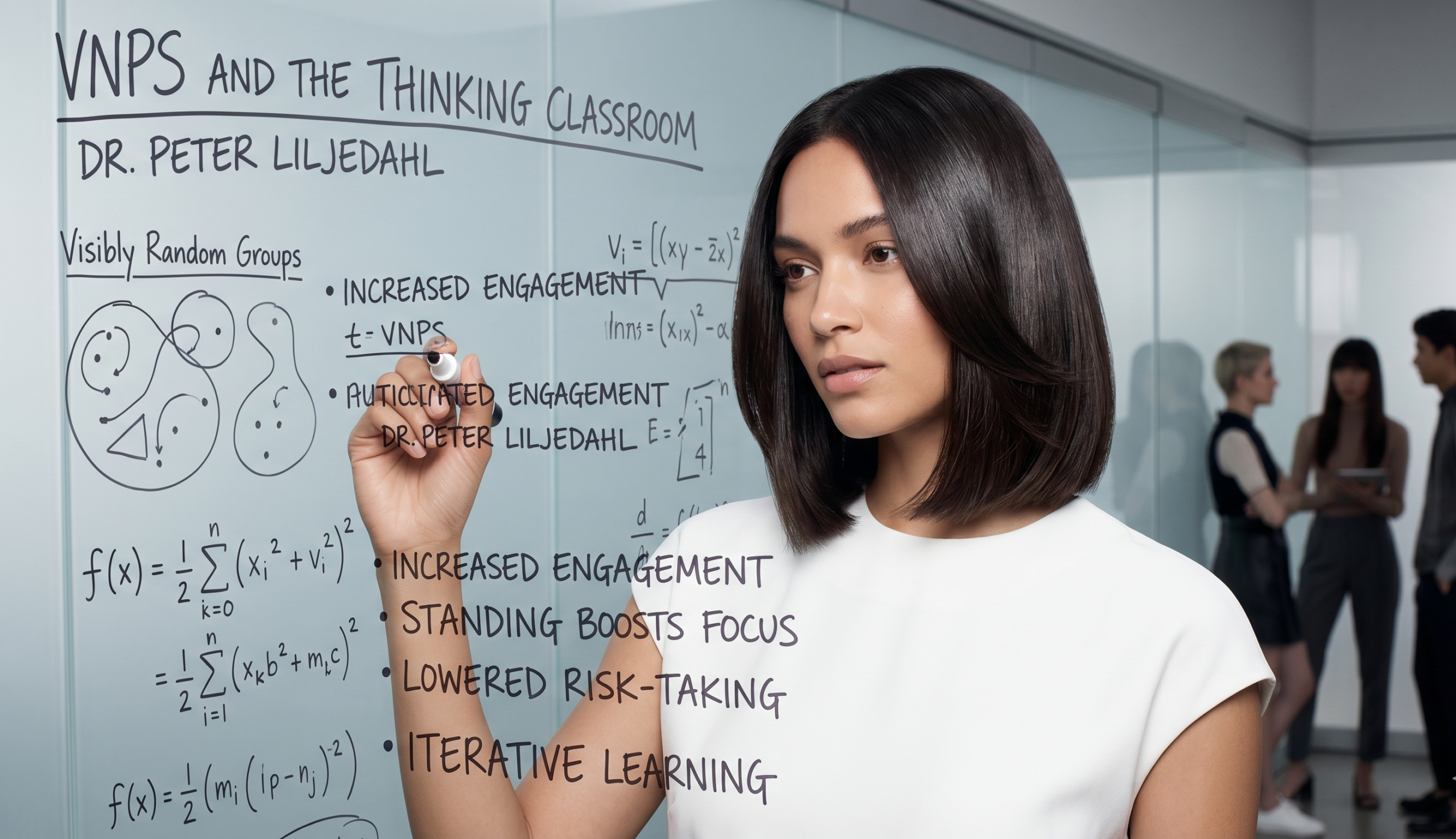
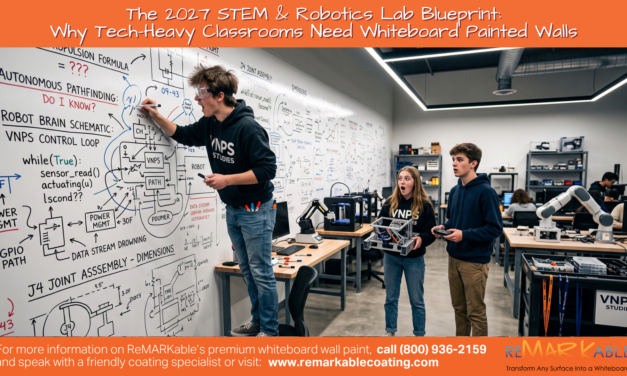
The integration of these expansive writable surfaces is heavily supported by empirical educational research, most notably the highly acclaimed “Building Thinking Classrooms” framework developed by researcher Dr. Peter Liljedahl. His extensive observational research revealed a startling reality: in standard, seated classroom settings, the vast majority of students spend their time passively mimicking the teacher’s procedures rather than engaging in authentic, difficult problem-solving. To break this cycle of passive compliance, the framework advocates for moving students out of their chairs and having them work in visibly random groups on Vertical Non-Permanent Surfaces (VNPS).
The data supporting this physical shift is remarkable. Educational studies demonstrate that when students work on vertical whiteboards, they exhibit three times more engagement within the first ten minutes compared to when they are seated at their desks. The physical act of standing is a critical component of this success; it naturally increases blood flow to the brain, which immediately improves focus, alertness, and overall physiological arousal. Furthermore, working on a vertical surface prevents students from slouching, checking out, or hiding within their groups, drastically reducing anonymity and off-task behavior. In fact, schools that transition to 360-degree writable spaces report that active student participation increases by up to 60 percent.
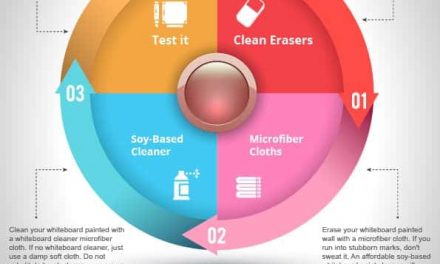
The “non-permanent” nature of these surfaces is equally important to a student’s psychological development. Because the medium is inherently erasable, it drastically lowers the psychological threshold for risk-taking. Students who suffer from severe academic anxiety or the fear of failure are far more willing to attempt a challenging mathematical concept when they know that any error can be obliterated in a second with a simple swipe of a microfiber cloth. This freedom to experiment safely encourages a continuous cycle of iteration and peer-supported learning, teaching students that making mistakes is a natural and necessary part of the learning process.
Cost-Effective DIY Classroom Hacks for Teachers
For teachers looking to implement these advanced strategies on a tight back-to-school budget, dry erase paint offers an incredible opportunity for resourceful, highly effective classroom hacks.
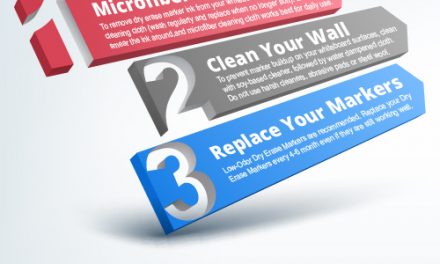
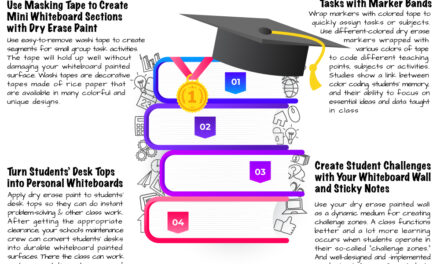
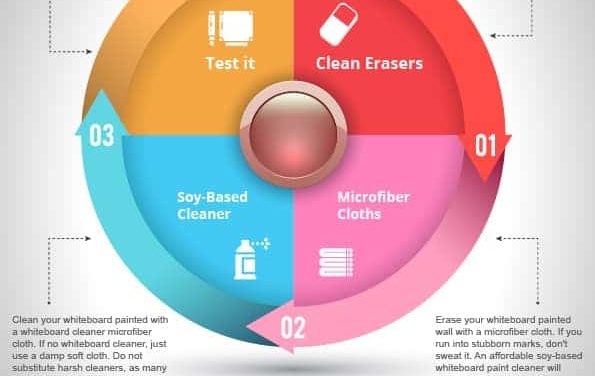
- The Washi Tape Grid: Once a wall is coated, educators can use standard masking tape or decorative washi tape to easily divide the massive surface into smaller, designated mini-sections for different groups or subjects. Considering that a standard classroom wall measuring thirty feet wide by nine feet high provides a staggering 270 square feet of continuous writing area, there is more than enough room to accommodate the entire class simultaneously. When it is time to remove or adjust the tape, teachers can simply pull it off, wipe the area with a dry microfiber cloth, apply a quick spritz of cooking spray to any leftover adhesive residue, and finish with a wet cloth to safely restore the pristine surface.
- Color-Coded Marker Bands: To improve classroom organization and memory retention, teachers can wrap the barrels of their dry-erase markers with colored tape to assign specific tasks to different groups. For example, designating blue markers specifically for English and Language Arts signals to students that it is time to transition subjects, creating a powerful visual cue that streamlines classroom management and transitions.
- Challenge-Based Learning Zones: Educators can use the expansive wall to implement Challenge-Based Learning. By dividing the surface into a “Comfort Zone,” a “Challenge Zone,” and a “Panic Zone,” students can use sticky notes to track their emotional and academic progress as they work through difficult real-world problems, encouraging vital self-reflection.
- The Desktop Makeover: Schools are saving thousands of dollars in their budgets by applying clear writable coatings directly to the tops of old student desks. This instantly transforms outdated, scratched furniture into personalized, interactive workspaces where students can jot down homework reminders or solve equations right at their seats—all for a fraction of the cost of buying brand new collaborative furniture.
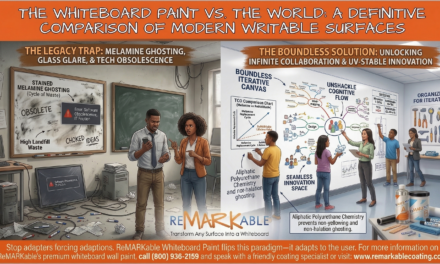
The Environmental and Budgetary Impact Beyond pedagogy and classroom management, investing in premium writable coatings addresses critical sustainability and budgetary concerns for the 2026-2027 school year. Traditional framed dry-erase boards present a significant environmental hazard. When a standard melamine or porcelain board inevitably degrades, scratches, or suffers from permanent ink “ghosting,” the entire bulky unit—including its heavy plastic and aluminum framing—is typically discarded straight into a local landfill. By contrast, a seamless whiteboard wall offers a permanent, zero-waste alternative that completely eliminates the cycle of continuous manufacturing and disposal.
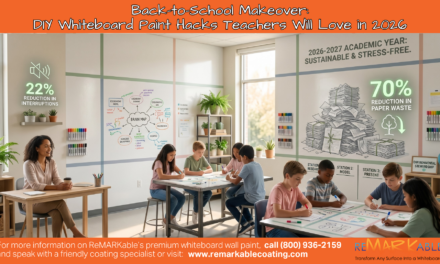
On a daily operational level, the use of these surfaces dramatically reduces an educational institution’s reliance on single-use paper. Schools that utilize writable walls and coated desks for daily practice, messy math equations, and collaborative brainstorming sessions report reducing their classroom paper waste by up to 70 percent. Because students can wipe away mistakes and edit their work directly on the wall, the need for disposable notebooks, scratch paper, and printed worksheets drops drastically, helping institutions conserve natural resources while simultaneously trimming tight district budgets.
Why ReMARKable is the Industry Standard for 2026
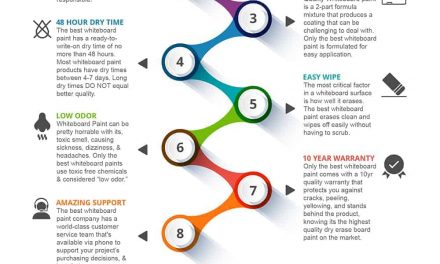
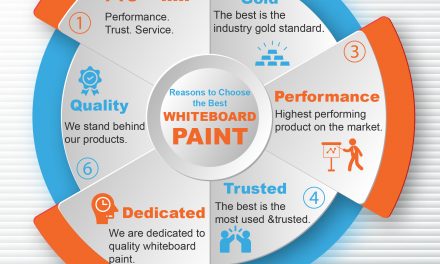
When specifying building materials for K-12 and higher education environments, safety, durability, and performance are non-negotiable priorities. ReMARKable has firmly established itself as the premier, industry-standard choice for schools due to its uncompromising, real-world tested product specifications. First and foremost is cost-effectiveness; creating a massive, seamless writable surface with this product costs approximately one-third the price of purchasing and installing a comparably sized traditional framed whiteboard. Despite the lower cost, the durability is entirely unmatched. The pro-grade formulation is guaranteed against cracking, peeling, staining, or yellowing for ten-plus years of continuous, daily classroom use.
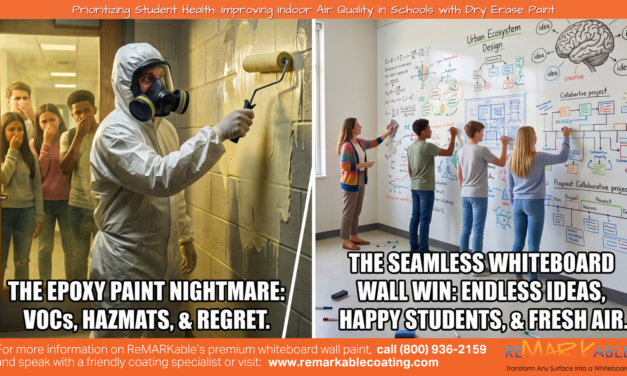
Health and safety are paramount when bringing chemical coatings into a school environment. Unlike inferior, hazardous epoxy-based paints historically used in the industry, this product features a 100 percent water-based, non-epoxy formula. It contains extremely low levels of volatile organic compounds (VOCs) and is virtually odorless—meaning it “doesn’t stink”—ensuring that classroom indoor air quality remains pristine and students do not experience headaches or dizziness during or after the application process.
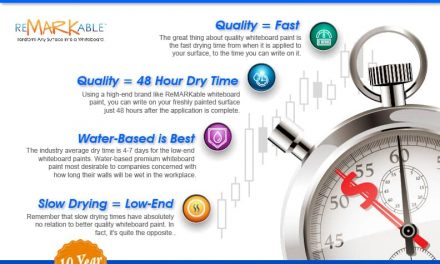
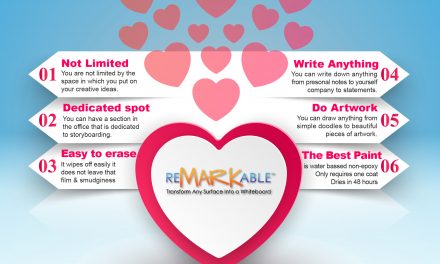
The product also features a simple one-coat advantage that saves up to 50 percent on installation effort and boasts the fastest dry-time on the market at just 48 hours, allowing school facilities teams to complete massive classroom upgrades over a single weekend. Furthermore, it is engineered to be the most glare-resistant coating available, ensuring that students sitting at various angles in brightly lit classrooms can easily read the board without suffering from eye strain. Available in both traditional white and a completely clear finish, kits range from 35 to 600 square feet, giving schools the flexibility to maintain their existing, calming neuro-aesthetic wall colors or preserve the natural wood grain on desks while adding full dry-erase functionality.
Preparing for the Future of Education
Preparing for the future of education requires a willingness to completely rethink how physical space, emerging technology, and human connection intersect. By embracing station rotations, microlearning, and the proven framework of building thinking classrooms, educators can foster a dynamic environment where students are active, eager participants rather than passive listeners. The transition away from restrictive, single-purpose furniture toward expansive, multi-functional surfaces is a critical step in this ongoing evolution. Whether you are a teacher looking to implement station rotations or an administrator aiming to boost district-wide engagement, the journey to a brighter educational future begins with premium whiteboard paint.

![Giant Leaps Forward Require Big Spaces. [Leap Year Sale Event!]](https://www.remarkablecoating.com/wp-content/uploads/2016/02/Giant-Leaps-ForwardRequire-Big-Spaces-440x264.jpg)



![30% Off St Patrick’s Day Sale! [Details Inside]](https://www.remarkablecoating.com/wp-content/uploads/2016/03/Glorious-1-440x264.png)

![Drive Your Organization Into Openness and Watch it Expand [20% Off Whiteboard Paint]](https://www.remarkablecoating.com/wp-content/uploads/2016/04/Drive-Your-Organization-Into-Openness-and-Watch-It-Expand.-1-440x264.jpg)










![ReMARKable’s Winter Sale is Here! [25% Off + Free Shipping]](https://www.remarkablecoating.com/wp-content/uploads/2018/01/Red-Tag-Winter-Fashion-Facebook-Post-1-440x264.png)



![ReMARKable Summer Sale 2018 [28% Off Whiteboard Paint]](https://www.remarkablecoating.com/wp-content/uploads/2018/06/Blue-Simple-Line-Beach-Facebook-Post-1-440x264.png)


































































































0 Comments