Meeting UDL Mandates on a Budget: Designing Neuro-Inclusive Classrooms with Whiteboard Paint
Home / News / Meeting UDL Mandates on a Budget: Designing Neuro-Inclusive Classrooms with Whiteboard Paint
Whiteboard Paint for Schools: Budget-Friendly, Neuro-Inclusive Classroom Design
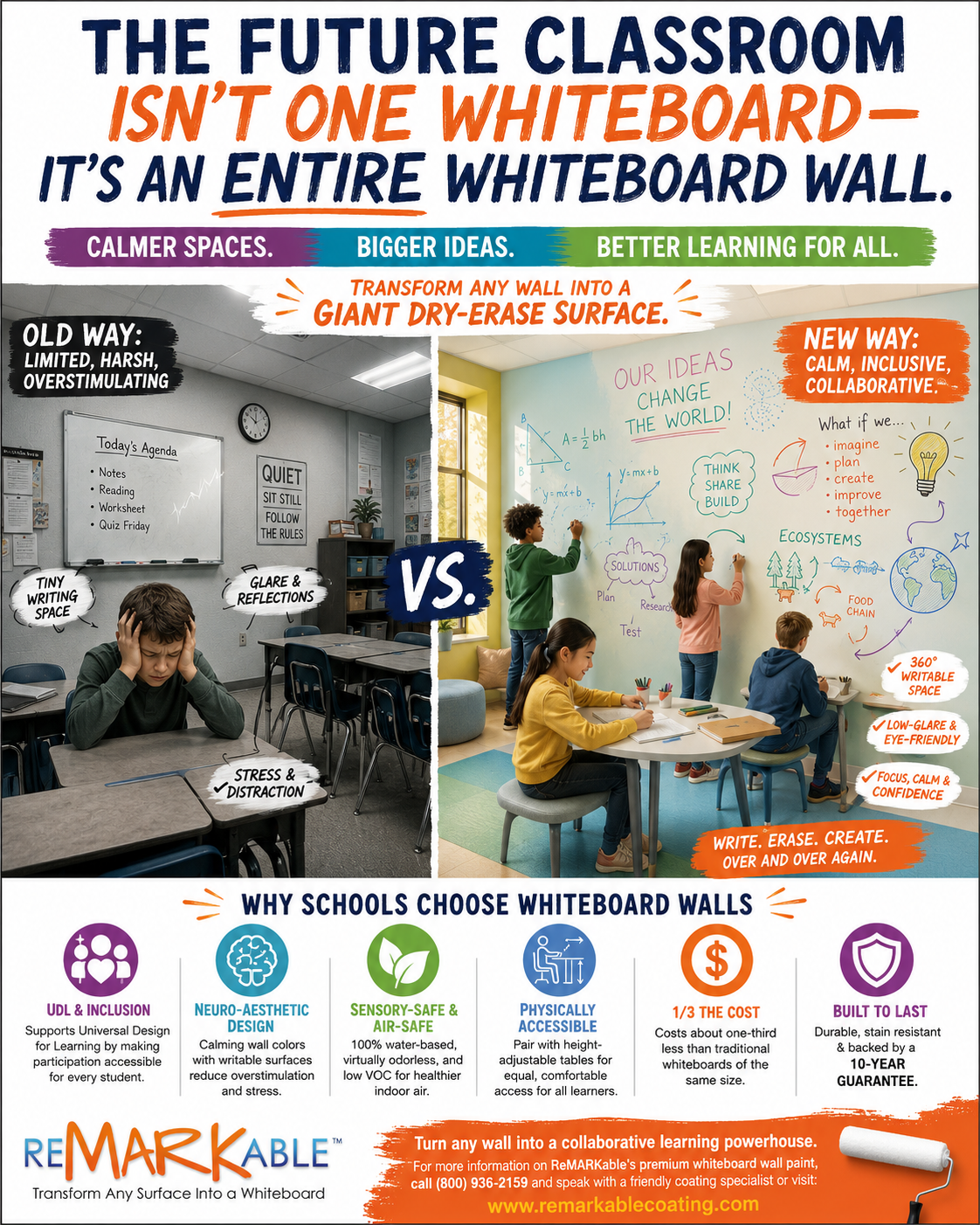
As administrators prepare for the 2026-2027 academic year, they are discovering that integrating premium whiteboard paint is the most effective and budget-friendly strategy for designing neuro-inclusive classrooms. As the educational landscape rapidly evolves, school districts are increasingly tasked with supporting a highly diverse student body, which includes a growing number of neurodivergent learners. Providing equitable access to education requires far more than simply updating textbooks or distributing digital tablets; it necessitates a fundamental rethinking of the physical learning environment itself. Administrators must balance the pressing need to meet Universal Design for Learning (UDL) mandates with the stark reality of shrinking facility budgets. The traditional “one-size-fits-all” classroom, characterized by rigid rows of desks and a single instructional focal point at the front of the room, creates invisible barriers for students who process information differently. Instead, modern pedagogy demands flexible, sensory-friendly spaces that encourage active participation without causing cognitive overload. By transforming static architectural elements into dynamic, interactive canvases, school leaders can foster an inclusive atmosphere where every student feels empowered to collaborate. This comprehensive guide explores how strategic facility upgrades—specifically the use of advanced writable coatings—can help administrators achieve these ambitious inclusion goals while maintaining strict fiscal responsibility.
The Rise of Neuro-Aesthetic Design in 2026
In recent years, the concept of neuro-aesthetics has moved from specialized architectural theory to the absolute forefront of K-12 and higher education facility planning. Neuro-aesthetics is the scientific study of how our brains and bodies respond to the visual and spatial qualities of our built environments. Researchers have confirmed that spatial design directly alters brain chemistry; the colors, textures, and lighting within a room can significantly impact a student’s emotional and cognitive state. For decades, the standard educational aesthetic relied heavily on sterile, stark white walls and harsh fluorescent lighting. While these choices were historically driven by a desire for cleanliness and uniformity, modern science reveals that they can actually be highly detrimental to student well-being. Environments lacking in visual warmth can increase cortisol levels, heightening stress and anxiety among learners.
To counteract this, the 2026-2027 design trends heavily prioritize biophilic elements and calming color palettes. Administrators are steering their facilities toward earthy, natural tones such as sage green, warm angora, and soft cocoa powder. Light pastel tones create a calm, reassuring atmosphere, while softer hues help minimize visual overstimulation. These neuro-inclusive palettes create a “cocooning” effect that helps students feel grounded and secure, effectively reducing the sensory noise that often distracts them from academic tasks. When students are relaxed and their sensory input is properly managed, their capacity for deep focus and emotional regulation increases dramatically. The challenge for administrators, therefore, is finding a way to integrate necessary collaborative tools into these spaces without disrupting the carefully curated, calming aesthetic that neurodiverse students rely upon for their daily success.
Meeting UDL Framework Mandates with Flexible Surfaces
Universal Design for Learning (UDL) is a widely adopted educational framework aimed at optimizing teaching and learning for all individuals based on scientific insights into how humans learn. UDL mandates require schools to provide multiple means of engagement, representation, and action or expression. Essentially, this means that educators must offer students various ways to absorb information and demonstrate their understanding, recognizing that neurodiverse learners may struggle with traditional paper-and-pencil assessments or static, uninterrupted lectures. Implementing UDL effectively requires a physical classroom environment that is highly adaptable and responsive to individual student needs.
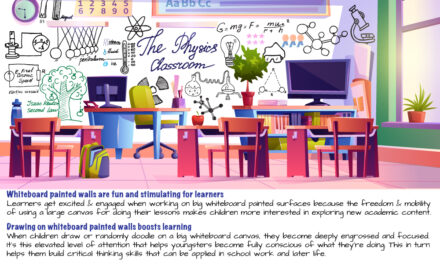
Whiteboard walls offer an incredibly powerful tool for meeting these strict UDL guidelines. By creating expansive, floor-to-ceiling writable surfaces, schools provide students with a massive, alternative medium for expression. A student who struggles to articulate their thoughts verbally or feels claustrophobic when confined by the small margins of a spiral notebook can simply stand at a massive wall and map out their ideas visually. This kinesthetic approach to learning allows students to engage their gross motor skills, which can be highly beneficial for those who have excess energy or difficulty sitting still for prolonged periods. Furthermore, the collaborative nature of these walls allows students to work together in visibly random groups, supporting diverse learning styles through peer-to-peer tutoring and shared problem-solving. By turning classroom walls into flexible learning tools, administrators can ensure compliance with UDL mandates while genuinely supporting the diverse cognitive and physical needs of their student population.
Reducing Sensory Overload with Sensory-Friendly Writable Surfaces
One of the primary concerns when designing a neuro-inclusive classroom is mitigating sensory overload. For students with autism spectrum disorder (ASD), ADHD, or sensory processing disorders, an overly stimulating environment can trigger severe anxiety and severely hinder their ability to learn. Traditional framed dry-erase boards often contribute to this problem in hidden ways. They are typically stark, glossy white rectangles wrapped in clunky aluminum frames that create a harsh visual contrast against classroom walls, and their high-gloss finish can reflect overhead LED lights, causing severe glare and eye strain.
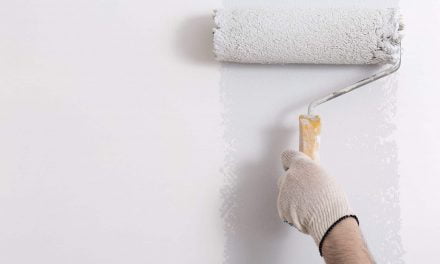
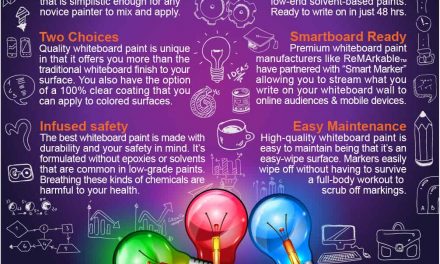
To solve this, proactive administrators are turning to innovative dry erase paint solutions. Premium manufacturers offer clear formulations that can be applied directly over any painted wall. This means a school can paint a classroom in a calming, neuro-aesthetic shade of soft green or warm taupe, and then apply the clear coating to transform that colored wall into a fully functional writable surface. This approach entirely eliminates the jarring visual interruption of bright white boards, maintaining the soothing atmosphere required for sensory regulation. Additionally, top-tier whiteboard painted walls are engineered to be highly glare-resistant. By offering a smoother, less reflective finish than cheap melamine, plastic, or glass boards, these surfaces ensure that students sitting at any angle in the room can read the text clearly without suffering from optical fatigue or distracting light reflections that can derail a lesson.
Visualizing the “Writable Future” and Global Consciousness
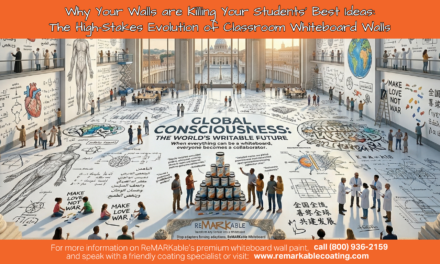
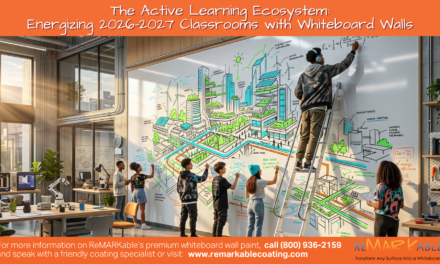
When analyzing the ultimate potential of these inclusive educational spaces, we can look to the emerging architectural concept of the “Writable Future,” beautifully visualized in contemporary educational design renderings. Imagine stepping into a grand, expansive school hall flooded with natural light, where the traditional, restrictive boundaries of learning have been completely erased. In this visionary environment, the entire floor and all the structural architectural walls are pristine, covered in intricate dry-erase marker drawings. We see a vibrant, chaotic tapestry of collaborative thought: complex math equations intertwining with highly detailed anatomical diagrams, sprawling solar systems, and intricately drawn global maps. Scattered throughout this vast, open room are dozens of diverse students, educators, and professionals actively standing, conversing, and drawing together in perfect harmony.
This scene perfectly illustrates the concept of “Global Consciousness” in education—the profound realization that when everything can be a whiteboard, everyone becomes an active collaborator. By removing the aluminum frames and confined spaces of traditional boards, administrators literally tear down the walls that silo student thinking. In a neuro-inclusive classroom modeled after this writable future, there is no distinct “front” of the room where a teacher dictates information to a passive audience. Instead, knowledge is totally decentralized. Students of all abilities and backgrounds have the physical space to contribute their unique perspectives. The vastness of the canvas easily accommodates the sprawling, non-linear thought processes of neurodivergent learners, allowing them to connect ideas across various disciplines—from science and geography to art and mathematics—without ever running out of room to express themselves.
Physical Accessibility and Inclusive Furniture
True neuro-inclusive design must also thoroughly account for physical accessibility, ensuring that students with mobility challenges or specific postural needs have equal access to collaborative tools. UDL mandates emphasize that learning materials must be physically accessible to everyone in the room. Traditional whiteboards, which are permanently mounted at a standardized height, often inadvertently exclude younger students, individuals utilizing wheelchairs, or those who require seated learning stations due to physical limitations.
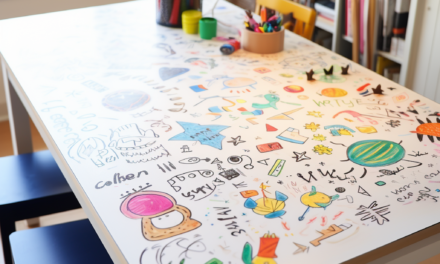
To bridge this gap, proactive administrators are extending the application of writable coatings far beyond the classroom walls. By using advanced dry erase paint to coat the tops of height-adjustable student desks and multi-use group tables, schools can bring the interactive learning experience directly to the student’s level. Writeable surfaces, particularly height-adjustable whiteboards or desks, allow all learners, especially those with mobility challenges, to participate comfortably and safely. This ensures that a student with physical disabilities can actively participate in a group brainstorming session without needing to reach uncomfortable heights or navigate crowded classroom perimeters. Furthermore, writing directly on a desk provides an immediate, tactile outlet for neurodiverse students who benefit from constant doodling or sketching as a form of sensory regulation and focus enhancement.
Ensuring Safe Indoor Air Quality
Another critical, yet frequently overlooked, component of neuro-inclusive design is indoor air quality. Students with sensory processing differences are often hyper-sensitive to their physical environments, including olfactory stimuli. Harsh chemical smells can be incredibly distracting, overwhelming, and even physically sickening for these young learners. Historically, the facility coatings industry relied heavily on strong, epoxy-based paints that emitted high levels of toxic Volatile Organic Compounds (VOCs) and required classrooms to be heavily ventilated and vacated for days during the curing process.
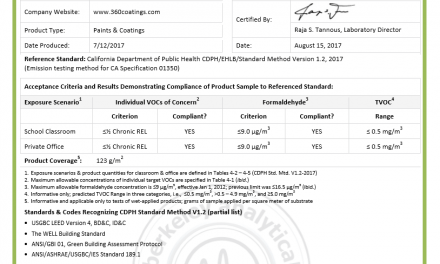
For modern school administrators, introducing these hazardous chemicals into a learning environment is completely unacceptable. Fortunately, premium whiteboard paint has revolutionized the application process. Industry-leading products feature a 100% water-based, non-epoxy formula. These advanced coatings have extremely low VOC levels and are virtually odorless. Because the product “doesn’t stink,” it ensures the classroom’s indoor air quality remains pristine, preventing students from experiencing headaches, dizziness, or sensory distress during and after the application. This unwavering commitment to environmental safety ensures that the transition to an active learning space supports the holistic health of every individual in the building.
High-Impact Budget Optimization for Administrators
While the pedagogical and psychological benefits of neuro-inclusive design are undeniable, administrators ultimately have to justify the financial investment to school boards, superintendents, and taxpayers. In an era of shrinking educational budgets and rising operational costs, retrofitting entire campuses to meet UDL mandates can seem fiscally daunting. Replacing old classroom infrastructure with interactive digital smartboards or specialized sensory furniture often runs into the tens of thousands of dollars per room, making widespread implementation impossible for many public school districts.
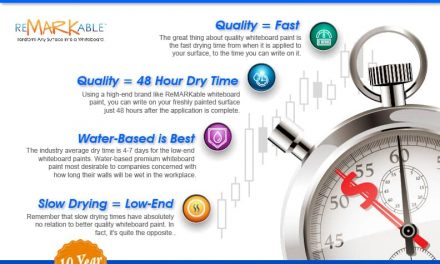
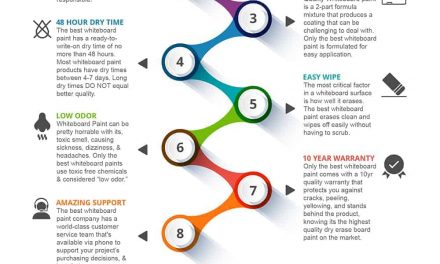
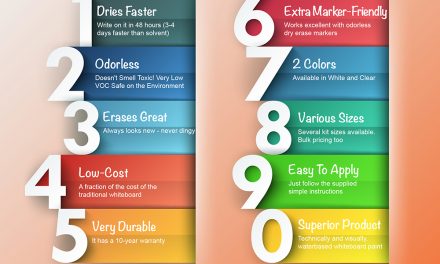
This is exactly where the strategic procurement of writable coatings provides unmatched administrative value. Creating a massive, seamless, floor-to-ceiling collaborative surface using high-quality whiteboard paint costs approximately one-third the price of purchasing and installing a comparably sized traditional whiteboard. Furthermore, the installation process is highly efficient and labor-friendly. The simple one-coat advantage of these premium systems can save facilities teams up to 50% on installation effort. Combined with the fastest dry-time on the market at just 48 hours, school maintenance crews can easily complete comprehensive classroom upgrades over a single weekend, resulting in zero disruption to the busy academic calendar.
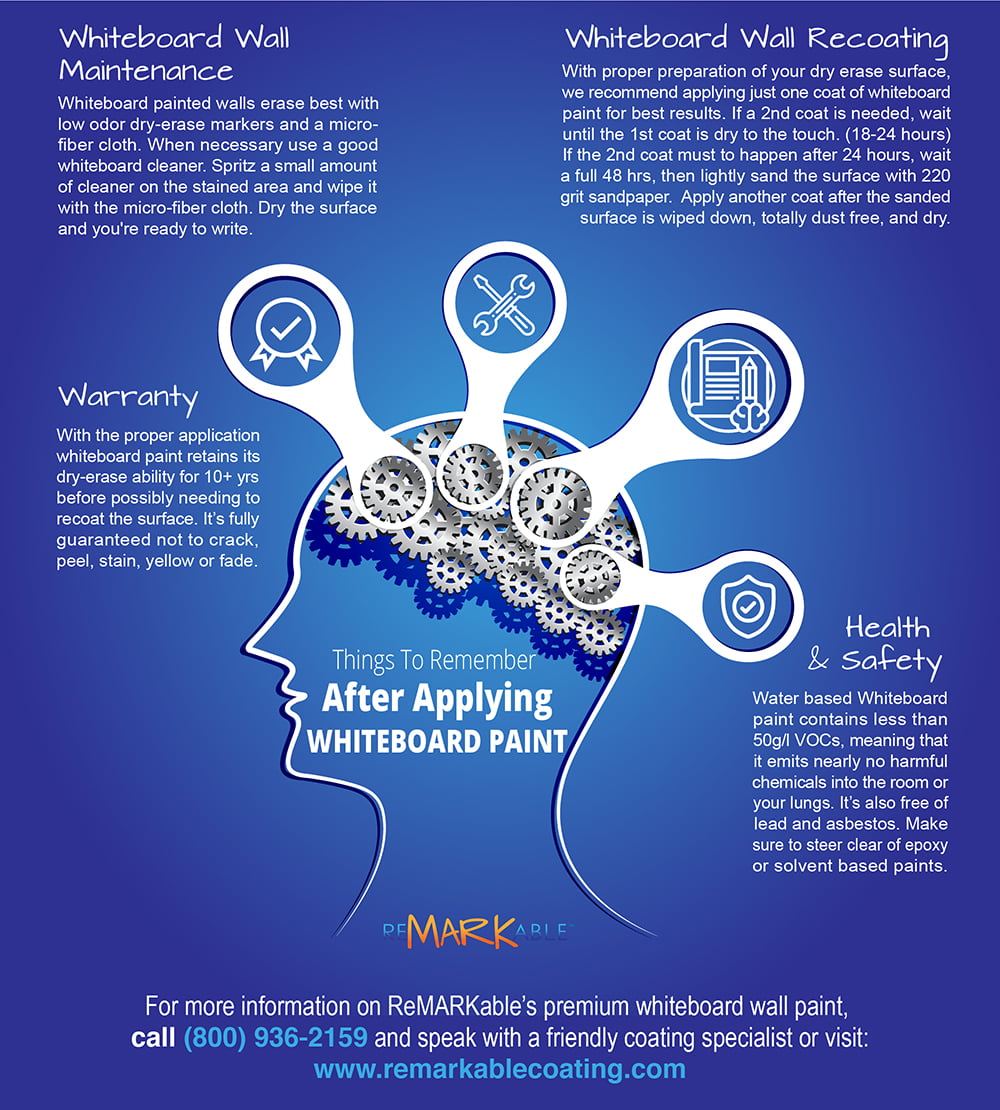
From a long-term budget perspective, the durability of these surfaces is a massive financial asset. Pro-grade, water-based formulations are engineered to withstand the rigorous wear and tear of daily student use and are backed by an extensive 10-year guarantee. Unlike cheap melamine boards that succumb to permanent marker ghosting and require frequent, costly replacement, these painted surfaces will not crack, peel, stain, or yellow over time. Additionally, schools using these expansive surfaces report drastically reducing their reliance on single-use paper, notebooks, and printed worksheets, resulting in immediate financial savings in the supply budget. By making a single, cost-effective investment in durable coatings, administrators essentially future-proof their classrooms, eliminating the recurring capital expenses associated with replacing degraded classroom equipment.
As we look toward the future of education, it is clear that meeting Universal Design for Learning mandates and supporting neurodiverse students need not drain a school district’s financial reserves. By actively embracing neuro-aesthetic principles, prioritizing safe indoor air quality, and maximizing the physical accessibility of the learning environment, school administrators can cultivate spaces that truly empower every single learner. Turning ordinary walls and height-adjustable desks into boundless canvases sparks a “Global Consciousness” that democratizes education and makes peer collaboration a daily reality. Ultimately, for districts seeking to elevate student outcomes while strictly managing their operational budgets, the journey to a brighter, more inclusive educational future begins with premium whiteboard paint.
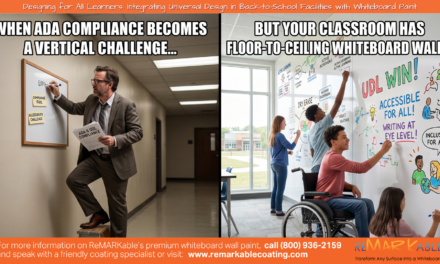
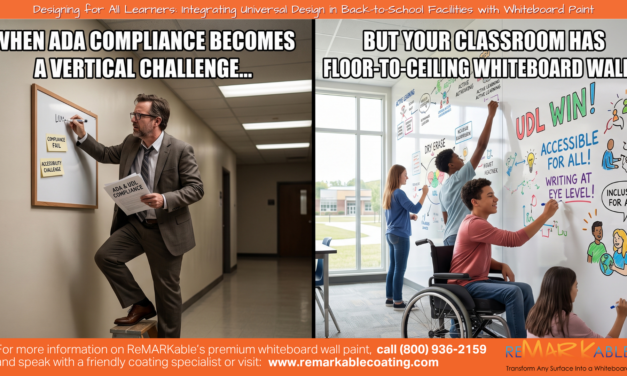
Struggling to meet Universal Design for Learning (UDL) mandates on a tight district budget? Discover how upgrading to seamless whiteboard painted walls helps schools create fully inclusive, accessible, and neuro-diverse learning environments. Learn how continuous writing surfaces support all students while protecting your facility’s budget!
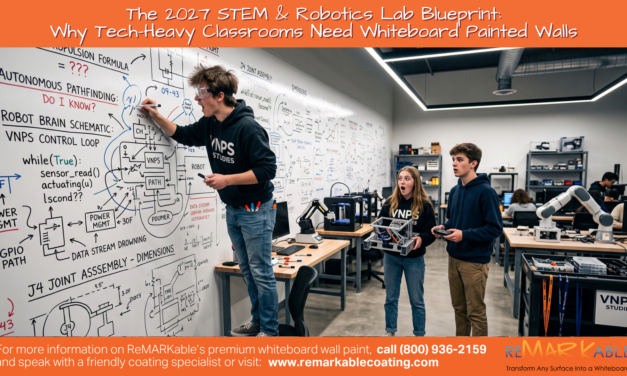
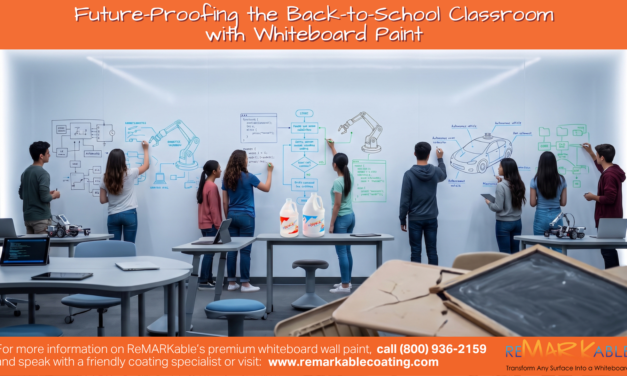
Traditional classrooms and small whiteboards cannot handle the complex demands of modern high school STEM labs and robotics workshops. Discover how upgrading to seamless whiteboard painted walls creates a 360-degree collaborative R&D workspace, bridging digital coding with physical design while eliminating classroom clutter and maximizing your district’s budget!
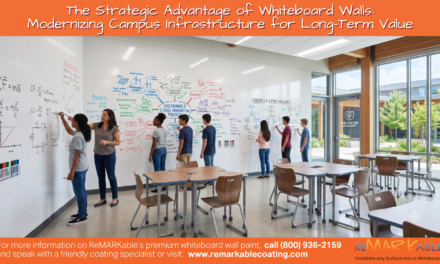
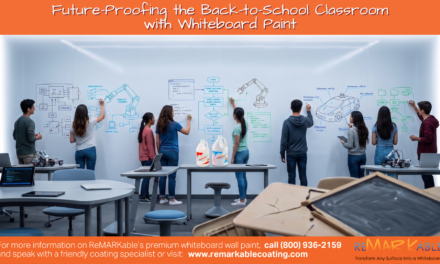
Are traditional classrooms built to handle the rapidly changing demands of modern education? Discover how future-proofing your school with seamless whiteboard paint creates flexible, tech-integrated, and highly durable learning spaces. Learn how upgrading to continuous, floor-to-ceiling writing surfaces prepares K-12 and higher ed institutions for the next generation of academic excellence!
September brings a powerful shift in energy. Discover how to use whiteboard painted walls to capture the season of change with curated quotes for Labor Day, back-to-school, and Q3 goal-setting. Refresh your environment, celebrate the start of autumn, and keep your space inspired all month long!
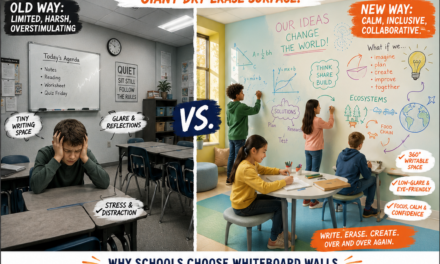
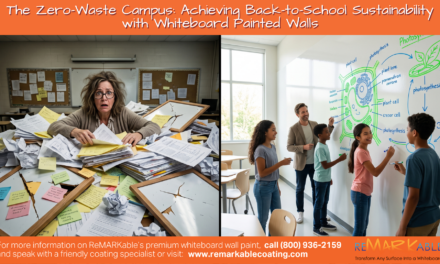
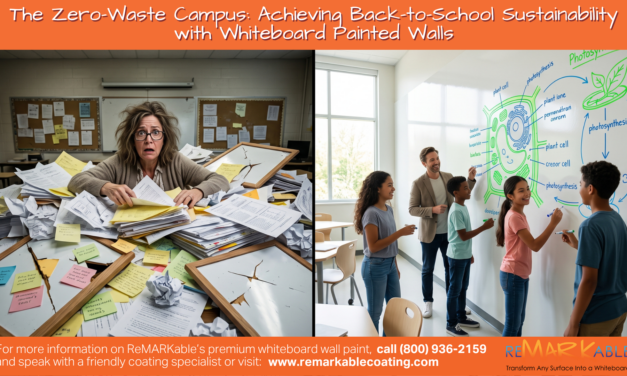
Drowning in paper waste and replacing ghosted boards every year? Discover how upgrading to seamless whiteboard painted walls helps schools achieve true back-to-school sustainability. Learn how to eliminate single-use paper, reduce landfill waste, and build a permanent, eco-friendly infrastructure that protects both the environment and your district’s budget!
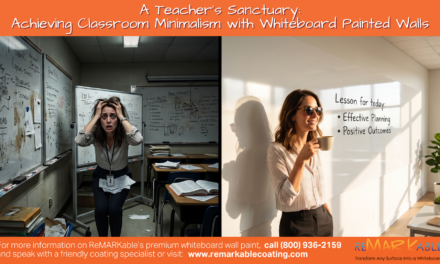
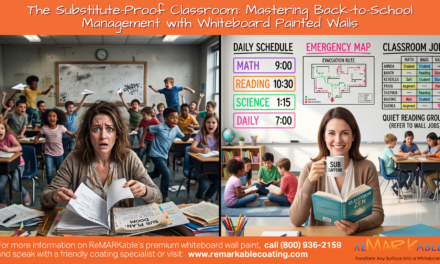
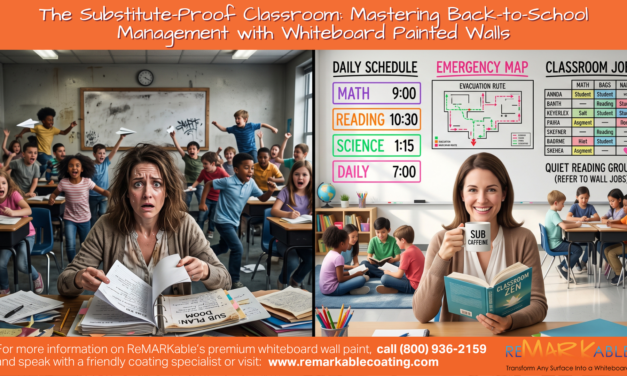
Tired of classroom chaos when you’re out sick? Discover how upgrading to seamless whiteboard painted walls helps educators build a substitute-proof command center. Learn how to visually anchor daily routines, delegate student jobs, and map emergency protocols so your classroom runs itself flawlessly—even when you aren’t there!
Struggling to meet Universal Design for Learning (UDL) mandates on a tight district budget? Discover how upgrading to seamless whiteboard painted walls helps schools create fully inclusive, accessible, and neuro-diverse learning environments. Learn how continuous writing surfaces support all students while protecting your facility's budget!




![Giant Leaps Forward Require Big Spaces. [Leap Year Sale Event!]](https://www.remarkablecoating.com/wp-content/uploads/2016/02/Giant-Leaps-ForwardRequire-Big-Spaces-440x264.jpg)



![30% Off St Patrick’s Day Sale! [Details Inside]](https://www.remarkablecoating.com/wp-content/uploads/2016/03/Glorious-1-440x264.png)

![Drive Your Organization Into Openness and Watch it Expand [20% Off Whiteboard Paint]](https://www.remarkablecoating.com/wp-content/uploads/2016/04/Drive-Your-Organization-Into-Openness-and-Watch-It-Expand.-1-440x264.jpg)
















![ReMARKable’s Winter Sale is Here! [25% Off + Free Shipping]](https://www.remarkablecoating.com/wp-content/uploads/2018/01/Red-Tag-Winter-Fashion-Facebook-Post-1-440x264.png)



![ReMARKable Summer Sale 2018 [28% Off Whiteboard Paint]](https://www.remarkablecoating.com/wp-content/uploads/2018/06/Blue-Simple-Line-Beach-Facebook-Post-1-440x264.png)














































































































































0 Comments