
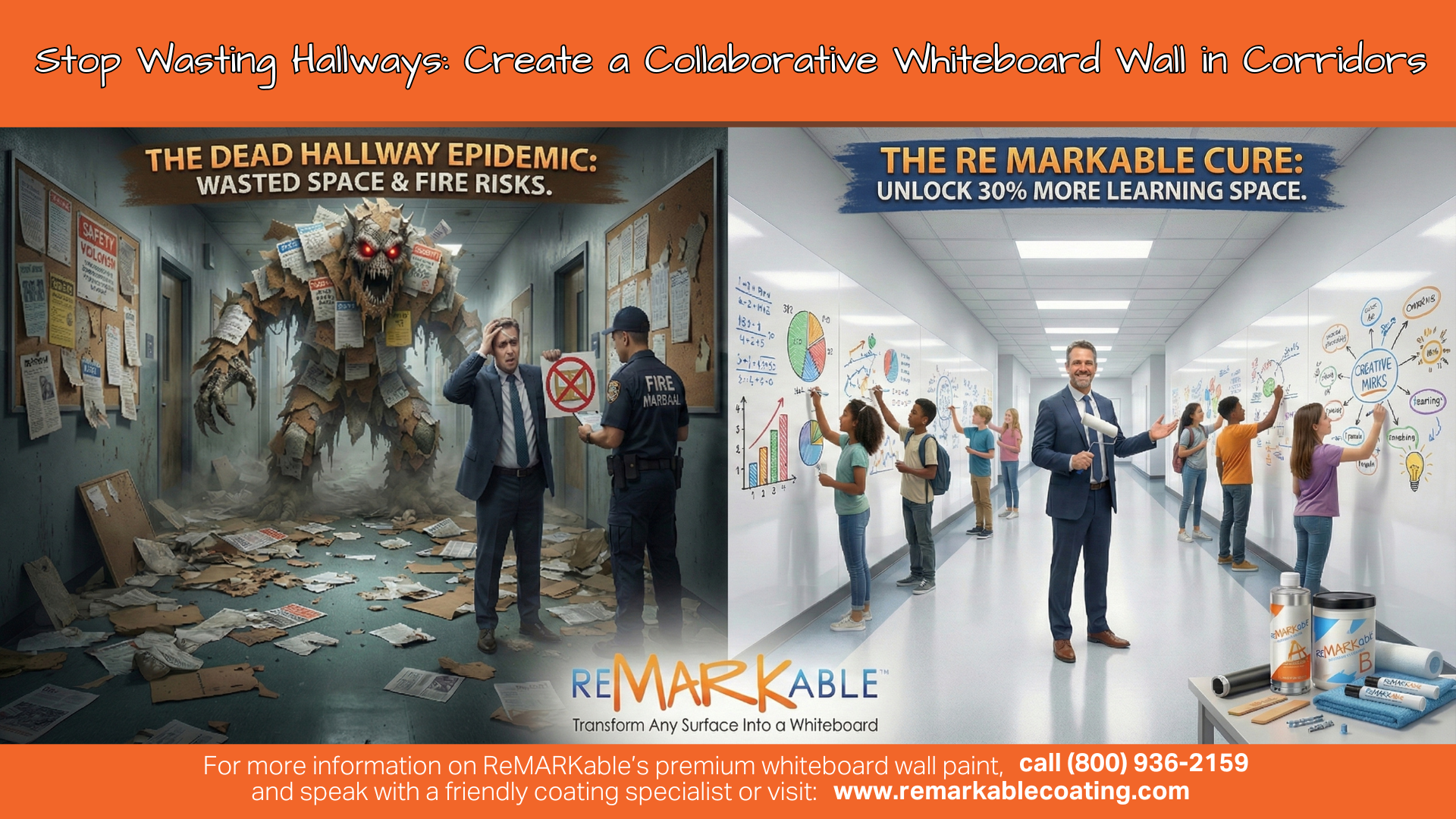
Creating Collaborative Whiteboard Walls in Your School Corridors
The use of dry erase paint for schools can extend beyond classroom walls to virtually any smooth, flat surface, including school corridor learning spaces. A key aspect of educational facility management is making optimal use of all available interior areas for learning. And some of the most plentiful of these areas are hallways.
If you’re looking for school hallway ideas to revamp your building’s aesthetics, you can add practicality to the mix by installing whiteboard paint. That way, you’ll improve the look of your corridors and provide greater learning opportunities for your students at the same time.
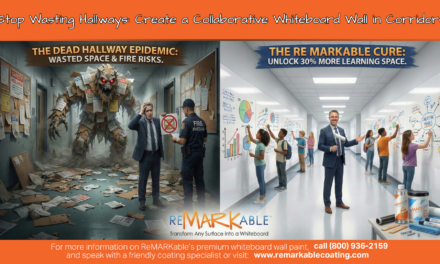
Today, most schools need more instructional space, yet administrators ignore the hallways that make up 30% of their buildings’ interiors. Pedagogy in the twenty-first century is moving toward using “breakout areas,” spaces without a specific purpose, such as hallways to serve students’ randomly occurring needs.
For instance, groups of learners can “break out” into the hallways after class for quick brainstorming sessions on class assignments, problem-solving, or projects. This way, students don’t just learn at their desks; they learn in groups by interacting and collaborating on spacious vertical surfaces.
In this post, we’ll show you how to safely turn your corridors into “the third teacher” without the need for major remodeling. Use your summer maintenance window to transform your school’s dead corridors into active learning centers using whiteboard paint.
The “Third Teacher”: Why Hallways Are the New Classrooms
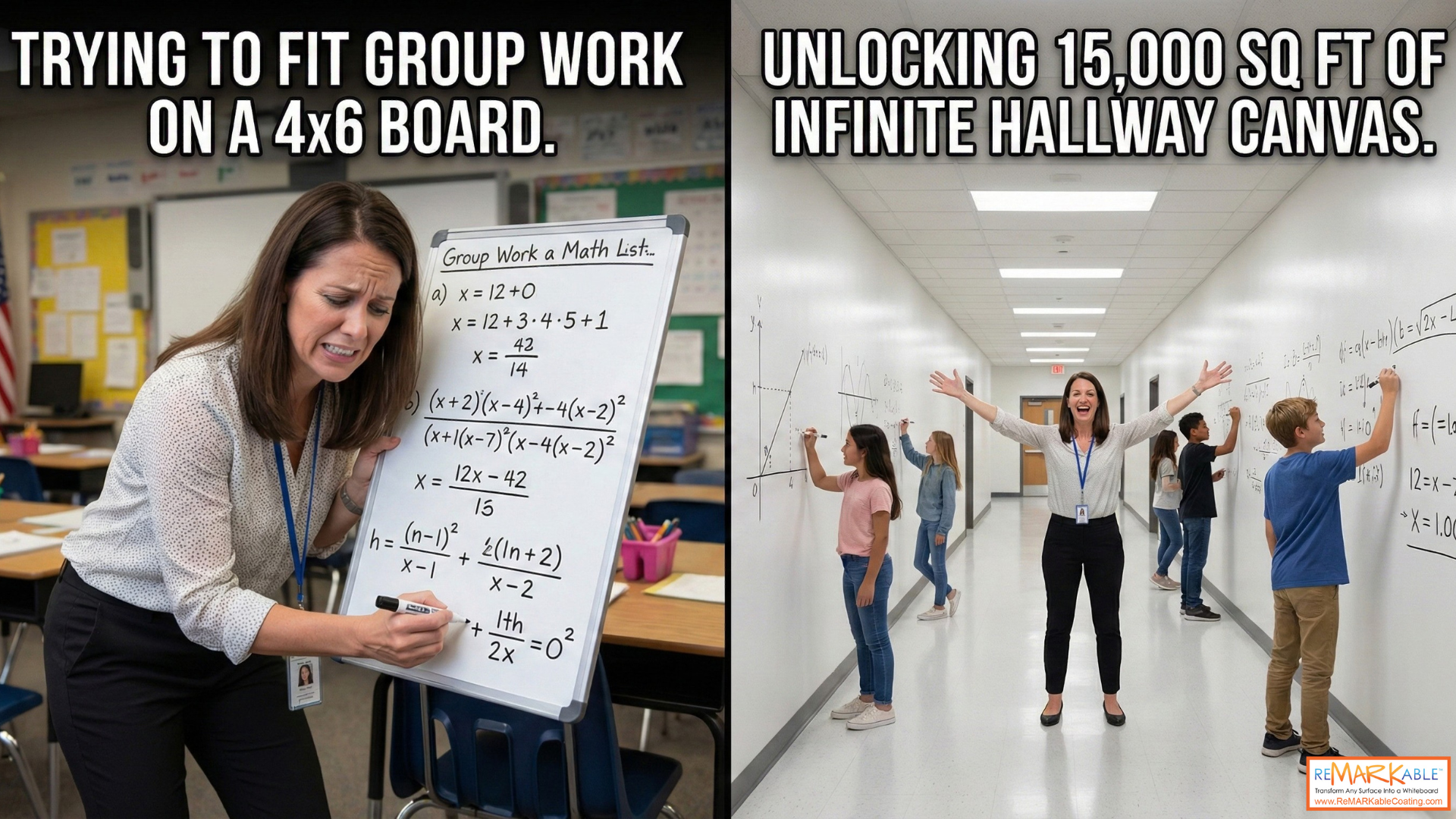
In current educational theory, the environment is seen as central to making learning meaningful for students. For this reason, the environment is referred to as the “third teacher,” the first being the parents and the second being the classroom teacher. The school setting should thus be functional, beautiful, and reflective of children’s learning.
It’s the child’s interactions with parents, teachers, and the environment that trigger knowledge acquisition. So, instead of keeping students glued to their desks, teachers can send small groups into the hallway to work on whiteboard walls.
This approach aligns with the concept of the “gallery walk,” a discussion technique in which students get out of their seats and engage actively. The advantage of this method is its flexibility and the range of benefits it offers students and instructors alike, such as enhanced creativity.
A gallery walk can be conducted with computers, with pieces of paper on tables, with posted chart paper, or with whiteboard walls. It can be scheduled for fifteen minutes, for a whole class period, or for several class periods. For students, it provides a chance to share thoughts in a more intimate, supportive setting than a large, anonymous classroom. For teachers, it offers an opportunity to assess how well students’ comprehend specific concepts and to challenge erroneous thinking. Learners can leave their work up on the walls for the whole school to see, thus promoting a sense of community and pride.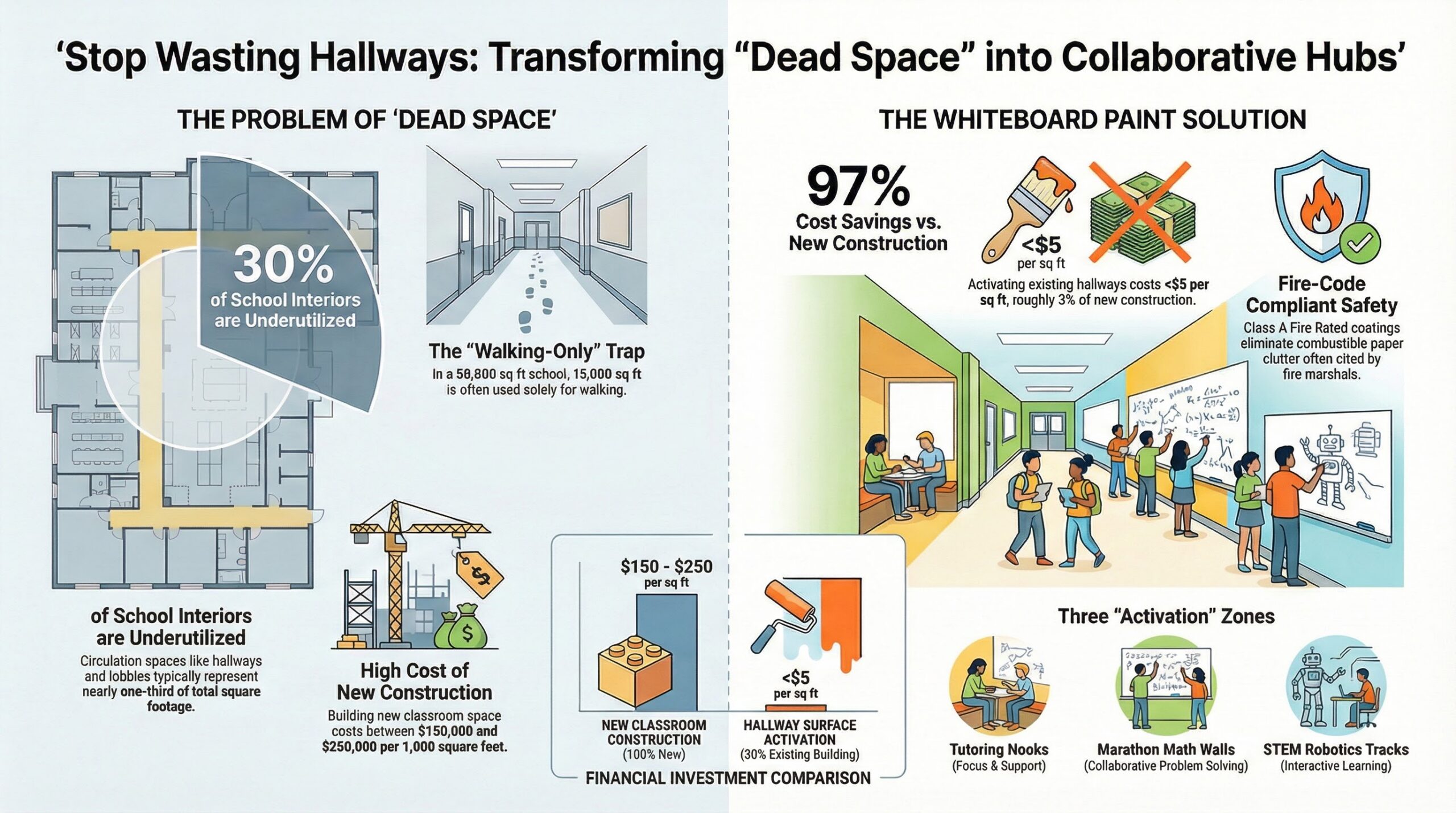
The “30% Dead Space” Statistic
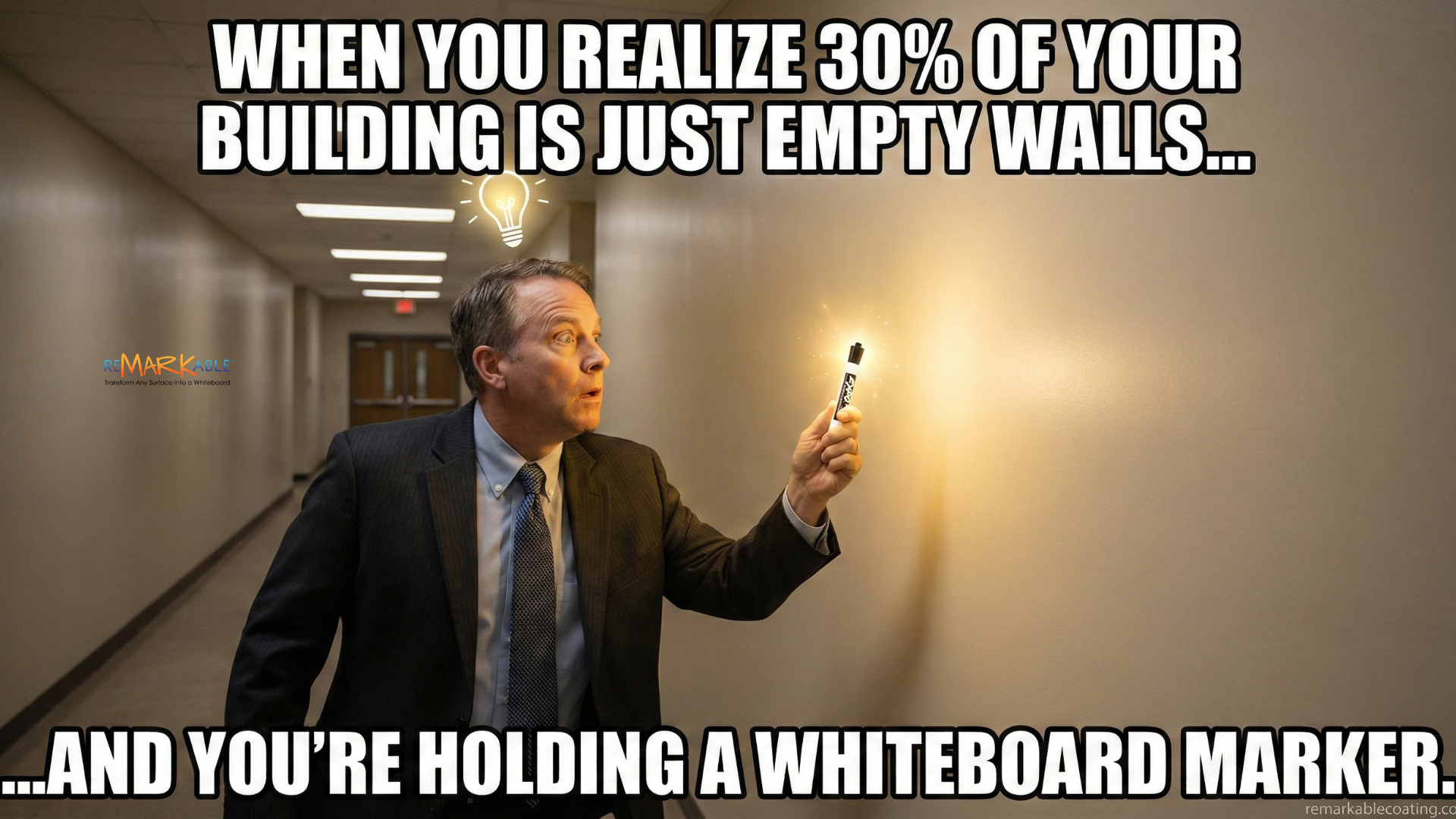
- Fact: According to standard architectural metrics and the National Center for Education Statistics, circulation space (hallways, lobbies, and stairwells) typically takes up 25% to 30% of a school’s total square footage.
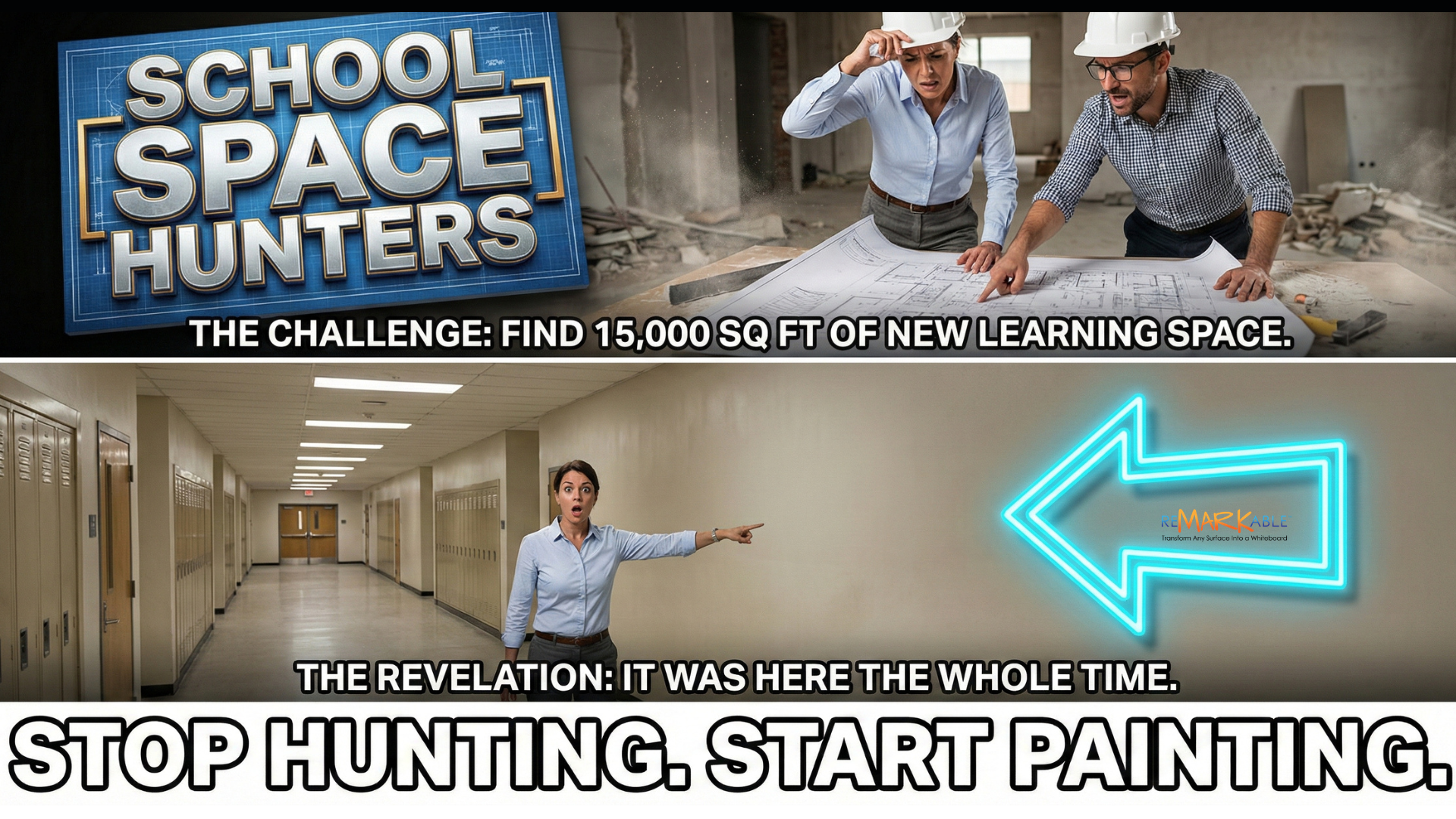
- The Argument: In a 50,000 sq ft school, that means 15,000 sq ft of space is used only for walking. If you aren’t utilizing this area for instruction, you’re wasting a third of your building’s potential.
Fire Code and Safety: Why Dry Erase Paint Beats Bulletin Boards
Another crucial point for school administrators to consider is safety.
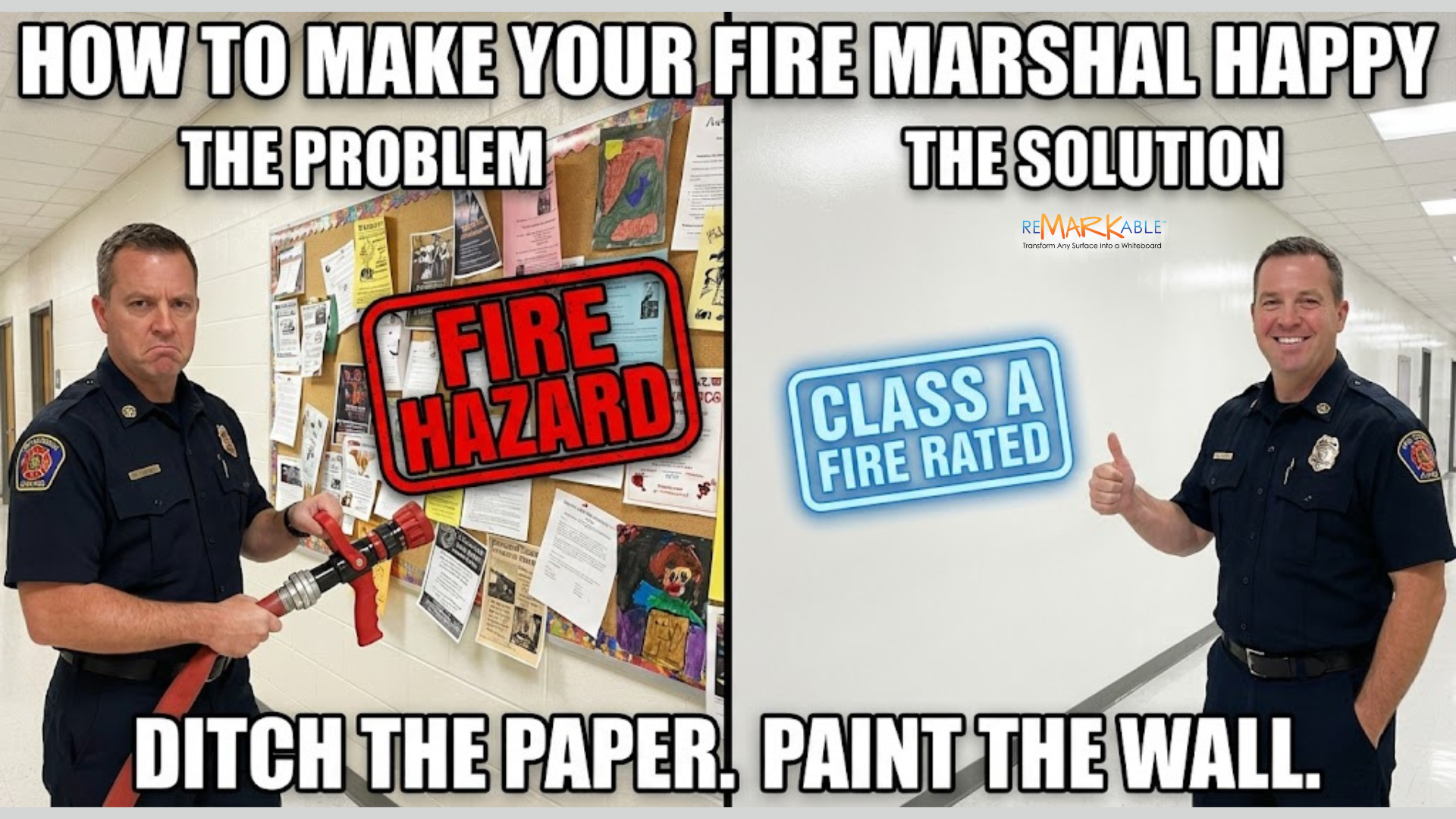
- The Danger: Fire marshals hate bulletin boards covered with paper (i.e., combustible loads). For this reason, they’re often cited in safety inspections.
- The Upgrade: Dry erase paint creates a zero-paper, zero-clutter surface. It eliminates the “fuel” (paper) from the walls while still allowing students’ work to be clearly displayed.
- Compliance: High-quality coatings such as premium dry erase paint are Class A Fire Rated, making them the safest choice for coating walls in egress corridors.
- The Code: The National Fire Protection Association 101 Life Safety Code strictly limits the amount of wall area that can be covered by combustible materials such as paper or cork bulletin boards in exit corridors. In many jurisdictions, this is limited to 10% or 20% of the wall area to prevent the spread of fire.
- The Solution: ReMARKable Whiteboard Paint is a surface finish, not a hanging mass of combustible material.
It allows schools to display students’ work and have handy writing surfaces without violating the fire code limit on paper decorations. Whiteboard paint thus allows for compliance with local safety codes without sacrificing students’ learning opportunities and creativity.
Cost of “New Space” vs. “Activated Space”
- New Construction: In the United States, the cost of construction runs from $150,000 to $250,000 for a standard 1,000-square-foot classroom.
- Activation: Coating a school hallway wall with whiteboard paint costs <$5 per square foot.
- ROI: Thus, with dry erase paint you gain a large amount of additional instructional space for approximately 3% of the cost of building a new classroom.
- The Solution: Use the summer maintenance window to transform your school’s unexploited corridors into active learning hubs using Whiteboard Paint.
Three Hallway Zones You Can Activate This Summer
-
Zone 1: The “Breakout Nook”
- Idea: Coat the small recessed areas near lockers or water fountains with dry erase paint. Add a standing-height table. Now it’s a tutoring spot.
-
Zone 2: The “Math Marathon” Wall
- Idea: Paint a long, continuous whiteboard wall (20+ feet) in a main corridor. Use it for “vertical math” relays or timelines in history classes.
-
Zone 3: The “STEM/Robotics” Test Track
- Idea: Paint the floor and the lower wall with durable whiteboard paint so robotics clubs can map out paths and record data during test runs.
The Summer Strategy: Execute This Project in July
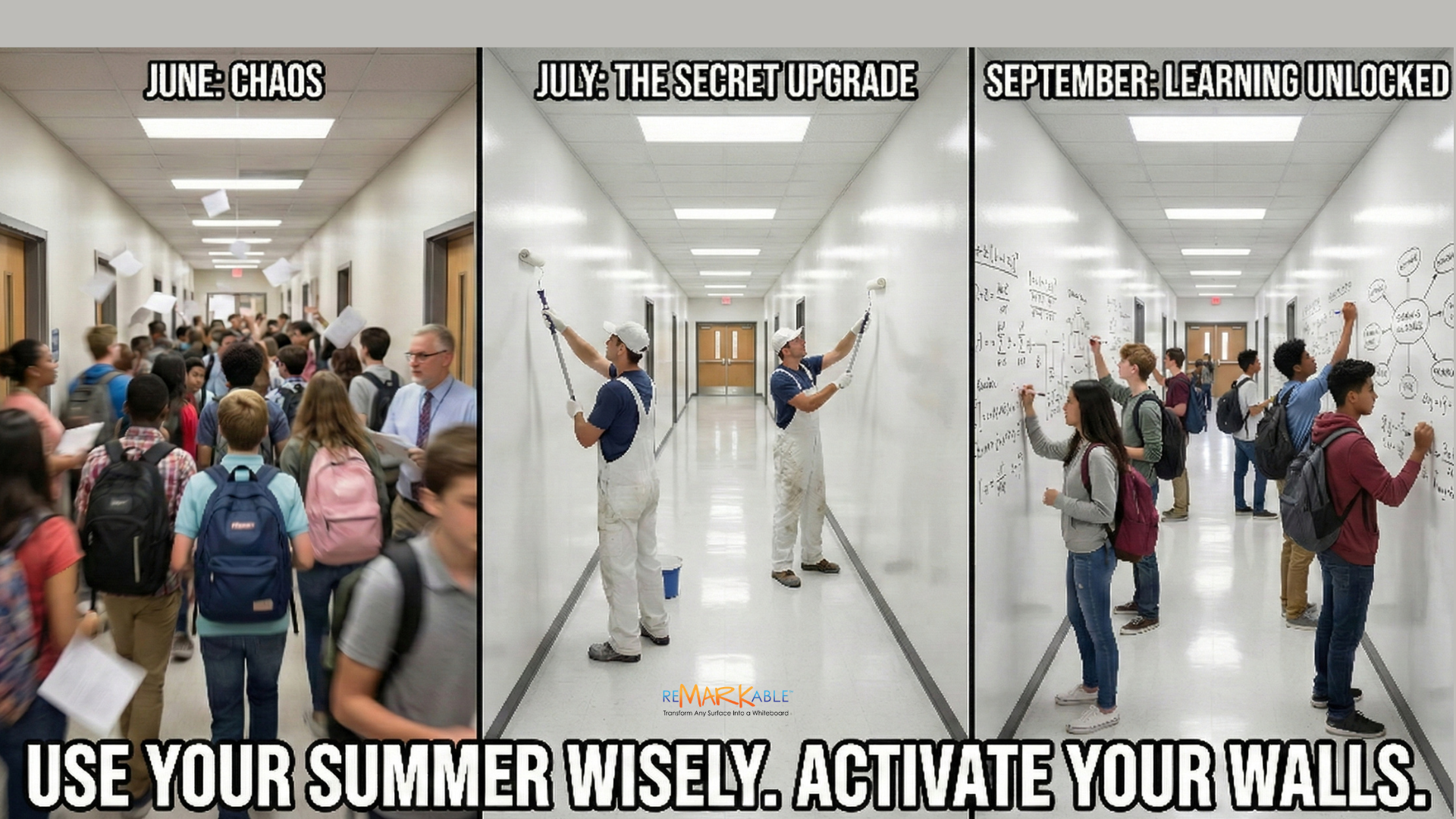
- Timing: Summer is non-negotiable (hallways must be empty for prep and painting).
- Durability: Corridors are high-traffic areas, and whiteboard paint is scuff-resistant and easier to clean than matte paint, which tends to hold dirt.
- Budget: Compare the cost of this upgrade (Paint + Labor) vs. buying portable room dividers or furniture.
You don’t need to build an addition to your building to get more space for learning. You need to unlock the space you already have. So, don’t let your hallways sit unused for another year. Request a Facility Volume Quote for ReMARKable Whiteboard Paint and activate your corridor walls this summer in preparation for September.
FAQs: Managing Whiteboard Walls in High-Traffic Corridors
Q: Will marker ink ruin students’ clothes as they walk by?
- A: To address this common fear, use the following design solution:
The “Wainscoting” Method: Apply the whiteboard paint 30 inches off the floor (above hip height) or install a chair rail. This prevents backpacks and clothing from rubbing against the writing surface.
Q: Are these walls durable enough to handle impact from backpacks and locker doors?
- A: Yes. ReMARKable cures into a hard, non-porous covering. It’s actually more resistant to scuffs and scratches than standard matte latex wall paint. The coating thus acts as a protective shield for the drywall underneath.
Q: Who is responsible for cleaning the hallway whiteboard walls?
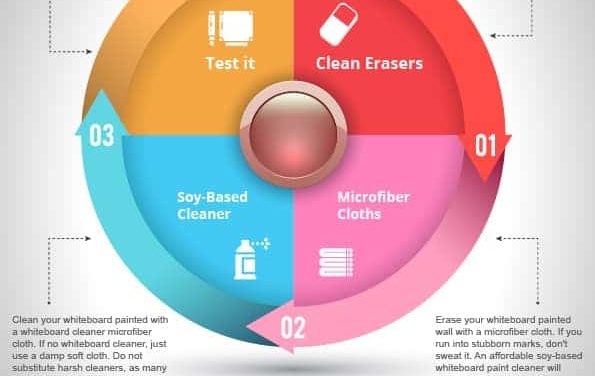
- A: You can implement a shared responsibility model. Students wipe off their own work after class, and the custodial staff does a quick spray-and-wipe of the walls during their evening rounds, just like they would when sanitizing a water fountain.
Q: Can we paint over brick or textured concrete block (CMU)?
- A: Many older schools have cinder block hallways. Since whiteboard paint requires a smooth surface, you can’t paint directly over raw cinder block. You need to apply a “block filler” or surfacer first to smooth it out, then apply the dry erase coating.
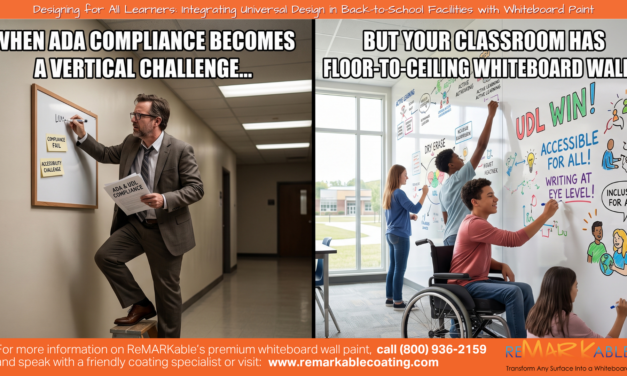
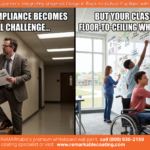
Q: Do whiteboard walls comply with Americans with Disabilities Act (ADA) requirements?
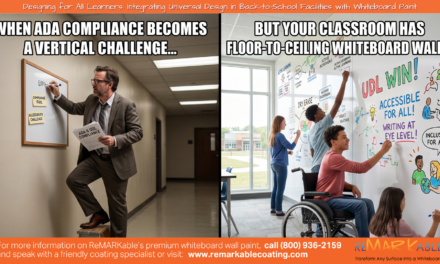
- A: Yes. Floor-to-ceiling whiteboard walls are actually more accessible than hung whiteboards because they allow students in wheelchairs to write at their own comfortable height, rather than trying to write on a board mounted too high for them to reach.



![Giant Leaps Forward Require Big Spaces. [Leap Year Sale Event!]](https://www.remarkablecoating.com/wp-content/uploads/2016/02/Giant-Leaps-ForwardRequire-Big-Spaces-440x264.jpg)


![30% Off St Patrick’s Day Sale! [Details Inside]](https://www.remarkablecoating.com/wp-content/uploads/2016/03/Glorious-1-440x264.png)

![Drive Your Organization Into Openness and Watch it Expand [20% Off Whiteboard Paint]](https://www.remarkablecoating.com/wp-content/uploads/2016/04/Drive-Your-Organization-Into-Openness-and-Watch-It-Expand.-1-440x264.jpg)

















![ReMARKable’s Winter Sale is Here! [25% Off + Free Shipping]](https://www.remarkablecoating.com/wp-content/uploads/2018/01/Red-Tag-Winter-Fashion-Facebook-Post-1-440x264.png)



![ReMARKable Summer Sale 2018 [28% Off Whiteboard Paint]](https://www.remarkablecoating.com/wp-content/uploads/2018/06/Blue-Simple-Line-Beach-Facebook-Post-1-440x264.png)














































































































































































































0 Comments