

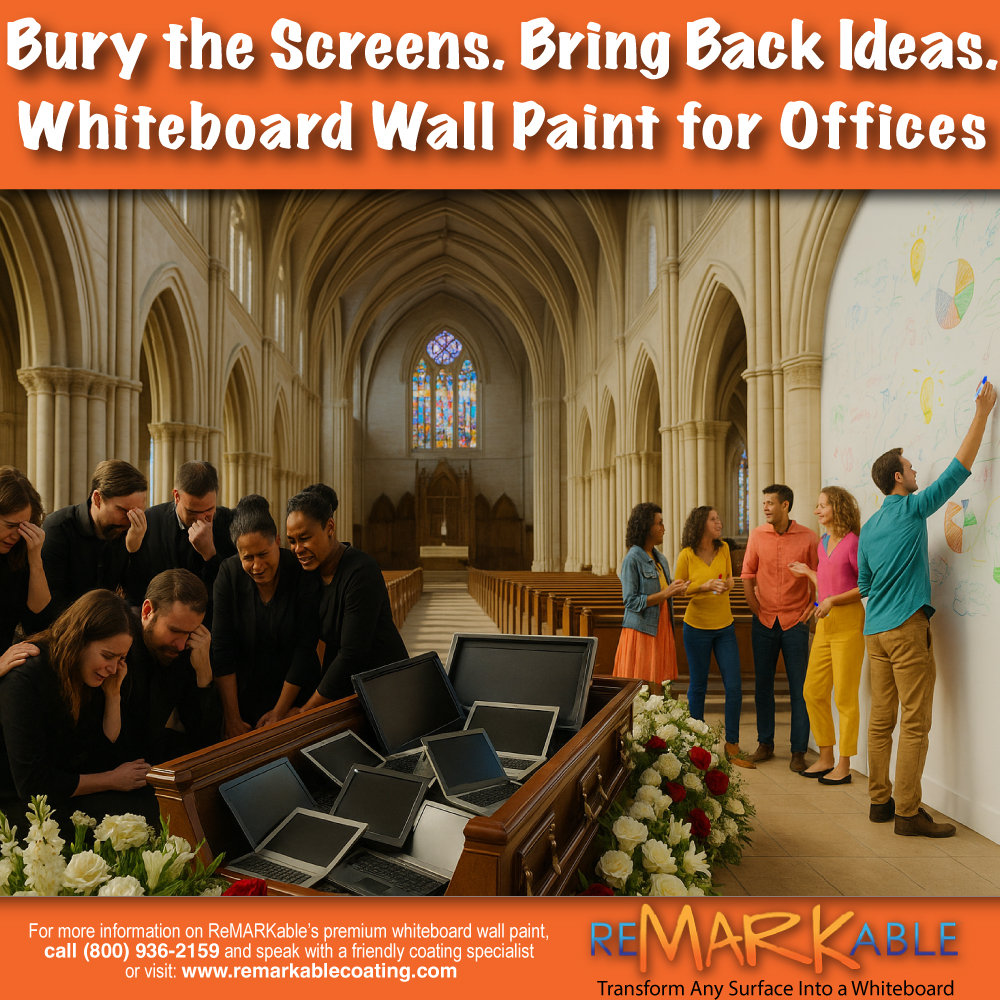
Bury the Screens and Bring Back Ideas with Whiteboard Wall Paint for Offices
Apart from its many benefits as a communication tool in the home, school, or small business, whiteboard wall paint applied in the office can greatly enhance mental well-being. Writable walls can serve as counseling tools, enabling both managers and employees to express their thoughts and feelings without fear of judgment. The walls also provide vast spaces for organizing tasks, goals, and due dates, thus reducing a team’s sense of cognitive overload and stress.
Moreover, whiteboard walls boost office mental health by freeing employees from their computer screens and fostering open communication among team members. This blog post will explore these and other employee well-being strategies to show the psychological benefits of whiteboard walls for offices.
1. Reduces Mental Clutter through Visual Organization
Constant worry about meeting deadlines, thoughts about unfinished tasks, anxiety about goals unmet, and constantly racing minds can hinder team productivity. These mental habits can drain energy, impede focus, and hinder employees’ ability to live in the present moment, ultimately affecting their ability to complete tasks efficiently.
Whiteboard wall paint offers an antidote to these problems by letting employees map out their duties, post cut-off dates, and list priorities in plain view for all to see. Dividing overwhelming to-do lists into smaller, manageable tasks and focusing on one thing at a time can help reduce team members’ feelings of being overburdened. Posting manageable groups of tasks on your office whiteboard wall is similar to categorizing items on a work table, making them easier to handle.
2. Encourages Movement and Alleviates Screen Fatigue
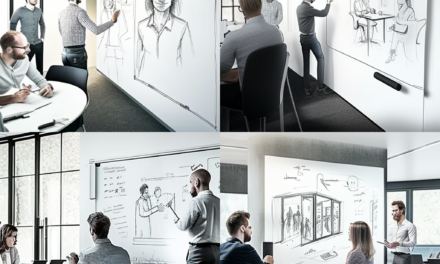
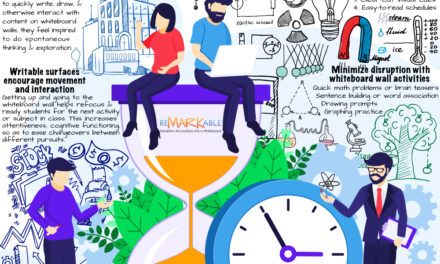
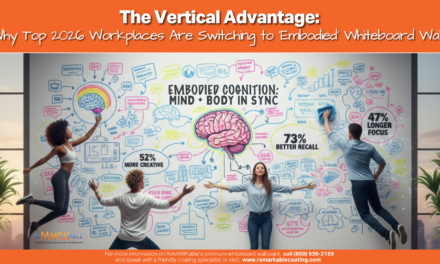
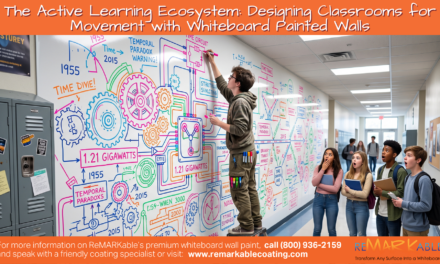
Writing, drawing, or brainstorming on whiteboard walls gets people out of their chairs and away from their screens. Staring at a desktop or laptop computer screen for long periods produces strain on the eyes and digital fatigue. Today’s remote and hybrid work arrangements have aggravated the problem of screen fatigue in many companies. Using large vertical no-tech collaborative wall surfaces can help alleviate this problem. They stimulate the imagination, enhance team productivity, and offer employees alternative ways to focus their attention – all without the glowing screen.
The ideal way to hold employees’ attention is to engage their bodies and minds simultaneously in the working process. Whiteboard walls do that. The very act of getting up out of their seats and walking to the whiteboard wall raises employees’ alertness and helps to encode and trigger memories. Movement allows team members to refocus and pay closer attention to their work assignments. It also enhances workplace well-being by fostering collaboration among workers when they come together for projects.
3. Fosters Team Support and Open Communication
Whiteboard walls make meetings more interactive and inclusive by helping all your team members feel like they’re being heard, thus reducing feelings of isolation.
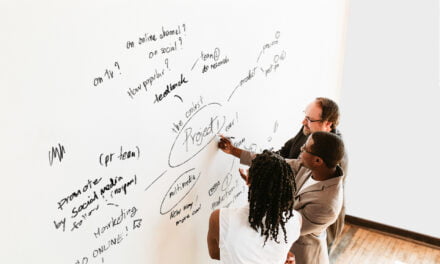
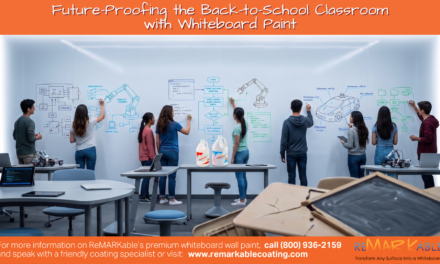
With its large, open, engaging surface, your office whiteboard wall is the ideal space for team interfacing during meetings and brainstorming sessions. This quality makes it easier to generate ideas for new company projects or products. Even the most introverted or shy members of your team will feel like expressing their ideas on the appealing space of your whiteboard wall.
Encouraging collective sessions using whiteboard walls promotes peer support networks, where employees can share their experiences and feelings, offer advice, and provide emotional support to one another. This approach fosters a sense of belonging and community in the team and leads to greater output and promptness in finishing tasks. Peer support involves people using their own knowledge to help one another manage stress and maintain emotional balance despite ongoing challenges at work.
Types of peer support networks differ, but they’re all designed to draw together individuals with common life experiences to sustain each other and provide a space where everyone feels accepted and appreciated. In the workplace, shared experiences are a natural part of life, so starting a peer support group in the office is a no-brainer that requires little planning. Whiteboard walls can be of great use in implementing this process. They provide large, convenient surfaces where team members can jot down issues they’re concerned about. Then others can take note and write down possible solutions in an ongoing cycle.
4. Creates Flexible Mental Break Zones
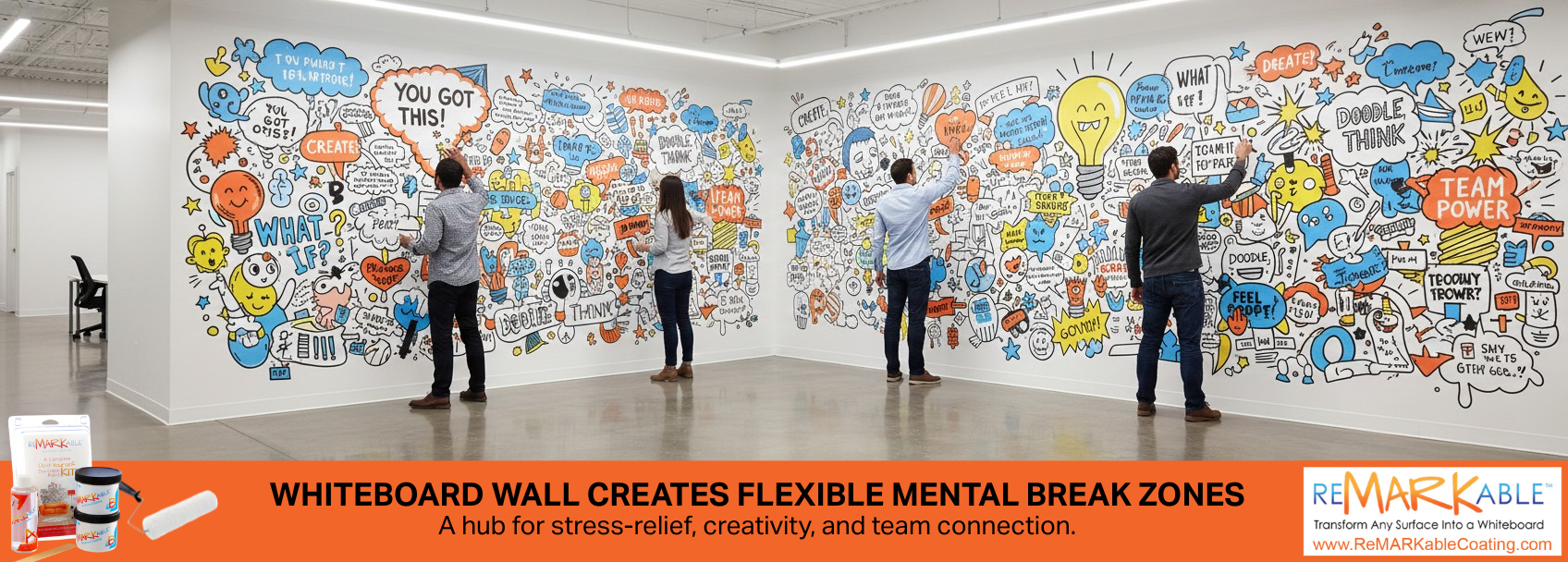
Offices can designate part of their whiteboard wall as a stress-relief or break zone. There employees can engage in activities such as doodling, posting positive affirmations, and sharing uplifting quotes or impromptu poems. Writing or drawing on whiteboard walls can have a calming and centering impact on the brain. This results in less stress, clearer thinking, and a more tranquil, focused office environment.
When employees experience mental blocks or feel uncreative on the job, they can alter their mental processes with the support of dry erase wall paint. Whiteboard walls’ huge, easy-to-access surfaces allow all the members of your team to express themselves spontaneously. Generating images and text on the spur of the moment may help to get rid of inefficient and psychologically harmful habits. It can also spark conversations among team members about how to develop new ways of thinking and working.
In this way, whenever they experience negative self-talk or distress about work-related issues, they can seek counseling from their colleagues. Such interventions will allow them to cope better, feel accepted, and resume their duties.
5. Supports Progress Tracking and Positive Reinforcement
Visually tracking progress, such as milestones achieved or tasks accomplished, posted on a whiteboard painted wall, boosts group morale and motivation. Such visible reinforcement reduces anxiety about problems on the job and helps team members to focus on their successes rather than on stress-producing activities.
Agile project management is an iterative strategy that fits well with this approach. It involves producing ongoing releases and integrating client responses with all the iterations that come up. This methodology breaks down complex projects into distinct, condensed chunks so that team members can do their work in short, incremental stages.
As its name implies, agile management involves moving quickly and skillfully in handling changing priorities. Whiteboard walls easily support this management approach. They provide large spaces for teams to visually track and adjust the progress of ideas from their conception to their conclusion. This ensures that each phase is clearly spelled out and efficiently completed.
Goal setting, when applied in conjunction with progress tracking, is an excellent way for teams to monitor their project’s evolution. It involves setting a clear-cut objective and reporting back on the steps individual team members have taken to reach their goal. Progress tracking is one of the employee well-being strategies that help teams stay motivated by building on their past successes. And this technique can be easily put into action on the vast surfaces of whiteboard walls.
6. Transforms Offices into More Supportive Environments
By integrating whiteboard wall paint into everyday workflows, companies signal to team members that their mental clarity, creativity, and welfare are being valued. Whiteboard walls are most often linked to practical functions in business, but they’re also ideal tools for supporting workers’ mental health.
The walls can serve as visual aids, allowing team members to articulate and assess their thoughts and feelings out in the open. The employee can then get feedback from their peers about their work-related concerns. This input can, in turn, help them eliminate unproductive behaviors and attitudes and boost their work efficiency and contentment on the job.
Surfaces coated with dry erase wall paint provide employees with handy creative places for expressing themselves at any time of the day. This quality fosters self-expression and emotional release, which can help improve individuals’ mental fitness and overall team output. Turning within to seek creative ideas and then sharing them on whiteboard walls lowers stress, improves team members’ attitudes, and heightens the general emotional tone. This helps to create a stress-free workspace and enhances mental wellness at work for everyone involved.



![Giant Leaps Forward Require Big Spaces. [Leap Year Sale Event!]](https://www.remarkablecoating.com/wp-content/uploads/2016/02/Giant-Leaps-ForwardRequire-Big-Spaces-440x264.jpg)



![30% Off St Patrick’s Day Sale! [Details Inside]](https://www.remarkablecoating.com/wp-content/uploads/2016/03/Glorious-1-440x264.png)

![Drive Your Organization Into Openness and Watch it Expand [20% Off Whiteboard Paint]](https://www.remarkablecoating.com/wp-content/uploads/2016/04/Drive-Your-Organization-Into-Openness-and-Watch-It-Expand.-1-440x264.jpg)













![ReMARKable’s Winter Sale is Here! [25% Off + Free Shipping]](https://www.remarkablecoating.com/wp-content/uploads/2018/01/Red-Tag-Winter-Fashion-Facebook-Post-1-440x264.png)



![ReMARKable Summer Sale 2018 [28% Off Whiteboard Paint]](https://www.remarkablecoating.com/wp-content/uploads/2018/06/Blue-Simple-Line-Beach-Facebook-Post-1-440x264.png)



































































































































0 Comments