
DIY Classroom Hacks Using Whiteboard Paint That Teachers Will Love in 2026
Applying premium whiteboard paint is undeniably the most effective, budget-friendly DIY strategy for teachers looking to completely revitalize their classroom environments for the 2026-2027 academic year. As educators, facility managers, and parents prepare for the back-to-school season, one of the most impactful design trends is the integration of immersive, active learning spaces. For decades, institutional learning was dominated by the industrial-era “cells and bells” model, which prioritized rigid rows of forward-facing desks and fostered passive consumption of information. However, contemporary pedagogical frameworks have definitively shifted toward student-centered methodologies where the physical space is an active participant in cognitive development.
Over the past few years, the educational landscape has experienced a massive influx of digital technology and artificial intelligence;. At the same time, these tools are valuable, current research indicates that students are experiencing unprecedented levels of digital fatigue. To counterbalance this screen-heavy reality, schools are actively seeking physical, collaborative solutions that get students out of their chairs, interacting face-to-face, and engaging in hands-on problem-solving. This is where a DIY classroom makeover comes into play, offering educators practical ways to maximize their teaching real estate on a tight budget.
The Washi Tape Grid for Station Rotations
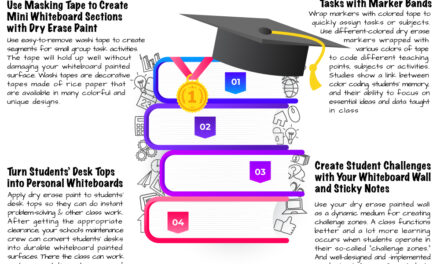
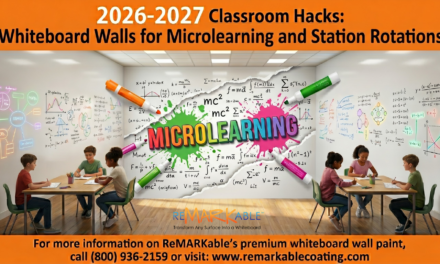
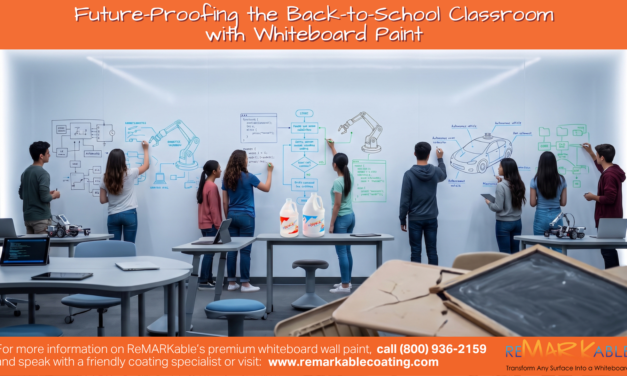
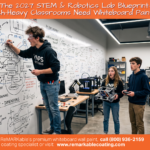
Classrooms typically have a layout measuring around 30 feet by 30 feet, leaving a massive amount of underutilized vertical real estate just waiting to be activated. Once you have coated your space, you can implement the highly popular washi tape grid hack. Educators can use standard masking tape or decorative washi tape to easily divide the massive surface into smaller, designated mini-sections for different groups or subjects. This setup is absolutely perfect for microlearning and station rotations, allowing small groups of students to rotate through specific academic challenges without bumping into one another.
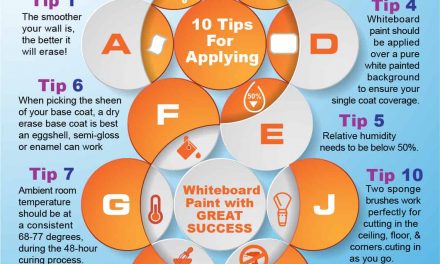
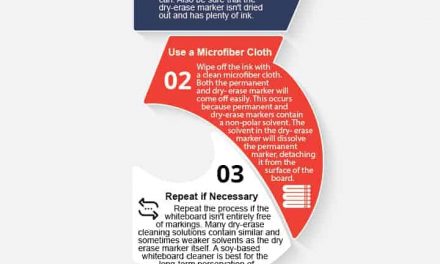
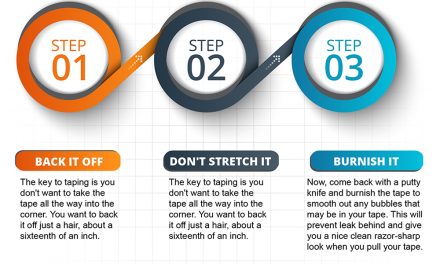
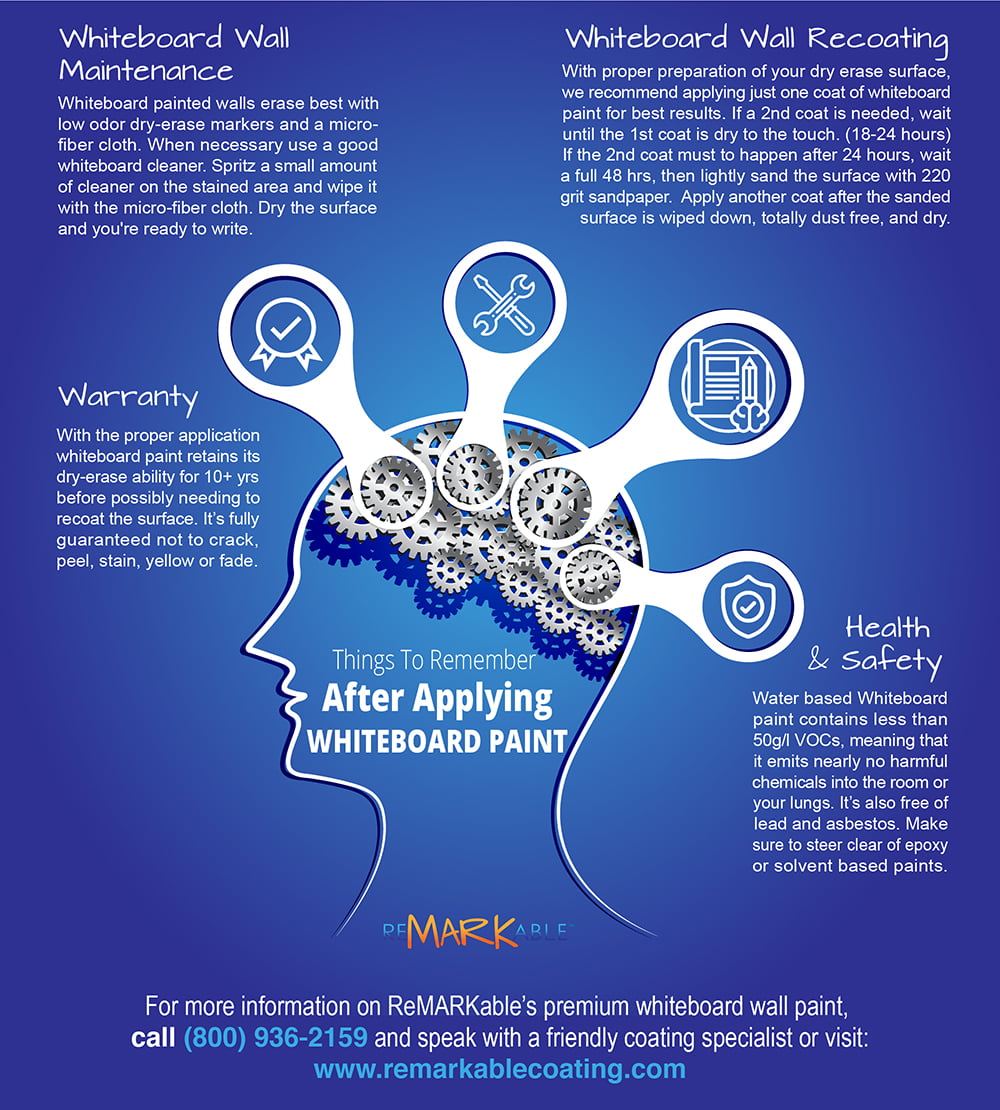
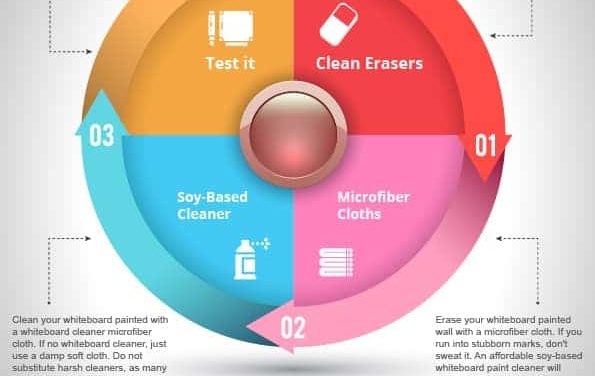
If you are planning to use tape to create these mini sections on your Whiteboard wall, you might eventually want to change the layout as the semester progresses. When it is time to remove or adjust the tape, the maintenance is incredibly simple. Carefully pull off as much of the tape as possible, then wipe the surface with a dry microfiber cloth. Next, apply a quick spritz of cooking spray to any remaining adhesive residue on the wall, then do a second wipe-down. Lastly, wipe off the wall a third time with a wet microfiber cloth to safely restore the pristine, frictionless surface.
Color-Coded Marker Bands and Organization
Another brilliant organizational hack for the back-to-school season involves strategic color-coding. Numerous studies have shown a substantial link between color coding and memory, and much evidence indicates that color coding can help students home in on essential ideas and information presented in the classroom. The creative use of this strategy can significantly aid classes in terms of knowledge retention, knowledge transfer, and differentiation among various facts and ideas.
To improve classroom organization and memory retention seamlessly, teachers can wrap the barrels of their dry-erase markers with colored tape. This simple hack allows educators to quickly assign specific tasks or subjects to different student groups based on their designated color. When students approach the Whiteboard painted walls, they know exactly which tools belong to their group and which section of the wall they are responsible for. This drastically reduces transition times between activities and minimizes the chaotic scrambling that often occurs when students are asked to gather supplies for group work.
Upcycling Furniture for “Building Thinking Classrooms”
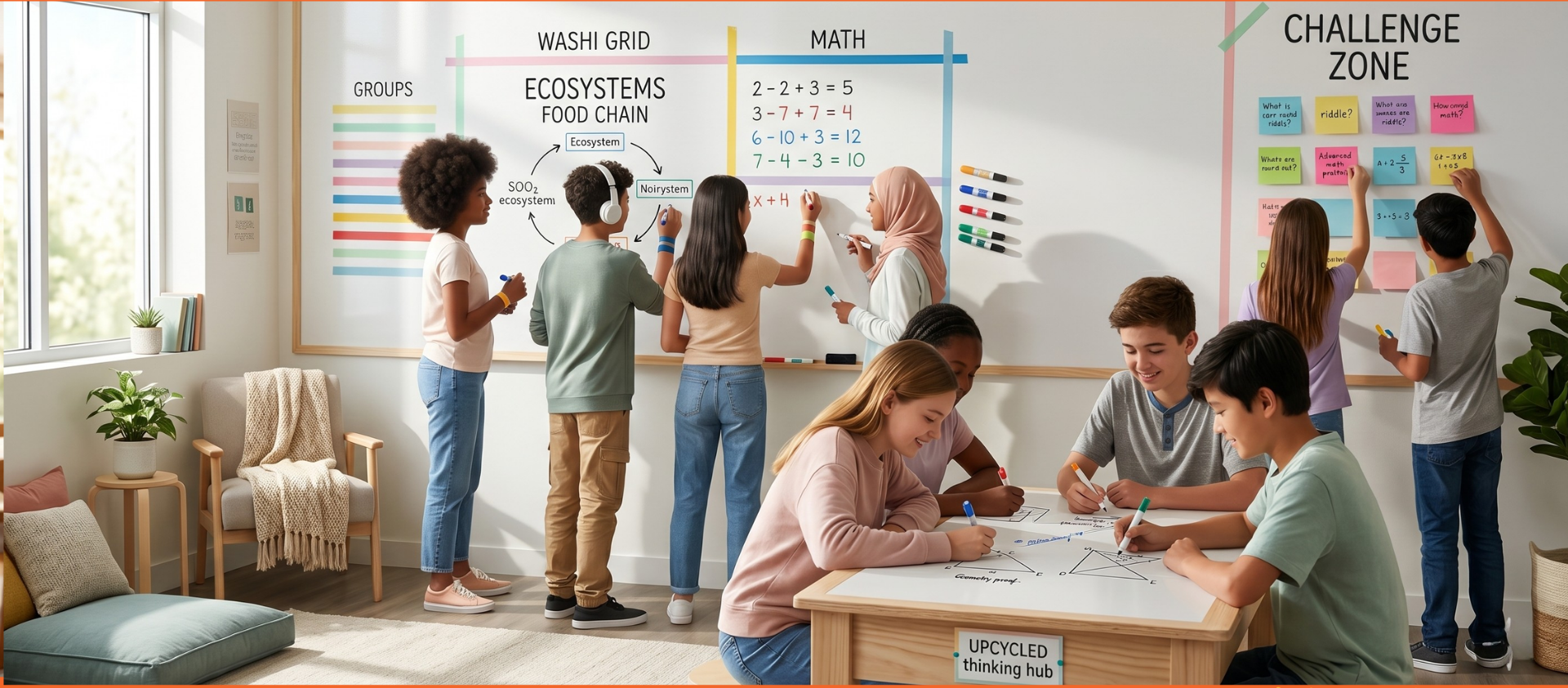
Why throw away old classroom furniture when you can upcycle it into an active learning hub? Rather than purchasing expensive new collaborative tables, outdated desks in classrooms can be coated with whiteboard paint to become writable surfaces for students. By applying a clear or white layer of whiteboard paint directly to students’ desk tops, reading tables, or the teacher’s desk, you can turn dormant furniture into instant problem-solving canvases without taking up any extra floor space.
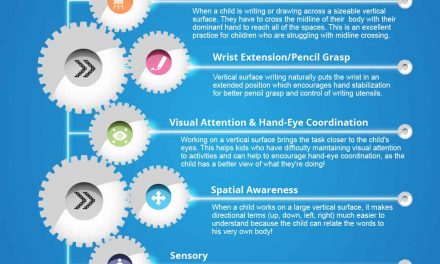
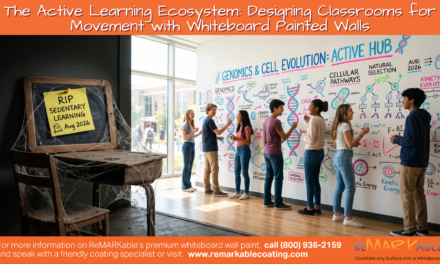
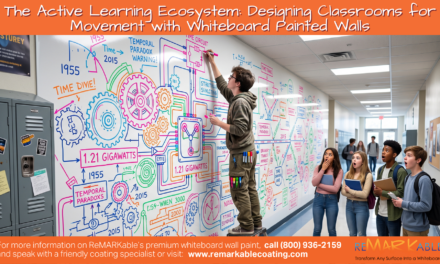
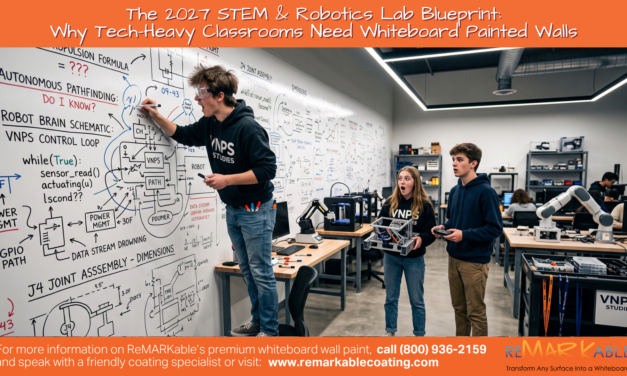
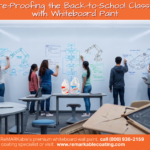
This DIY hack aligns perfectly with the widely adopted “Building Thinking Classrooms” framework developed by Dr. Peter Liljedahl. A recent study by Dr. Liljedahl revealed that students who did math-related tasks while standing at vertical non-permanent surfaces (VNPS) showed significant improvement in certain learning traits compared to students who worked on permanent surfaces like flip chart paper or notebooks. Specifically, the learners’ levels of eagerness, discussion, participation, persistence, mobility, and non-linearity were vastly improved. When students stand in small groups at a vertical non-permanent surface and work together on problems, it keeps them animated, involved, and actively discussing the curriculum. By repurposing old desks and walls, schools not only save hundreds of dollars from their back-to-school budgets but also foster an environment where students begin working sooner, discuss lesson content more, and keep working longer.
Creating Dynamic Challenge Zones
Educators are always looking for ways to keep early finishers engaged without creating busywork. You can use your Dry erase walls as a dynamic medium for creating dedicated “challenge zones.” By sectioning off a corner of the room and utilizing sticky notes containing extra-credit questions, riddles, or advanced math problems, teachers can implement challenge-based learning seamlessly. When students finish their primary assignments early, they can walk over to the challenge zone, pull a sticky note, and begin working through the problem directly on the expansive surface. This method fosters a culture of continuous learning and intellectual curiosity.
Furthermore, the sheer scale of the space allows for meta-cognitive modeling. When teachers speak while going through a series of steps—like solving a complex algebraic equation or interpreting the theme of a story—they talk through their thought process while writing on the wall, explicitly demonstrating how to reason and draw logical conclusions. The thinking-out-loud technique captures student attention powerfully and makes invisible cognitive processes entirely visible to the whole room.
Lowering Academic Anxiety and Boosting Neuro-Inclusivity
One of the greatest benefits of this classroom makeover is its positive impact on student mental health. The inherently erasable, non-permanent nature of dry-erase whiteboard paint is critical to its pedagogical success. Because the medium allows for immediate corrections, it drastically lowers the psychological threshold for risk-taking. Students who suffer from severe academic anxiety or the fear of failure are far more willing to attempt a challenging mathematical concept when they know that any error can be obliterated in a second with a simple swipe of a microfiber cloth. This freedom to experiment safely encourages a continuous cycle of iteration and peer-supported learning, teaching students that making mistakes is a natural and necessary part of the educational journey.
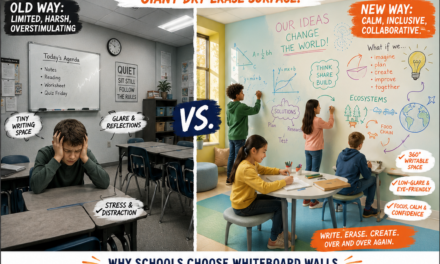
Additionally, this DIY upgrade serves neurodivergent students beautifully. For students with autism spectrum disorder (ASD) or ADHD, an overly stimulating environment can trigger severe anxiety and severely hinder their ability to learn. Traditional framed boards often create harsh visual contrast and blinding glare from overhead LED lights. By utilizing clear whiteboard paint over deep, calming wall colors, schools can maintain neuro-aesthetic, soothing environments while adding full dry-erase functionality.
Social-Emotional Recovery and Creative Brain Breaks
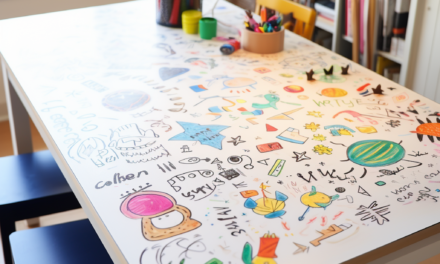
Beyond rigorous academic applications, providing an expansive writable canvas serves a critical role in students’ social-emotional recovery. Data indicates that following periods of disrupted learning, accelerating students’ social-emotional growth requires spaces that actively foster low-stakes, joyful interpersonal interaction. A simple but highly effective classroom hack is to let students doodle on the wall for a few minutes before each class session begins. This brief, unstructured doodling activity acts as a powerful cognitive primer, helping children self-regulate, burn off anxious energy, and maintain higher levels of focus during the subsequent lesson.
Teachers can also integrate structured recreational drawing games, such as the “shape game.” In this imaginative exercise, a teacher draws a random shape, and students must creatively transform it into a recognizable object, such as turning a simple circle into an apple by adding a stem. This helps children learn how to experiment, play, and express complex ideas visually, rapidly developing their spatial visualization skills. These low-stakes activities reintroduce a sense of playfulness to the school day, forging stronger classroom communities and helping students rebuild vital interpersonal soft skills that are often neglected in strictly traditional, desk-bound environments.
Reducing Teacher Stress and Promoting Sustainability
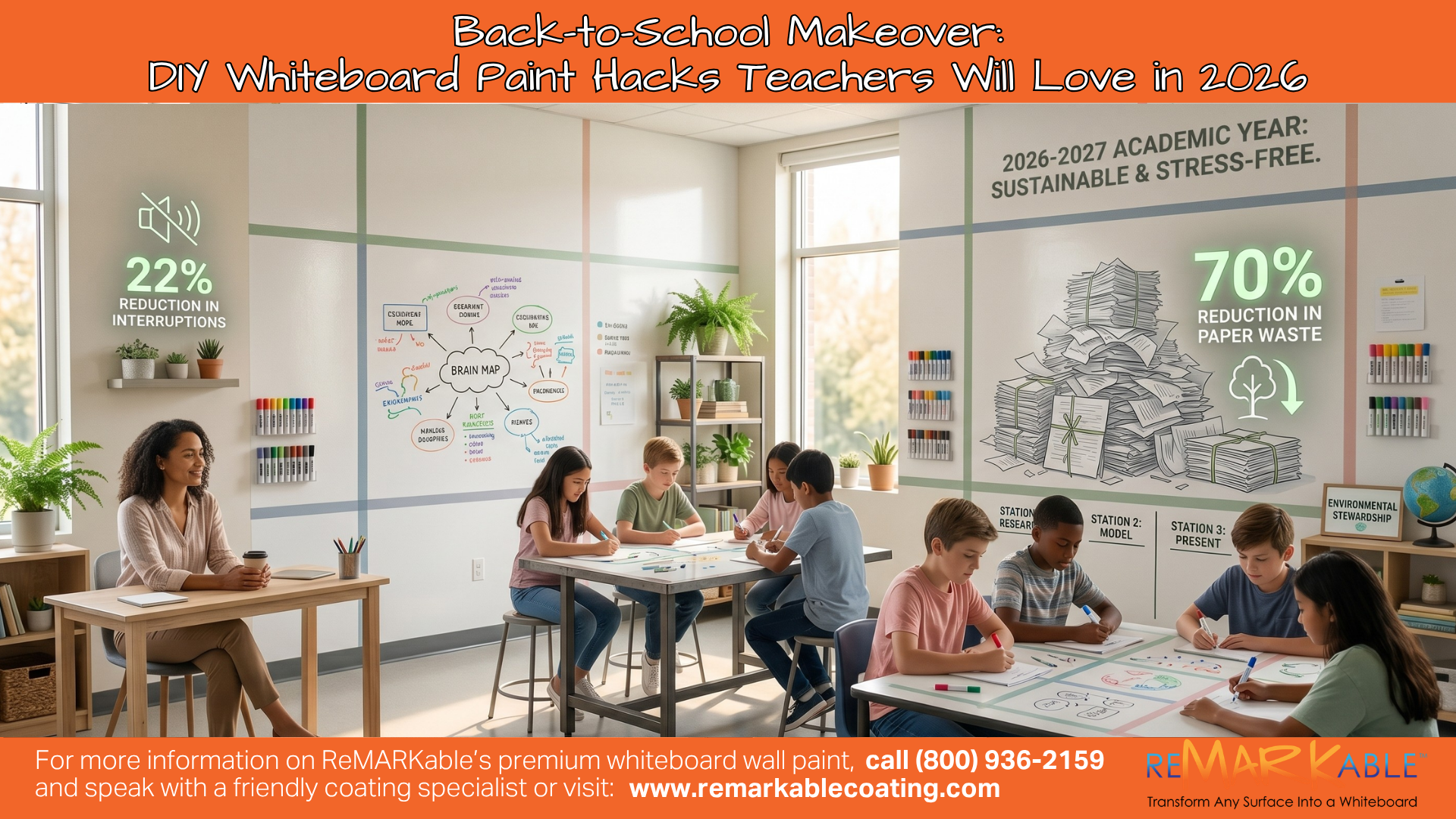
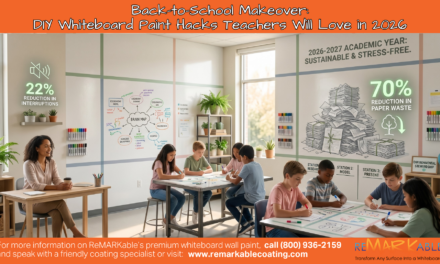
The transformation of the physical space directly impacts the educators themselves. In classrooms equipped with these writable surfaces, teachers report a remarkable 22% reduction in daily interruptions. This is because students become significantly more self-sufficient and visually guided. Instead of having to listen to the teacher talk constantly, learners can self-direct, creating lesson-related content on the walls. This shared locus of control lightens the burden on teachers, leading to a calmer, more positive learning environment and fundamentally reducing educator stress regarding class management.
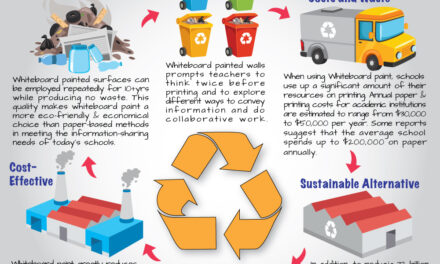
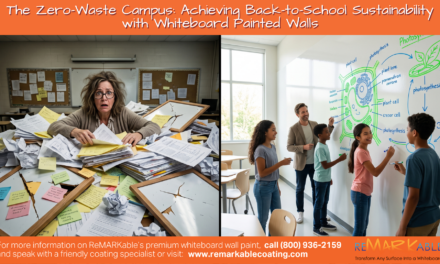
Furthermore, these classroom hacks promote incredible environmental sustainability. Paper waste remains one of the most significant contributors to landfill problems. By creating reusable spaces for writing and drawing, classrooms can reduce paper waste by an astonishing 70% when used daily. This eco-friendly alternative to conventional paper-based teaching methods conserves natural resources while practically eliminating the need for single-use notebooks, saving money and teaching students about environmental stewardship.
Investing in high-quality whiteboard paint is one of the most impactful decisions an educator or facility manager can make for the upcoming school year. By implementing these budget-friendly DIY hacks—from organizing washi tape grids and color-coded markers to upcycling old desks into thinking spaces—teachers can cultivate an environment that naturally supports collaboration and creativity. As the 2026-2027 academic year approaches, removing the physical boundaries of traditional framed boards will help mitigate digital fatigue, lower student anxiety, and drastically reduce paper waste. Embrace the limitless potential of active learning, and give your students the expansive canvas they need to truly thrive in the modern classroom.
![Giant Leaps Forward Require Big Spaces. [Leap Year Sale Event!]](https://www.remarkablecoating.com/wp-content/uploads/2016/02/Giant-Leaps-ForwardRequire-Big-Spaces-440x264.jpg)


![30% Off St Patrick’s Day Sale! [Details Inside]](https://www.remarkablecoating.com/wp-content/uploads/2016/03/Glorious-1-440x264.png)

![Drive Your Organization Into Openness and Watch it Expand [20% Off Whiteboard Paint]](https://www.remarkablecoating.com/wp-content/uploads/2016/04/Drive-Your-Organization-Into-Openness-and-Watch-It-Expand.-1-440x264.jpg)








![ReMARKable’s Winter Sale is Here! [25% Off + Free Shipping]](https://www.remarkablecoating.com/wp-content/uploads/2018/01/Red-Tag-Winter-Fashion-Facebook-Post-1-440x264.png)

![ReMARKable Summer Sale 2018 [28% Off Whiteboard Paint]](https://www.remarkablecoating.com/wp-content/uploads/2018/06/Blue-Simple-Line-Beach-Facebook-Post-1-440x264.png)

















































































0 Comments