

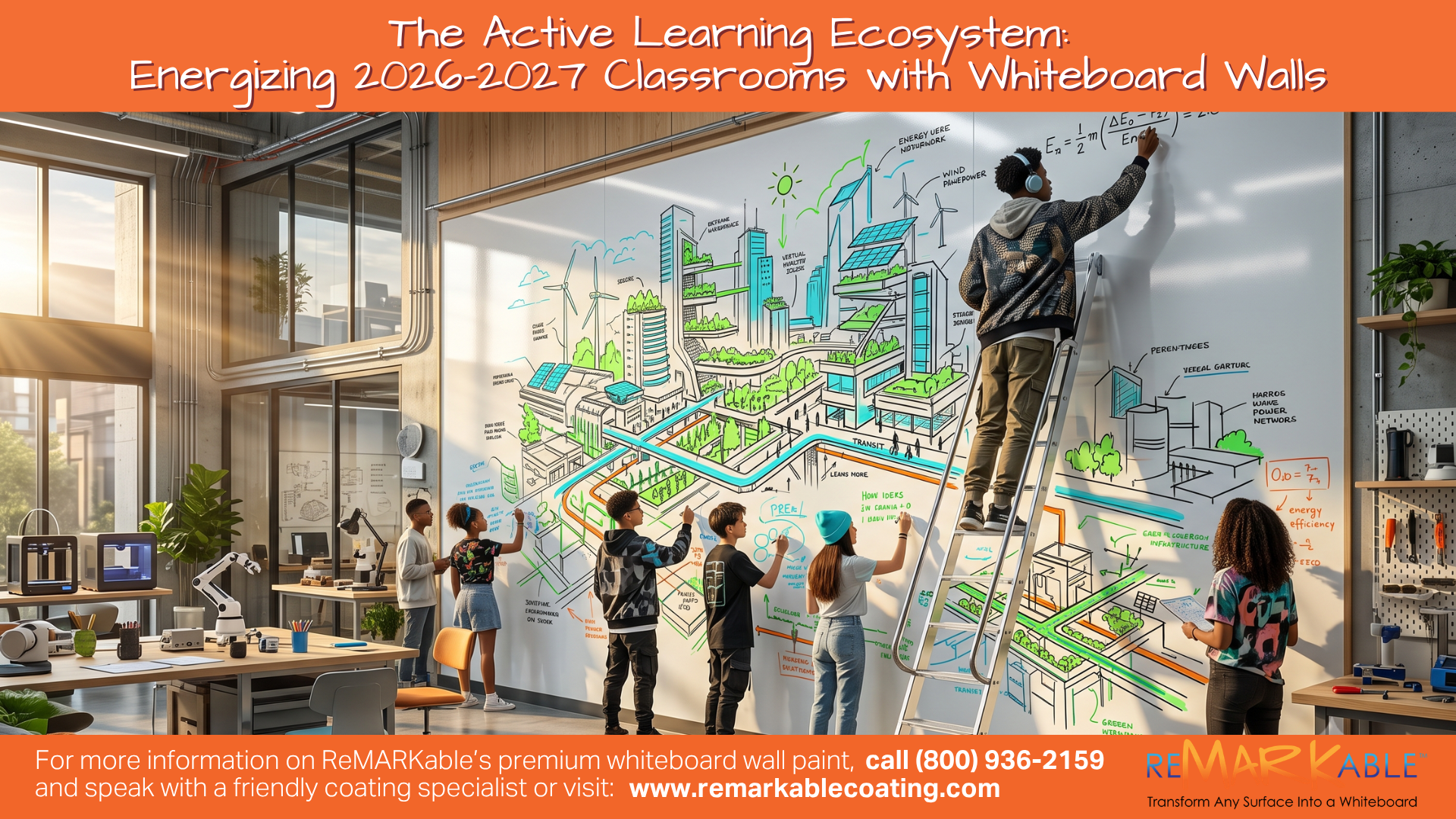
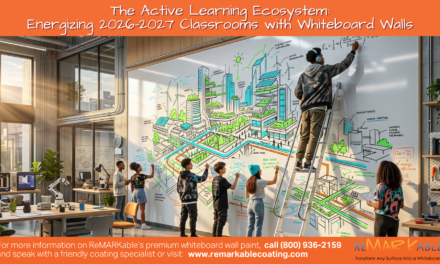
Energizing 2026-2027 Classrooms with Whiteboard Walls
As progressive administrators prepare for the 2026-2027 academic year, the integration of whiteboard walls into campus architecture has emerged as the definitive strategy for cultivating a vibrant, active learning ecosystem. For generations, the standard classroom was designed as a static container—a room where heavy furniture was bolted to the floor, attention was strictly forward-facing, and knowledge was passively received by a quiet audience. However, the modern educational landscape demands something entirely different. Today’s students are dynamic, highly collaborative, and accustomed to fast-paced, multi-modal information streams. To meet them where they are and keep them deeply engaged, school owners and facility directors must fundamentally rethink the physical spaces where education happens. Moving away from rigid, restrictive environments toward adaptable, fluid spaces is no longer a luxury; it is an institutional necessity that impacts everything from daily attendance to long-term academic success. By transforming static boundaries into expansive, 360-degree interactive canvases, progressive schools are discovering that the physical classroom can actively participate in the learning process, moving, flexing, and shifting alongside the students it serves.
The End of the Sedentary Era: How Whiteboard Paint Changes the Paradigm
The traditional classroom layout, characterized by a single, small framed board at the front of the room, was engineered for an industrial-era model of education. It inherently dictates a passive, sedentary experience. The teacher broadcasts information from a single point of authority, and the students, confined to their individual desks, merely transcribe it into notebooks. As we approach the 2026-2027 school year, educational researchers and pedagogical experts agree that this sedentary model severely limits cognitive engagement. Prolonged sitting and passive listening lead to a rapid decline in focus, contributing directly to the academic fatigue, behavioral issues, and burnout that administrators battle daily.
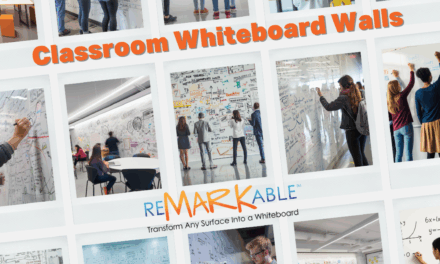
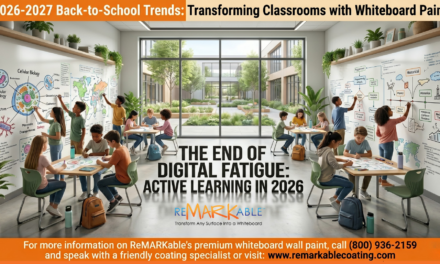
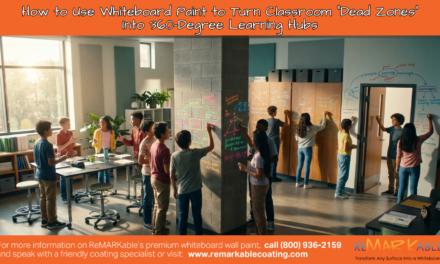
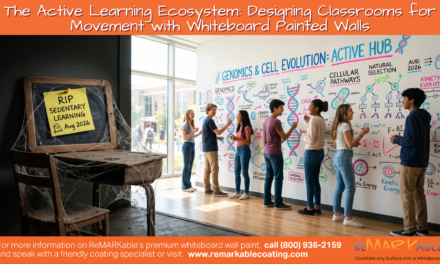
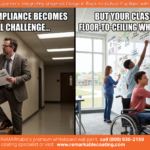
To break this cycle of disengagement, schools are actively seeking infrastructure that demands movement and interaction. This is where the application of premium whiteboard paint becomes a transformative architectural tool. By coating the entire perimeter of a classroom, a school effectively obliterates the restrictive “front of the room” paradigm. Suddenly, the room has no defined front or back. It becomes an immersive, 360-degree environment that inherently invites students to stand up, step away from their isolated desks, and physically engage with the curriculum on a grand scale. This simple yet profound shift from sitting to standing—from passively watching a lecture to actively creating content—signals the death of the sedentary classroom era and the dawn of a kinetic, highly engaged academic culture where every student is a participant.
Designing for Kinesthetic Engagement on Whiteboard Painted Walls
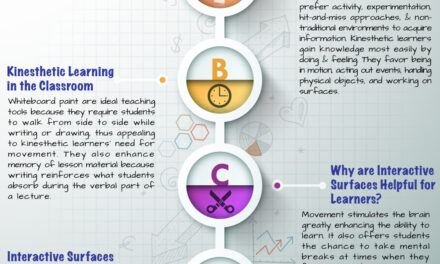
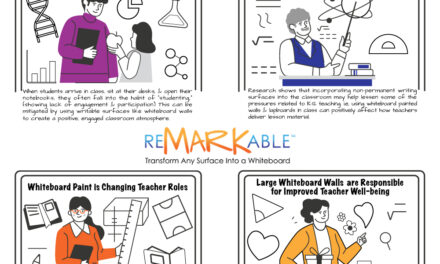
Understanding the deep connection between the physical body and the cognitive mind is absolutely crucial for modern educational design. Kinesthetic learners—those who process complex information best through physical activity, touch, and movement—are often the most marginalized in a traditional classroom setting that demands stillness. Even for students who do not primarily identify as kinesthetic learners, the act of physical movement significantly increases blood flow to the brain, naturally enhancing memory retention, accelerating problem-solving capabilities, and boosting overall daytime alertness without the need for constant teacher intervention.
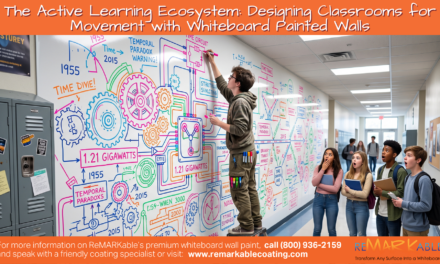
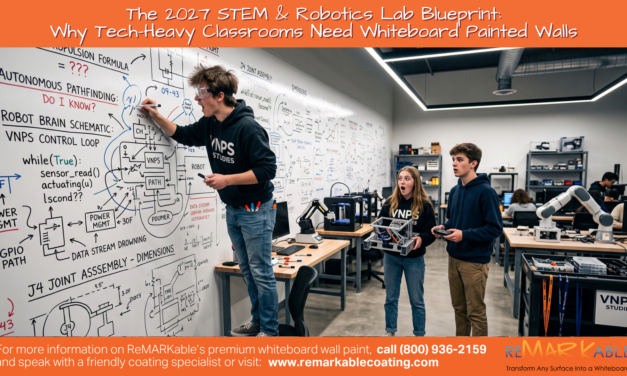
Expansive whiteboard painted walls provide the ultimate, boundary-free canvas for this vital physical engagement. When a student is required to stand up, stretch their arms, and use large gross motor skills to map out a historical timeline or collaboratively solve a complex algebraic equation on a wall, they are creating deep, physical memory associations with the academic material. The sheer, uninterrupted scale of the writable surface allows for “macro-visual mapping,” a process where students can physically step back, walk the entire length of their developing ideas, and visually connect disparate concepts across a broad physical space. This level of kinesthetic involvement simply cannot be replicated on a small digital tablet screen or a restrictive piece of lined notebook paper. By designing classrooms that require students to physically move through the space to access their primary workspace, administrators are actively supporting neuro-inclusive pedagogies that cater to a wide, beautifully diverse spectrum of cognitive and physical learning needs.
Democratizing the Classroom Landscape with a Dry Erase Wall
One of the most significant, yet rarely discussed, barriers to student participation in a traditional classroom is psychological friction. Being called up to the singular board at the front of the room while thirty peers watch in silence is a deeply intimidating experience that reliably induces performance anxiety in all but the most extroverted students. This traditional dynamic naturally stifles organic collaboration and prevents valuable, messy, exploratory thinking from occurring in public view, where it can be guided and refined.
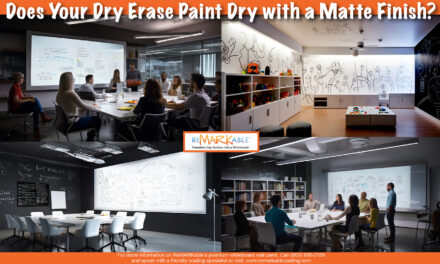
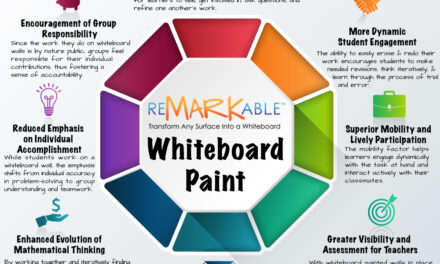
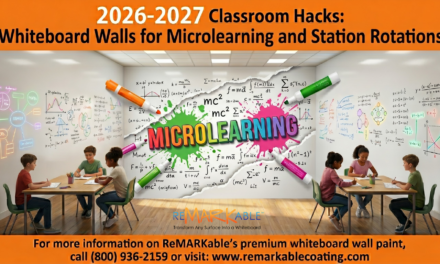
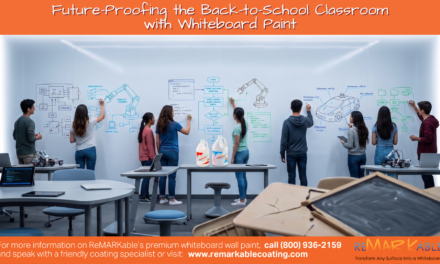
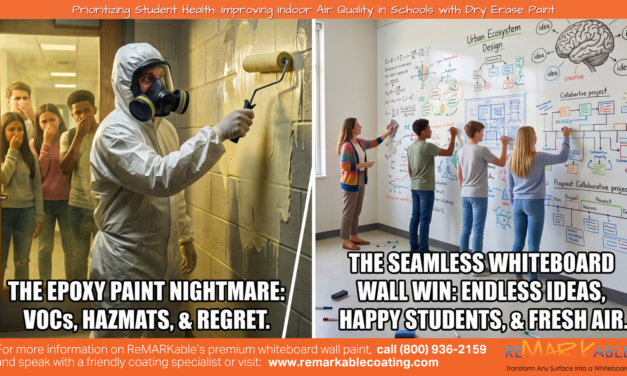
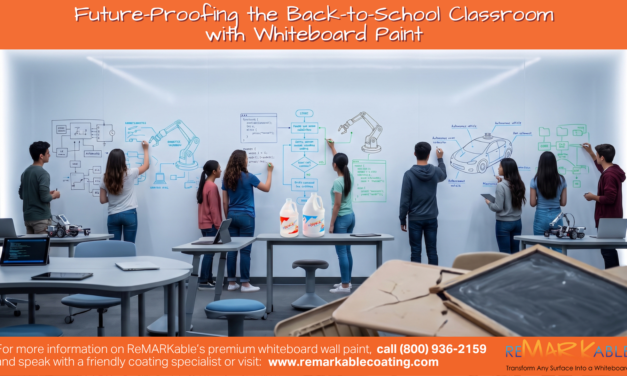
When an educational institution installs a seamless dry erase wall that spans multiple sides of a room, it effectively and instantly democratizes the academic landscape. The workspace is entirely decentralized. Multiple small groups can utilize different sections of the room simultaneously without competing for limited real estate or waiting for a single marker. In this expansive environment, collaboration becomes an immersive, low-stakes, group-oriented activity. Students work shoulder-to-shoulder, quietly negotiating ideas, sketching out rapid prototypes, and sharing knowledge peer-to-peer. The psychological safety of this decentralized setup is profound. Because early mistakes, grammatical errors, or incorrect mathematical calculations can be wiped away instantly with the simple swipe of a microfiber cloth, the paralyzing fear of permanent failure is completely removed. The classroom transforms into a safe, supportive laboratory for trial, error, and eventual mastery, fostering a resilient growth mindset that will serve students long after they graduate and enter the workforce.
The Vibe of a Living Ecosystem: Transforming Spaces with Whiteboard Walls
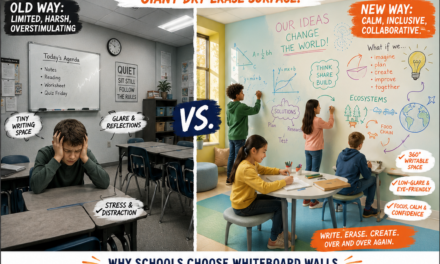
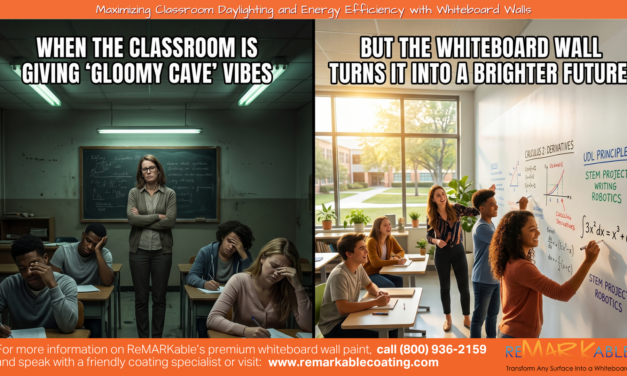
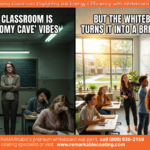
Beyond the strict, measurable pedagogical benefits, the aesthetic and emotional “vibe” of a classroom plays a monumental role in institutional success and student well-being. The physical layout of a room sends a silent but incredibly powerful message to everyone who enters it. A room cluttered with bulky metal whiteboard frames, stained chalk trays, peeling posters, and space-consuming mobile boards feels chaotic, industrial, and inherently stressful. It contributes directly to visual noise and sensory overload, which can trigger anxiety and decrease attention spans.
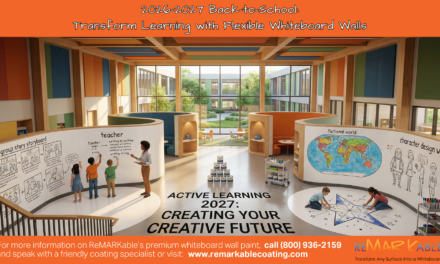
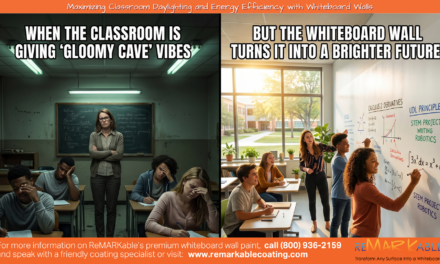
Conversely, a classroom purposefully engineered as an active learning ecosystem using whiteboard walls feels like a breath of fresh air. Modern interior design principles in educational facilities emphasize clean lines, bright open spaces, and minimalist architecture. By using specialized commercial coatings to transform the existing drywall into a highly functional surface, schools achieve a sleek, invisible infrastructure. When not actively covered in vibrant markers and student ideas, the walls appear as clean, glossy, professionally finished architectural elements. This aesthetic minimalism radically reduces sensory clutter, naturally promoting emotional calm and deep academic focus. Imagine walking into a sunlit campus classroom on the first day of the 2026-2027 school year: the room feels open, airy, and brimming with unwritten potential. The furniture is modular, capable of being pushed aside in an instant, and the seamless walls stand ready to capture the collective brilliance of the room. This is not just a place to store students for eight hours; it is a living, breathing ecosystem explicitly designed to inspire.
The ROI of Architectural Agility and Whiteboard Paint
For school owners, campus administrators, and facility directors, the exciting decision to modernize classroom infrastructure must always balance visionary pedagogy with rigorous, long-term fiscal responsibility. The reality of modern campus management is that square footage is an institution’s most valuable and expensive physical asset. Rooms can no longer afford to serve a single, inflexible instructional purpose.
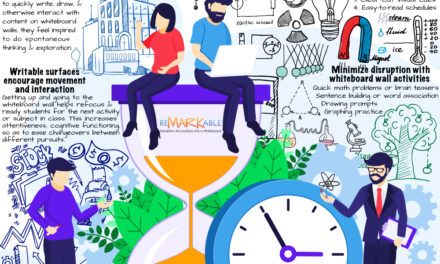
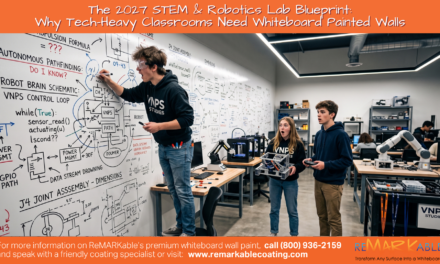
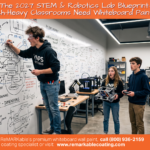
The ultimate administrative value of building an active learning ecosystem lies in its unparalleled architectural agility. A single room equipped with wall-to-wall whiteboard paint can seamlessly transition through multiple, drastically different identities in a single day. In the early morning, it serves as an intense, highly collaborative STEM laboratory where engineering students draft large-scale mechanical schematics. By midday, the rolling desks are reconfigured, and the walls host decentralized pods for an advanced literature seminar. After the final bell rings, the exact same physical space effortlessly converts into an interactive tutoring center, an administrative faculty brainstorming hub, or a community meeting room. This extreme, frictionless versatility ensures that every square inch of the facility is optimized, dramatically increasing the operational Return on Investment (ROI) of the building.
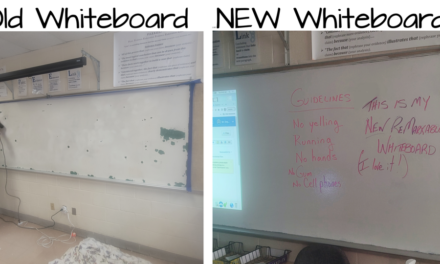
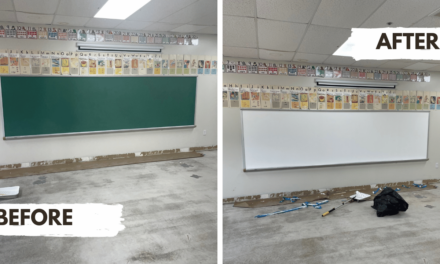
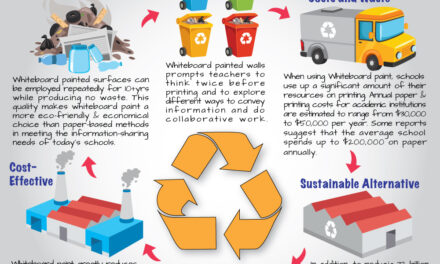
Furthermore, investing in premium, commercial-grade writable coatings permanently eliminates the hidden, perpetual financial costs typically associated with traditional classroom hardware. Facility maintenance teams are no longer burdened with the labor-intensive, yearly cycle of dismounting ghosted, permanently stained melamine boards, repairing damaged drywall anchors, and purchasing fragile replacements. The seamless, painted walls require absolutely zero mounting hardware and offer a highly resilient, ten-year functional lifespan with only simple, routine custodial maintenance, heavily protecting the school’s capital budget while consistently delivering a premium, future-ready educational experience.
Building the Future, One Dry Erase Wall at a Time
As we look toward the rapidly approaching future of education, it is abundantly clear that the most successful, prestigious institutions will be those that view their physical campuses as active, willing participants in the student learning journey. A school is not merely a collection of bricks, mortar, and wooden desks; it is a dynamic, psychological environment that directly shapes the daily behaviors, attitudes, and ultimate achievements of the students and faculty within it. By intentionally designing spaces that demand physical movement, encourage decentralized peer collaboration, and provide a visually calming, minimalist aesthetic, progressive administrators are setting the perfect stage for profound academic breakthroughs.
Ultimately, the most profound and cost-effective step an educational institution can take to future-proof its pedagogy and revitalize its campus culture is to invest heavily in high-quality whiteboard walls. The critical transition from a static, lecture-centric past to a dynamic, collaborative future officially begins the very moment a student stands up, marker in hand, and realizes the entire room is theirs to command. When we, as educational leaders, choose to utilize high-quality whiteboard paint, we are not simply upgrading a facility’s paint job; we are fundamentally changing the rules of academic engagement. We are tearing down the physical barriers to creativity and opening up a world of limitless, unbridled potential for every single learner who walks through our doors. Whether you are executing a major, multi-million dollar campus renovation or intelligently targeting specific, high-impact classrooms for the upcoming academic year, prioritizing whiteboard painted walls explicitly ensures that your physical infrastructure is exactly as agile, resilient, and forward-thinking as your best teaching faculty. By embracing the transformative power of a seamless dry erase wall, schools can finally build the vibrant, active learning ecosystems that the students of tomorrow so richly deserve, proving without a doubt that the most essential foundation of a truly transformative education will always be your whiteboard walls.



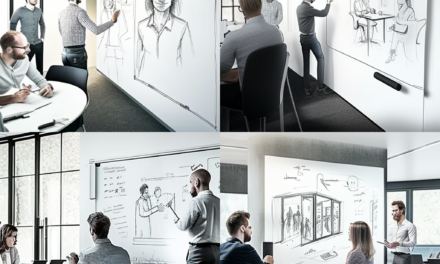
![Giant Leaps Forward Require Big Spaces. [Leap Year Sale Event!]](https://www.remarkablecoating.com/wp-content/uploads/2016/02/Giant-Leaps-ForwardRequire-Big-Spaces-440x264.jpg)



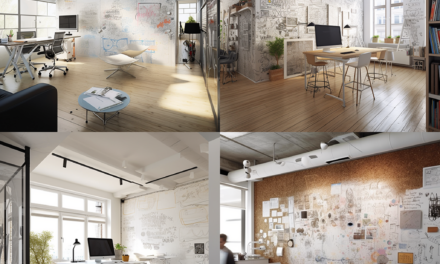
![30% Off St Patrick’s Day Sale! [Details Inside]](https://www.remarkablecoating.com/wp-content/uploads/2016/03/Glorious-1-440x264.png)

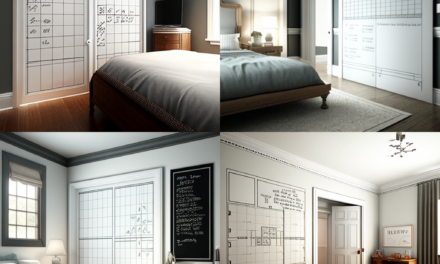
![Drive Your Organization Into Openness and Watch it Expand [20% Off Whiteboard Paint]](https://www.remarkablecoating.com/wp-content/uploads/2016/04/Drive-Your-Organization-Into-Openness-and-Watch-It-Expand.-1-440x264.jpg)

















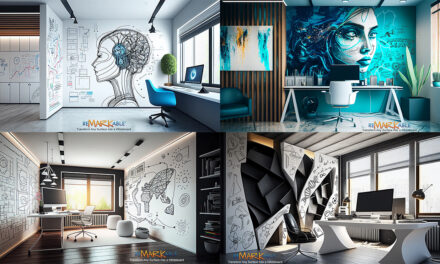
![ReMARKable’s Winter Sale is Here! [25% Off + Free Shipping]](https://www.remarkablecoating.com/wp-content/uploads/2018/01/Red-Tag-Winter-Fashion-Facebook-Post-1-440x264.png)





![ReMARKable Summer Sale 2018 [28% Off Whiteboard Paint]](https://www.remarkablecoating.com/wp-content/uploads/2018/06/Blue-Simple-Line-Beach-Facebook-Post-1-440x264.png)



































































































































































































































0 Comments