
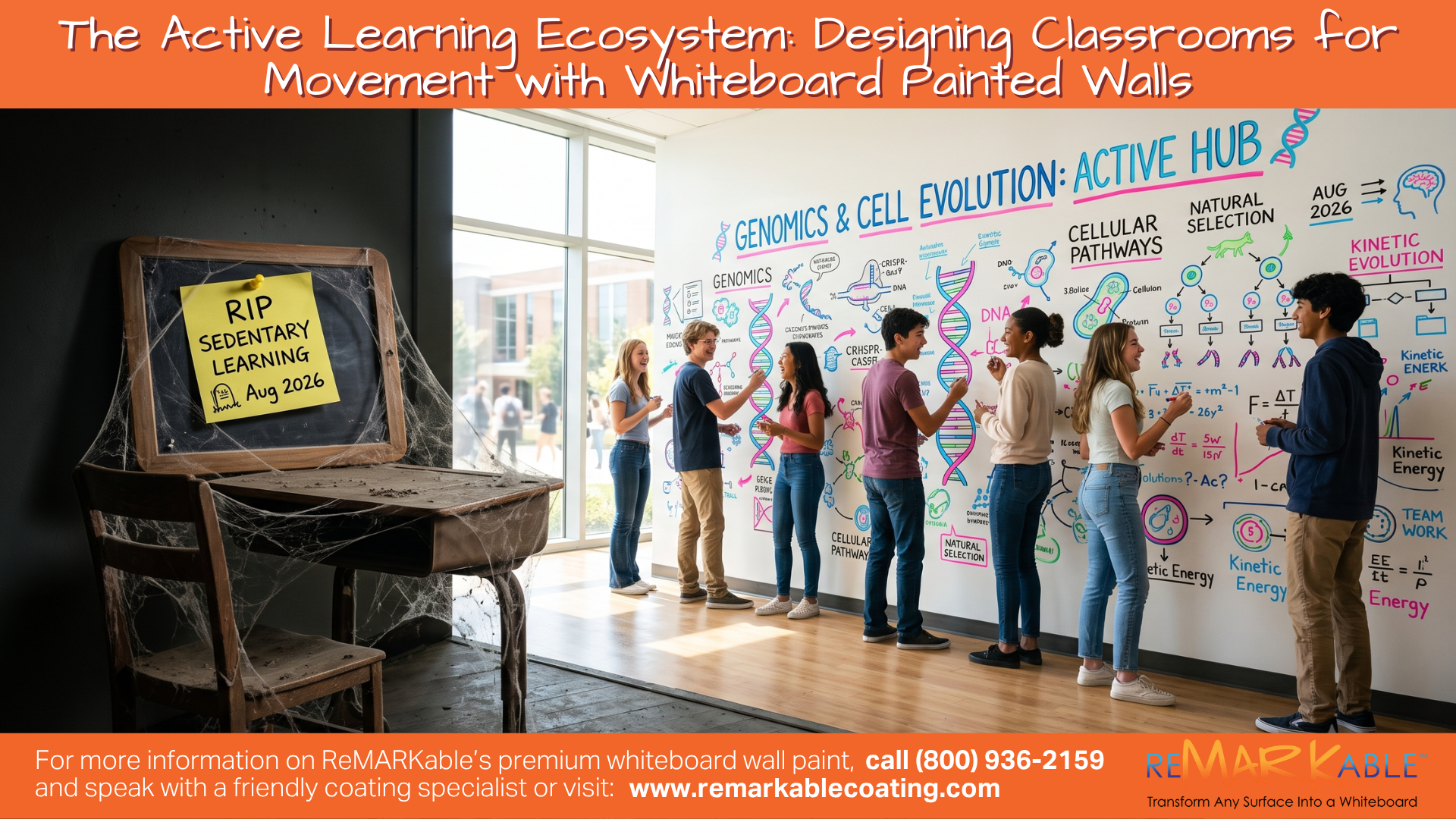
Designing Classrooms for Movement with Whiteboard Painted Walls
As progressive educational institutions blueprint their facility upgrades for the 2026-2027 academic year, integrating whiteboard painted walls has become a fundamental architectural strategy for creating dynamic, active learning ecosystems. For over a century, the standard institutional classroom was built around a profoundly sedentary model: heavy desks arranged in strict rows, facing a single focal point, while students passively absorbed information. However, modern pedagogical research has definitively proven that the human brain does not learn best in a state of physical stagnation. Today’s educators recognize that learning is a kinetic, fluid process. To keep students energized, engaged, and deeply involved in the curriculum, campus administrators must move beyond outdated desk-and-chalkboard layouts and construct environments that actively invite physical movement. By transforming standard classroom architecture into expansive, 360-degree interactive spaces, schools can build living, breathing ecosystems where the physical room itself drives student momentum and academic success.
1. The Science of Active Learning and Whiteboard Walls
To understand why the sedentary classroom model is failing modern students, institutional leaders must look at the empirical data surrounding how movement impacts cognitive function. The traditional lecture format, which relies heavily on static seating and a single front-facing board, fundamentally limits student engagement.
In a landmark meta-analysis published in the Proceedings of the National Academy of Sciences (PNAS), researchers analyzed 225 distinct educational studies and found a staggering reality: students in traditional, passive lecture settings are 1.5 times more likely to fail than students engaged in active learning environments. Furthermore, active learning practices were shown to boost overall examination scores by an average of 6%. But what exactly constitutes “active learning” in a physical space?
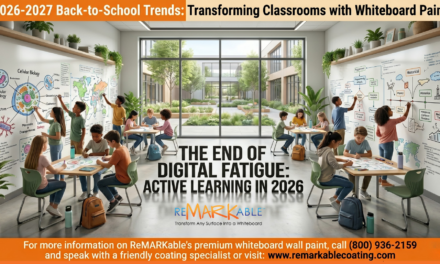
According to neurological research supported by organizations like the Centers for Disease Control and Prevention (CDC), physical movement is strongly connected to cognitive performance. When students stand up and move, their heart rates elevate slightly, pumping oxygen-rich blood to the brain. This physiological shift enhances executive functioning, sharpens focus, and improves memory retention. Traditional, framed whiteboard walls confined to the front of the room do not facilitate this movement for the majority of the class. They keep the power—and the physical activity—concentrated entirely in the hands of the instructor. To truly unlock the neurological benefits of active learning, the physical boundaries of the classroom must be expanded to invite every student out of their chair.
2. Vertical Non-Permanent Surfaces: The Power of Whiteboard Paint
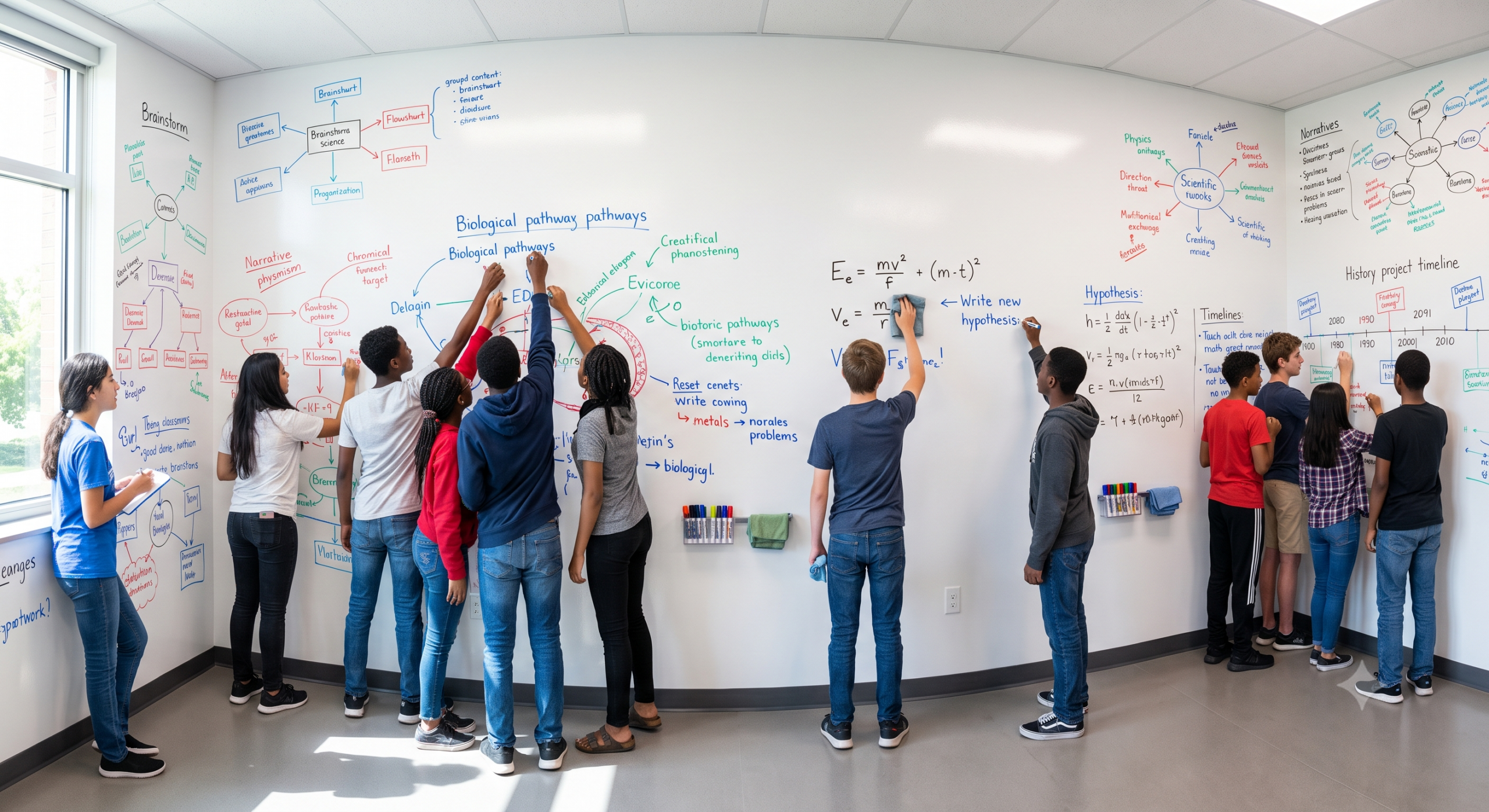
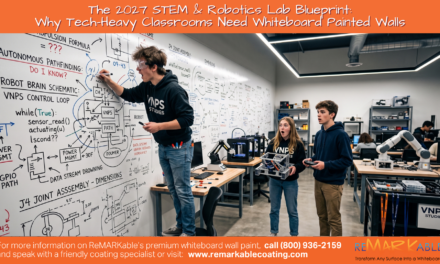
One of the most significant pedagogical breakthroughs of the last decade is the concept of “Building Thinking Classrooms,” heavily researched by educational theorist Dr. Peter Liljedahl. His extensive institutional studies found that when students are asked to solve complex problems on “Vertical Non-Permanent Surfaces” (VNPS), their behavior radically transforms.
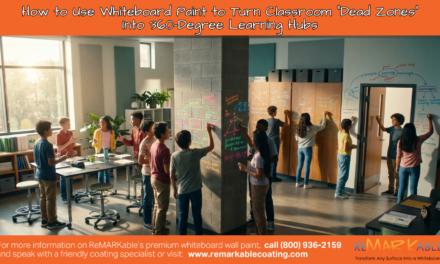
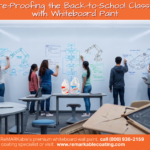
When schools apply premium whiteboard paint to create floor-to-ceiling writing surfaces along the entire perimeter of a room, they are essentially wrapping the classroom in VNPS. Liljedahl’s research observed that when students stand at a vertical writable surface rather than sitting hunched over a horizontal desk, they start working on the task significantly faster. The “time-to-task” drops from minutes to mere seconds.
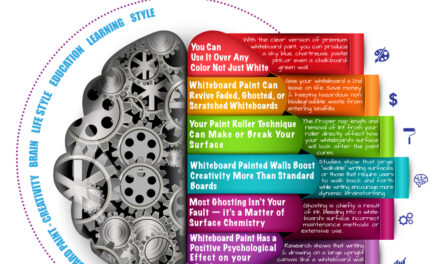
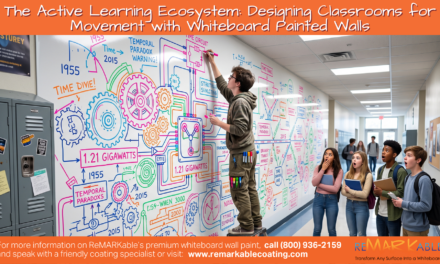
Why does this happen? The verticality of the surface requires gross motor movement, engaging the whole body rather than just the fine motor skills used on a tablet or notebook. Additionally, because the medium is non-permanent—meaning errors can be wiped away instantly with a simple cloth—students display a drastically higher willingness to take intellectual risks. They are not paralyzed by the fear of making a permanent mistake on a graded worksheet. By coating the classroom perimeter with high-performance writable coatings, administrators provide the exact physical infrastructure required to keep students energized, standing, and fearlessly experimenting with the curriculum.
3. Decentralizing Instruction: Peer-to-Peer Engagement on Dry Erase Walls
A classroom that moves with its students is a classroom that democratizes instruction. In an outdated model, the flow of information is strictly linear: teacher to student. But in a 2026-2027 active learning ecosystem, the flow of information is highly fluid, multi-directional, and collaborative.
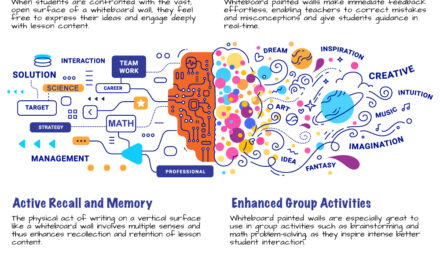
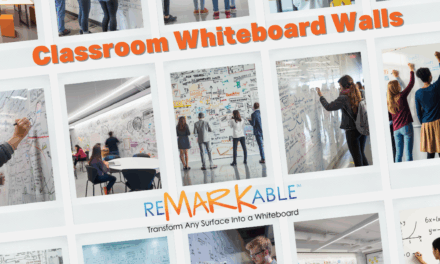
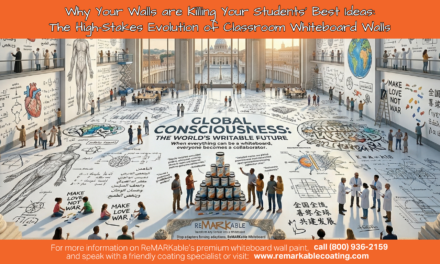
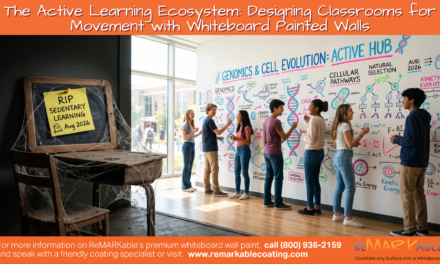
When an institution installs expansive, seamless dry erase walls, it shatters the restrictive “front of the room” paradigm. The classroom suddenly has no defined front or back. Instead, it becomes a 360-degree canvas for peer-to-peer instruction. Educational psychology, heavily rooted in Lev Vygotsky’s “Zone of Proximal Development,” demonstrates that students often master complex concepts fastest when they are guided by peers who have just recently grasped the material themselves.
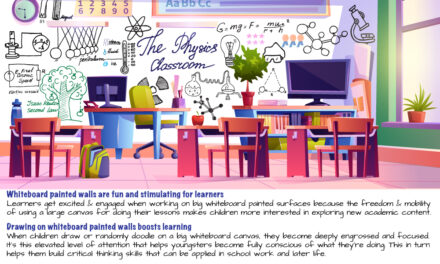
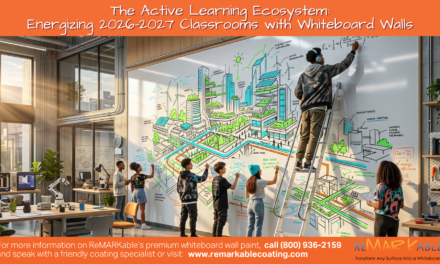
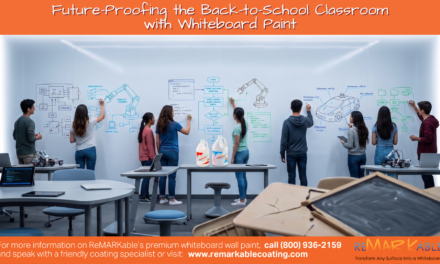
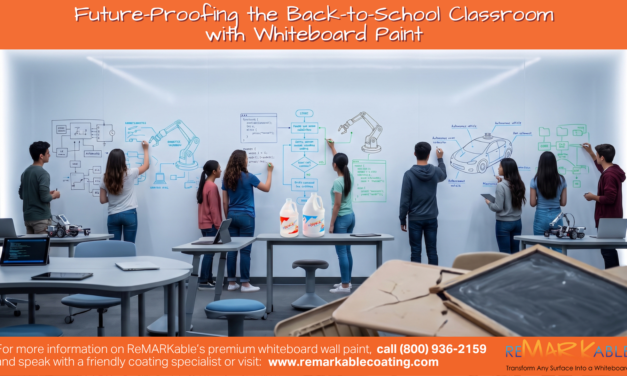
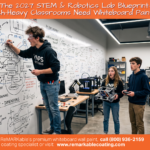
Expansive writable surfaces facilitate this exact type of decentralized, collaborative momentum. Imagine a high school physics class where the teacher introduces a complex thermodynamics equation. Instead of watching the teacher solve it silently, the class breaks into small pods of three. Because the entire room is coated in a writable surface, every single group has their own dedicated vertical space to work. The room hums with energy. Students stand shoulder-to-shoulder, passing markers back and forth, physically pointing to variables, crossing out miscalculations, and arguing passionately about the next step in the formula. The teacher’s role shifts from a static lecturer to an active facilitator, moving fluidly from group to group across the room. The space feels alive because the students are actively constructing their own knowledge in real-time.
4. Architectural Fluidity: Combining Modular Furniture and Whiteboard Wall Paint
To maximize the impact of an active learning ecosystem, facility directors must ensure that every physical element of the room works in synergy. While expansive writable surfaces provide the ultimate destination for student collaboration, the pathway to those surfaces must remain unobstructed. This is where the integration of agile, modular furniture becomes critical.
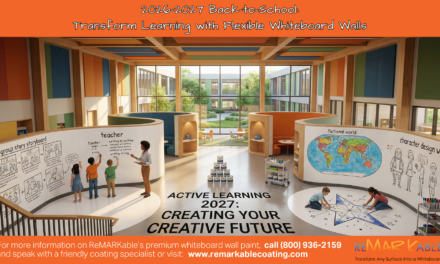
In a truly kinetic classroom, the furniture and the architecture work together seamlessly. Heavy, bolted-down desks have been replaced by lightweight, ergonomic seating and tables equipped with casters. This mobility allows the physical layout of the room to pivot in seconds. A teacher can begin the class with a brief, 10-minute centralized instructional huddle. Then, with a simple command, students roll their desks out of the way, opening up the center of the room and clearing the pathways to the perimeter walls.
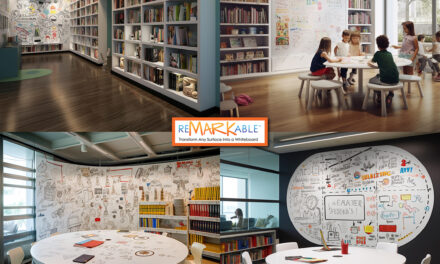
When paired with high-quality whiteboard wall paint, this modular approach creates an environment of total adaptability. There are no bulky, rolling easel boards to trip over, and no metal chalk trays protruding from the walls to dictate where furniture can be placed. The invisible infrastructure of the painted walls allows the room’s floor plan to shift fluidly from a Socratic seminar circle, to independent study pods, to wide-open collaborative standing zones. This spatial agility ensures that the physical room never acts as a barrier to the day’s instructional goals; instead, it flexes and adapts to support whatever pedagogical rhythm the teacher requires.
5. Institutional ROI: Why Real Schools are Ditching Framed Boards
For school district superintendents and campus facility managers, upgrading an institution’s infrastructure is a major logistical and financial undertaking. The shift toward active learning environments is not merely a passing educational trend; it is a data-backed evolution in how campuses operate. As a result, the procurement of classroom hardware is being scrutinized through the lens of long-term Return on Investment (ROI) and spatial efficiency.
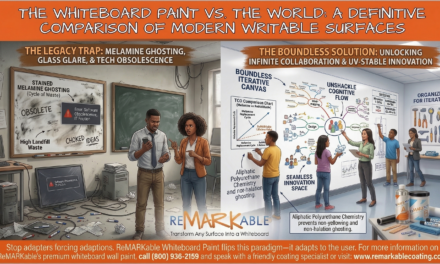
Traditional framed whiteboards carry severe limitations for real-world institutional use. They are restricted by rigid dimensions (typically 4×8 feet), forcing students to crowd uncomfortably around a tiny surface area if they attempt group work. Furthermore, the constant cycle of maintaining, repairing, and replacing ghosted melamine boards or shattered porcelain frames drains annual facility budgets and creates massive landfill waste.
By upgrading to seamless, commercial-grade writable coatings, schools are actively future-proofing their real estate. Painting the drywall directly transforms an existing architectural necessity—the wall—into a permanent, highly durable educational asset. It maximizes the usable square footage of the room, turning every blank space, structural column, and hallway into a potential hub for active learning and brainstorming. For schools aiming to deliver the highest quality education, investing in infrastructure that permanently supports physical movement, collaboration, and cognitive engagement is one of the most fiscally responsible capital improvements available.
Fostering Momentum for the Future
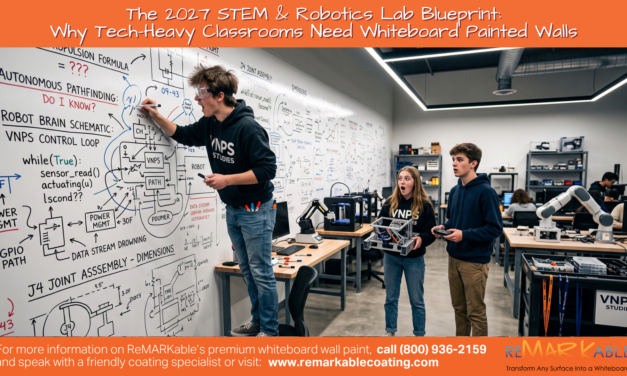
As educational leaders look ahead to the next generation of academic excellence, it is evident that the physical design of a classroom is just as important as the curriculum taught within it. We can no longer expect students to thrive in static, restrictive environments that actively suppress their natural kinetic energy. To cultivate deep, meaningful engagement, we must build spaces that honor the fundamental connection between physical movement and cognitive growth. By replacing outdated, industrial hardware with continuous, 360-degree writable surfaces, schools empower their educators to design highly fluid, energetic lessons that pull students out of their seats and into the heart of the learning process. Whether you are redesigning a high school STEM lab, upgrading a middle school humanities wing, or building a brand-new university campus from the ground up, prioritizing seamless, floor-to-ceiling surfaces ensures that your facilities actively drive student momentum. The transition from a passive past to a dynamic, collaborative future begins with the environment we provide, confirming that the ultimate catalyst for an active learning ecosystem will always be your whiteboard walls.



![Giant Leaps Forward Require Big Spaces. [Leap Year Sale Event!]](https://www.remarkablecoating.com/wp-content/uploads/2016/02/Giant-Leaps-ForwardRequire-Big-Spaces-440x264.jpg)



![30% Off St Patrick’s Day Sale! [Details Inside]](https://www.remarkablecoating.com/wp-content/uploads/2016/03/Glorious-1-440x264.png)

![Drive Your Organization Into Openness and Watch it Expand [20% Off Whiteboard Paint]](https://www.remarkablecoating.com/wp-content/uploads/2016/04/Drive-Your-Organization-Into-Openness-and-Watch-It-Expand.-1-440x264.jpg)
















![ReMARKable’s Winter Sale is Here! [25% Off + Free Shipping]](https://www.remarkablecoating.com/wp-content/uploads/2018/01/Red-Tag-Winter-Fashion-Facebook-Post-1-440x264.png)




![ReMARKable Summer Sale 2018 [28% Off Whiteboard Paint]](https://www.remarkablecoating.com/wp-content/uploads/2018/06/Blue-Simple-Line-Beach-Facebook-Post-1-440x264.png)
























































































































































































0 Comments