

Energy Efficient Classrooms Using Whiteboard Walls
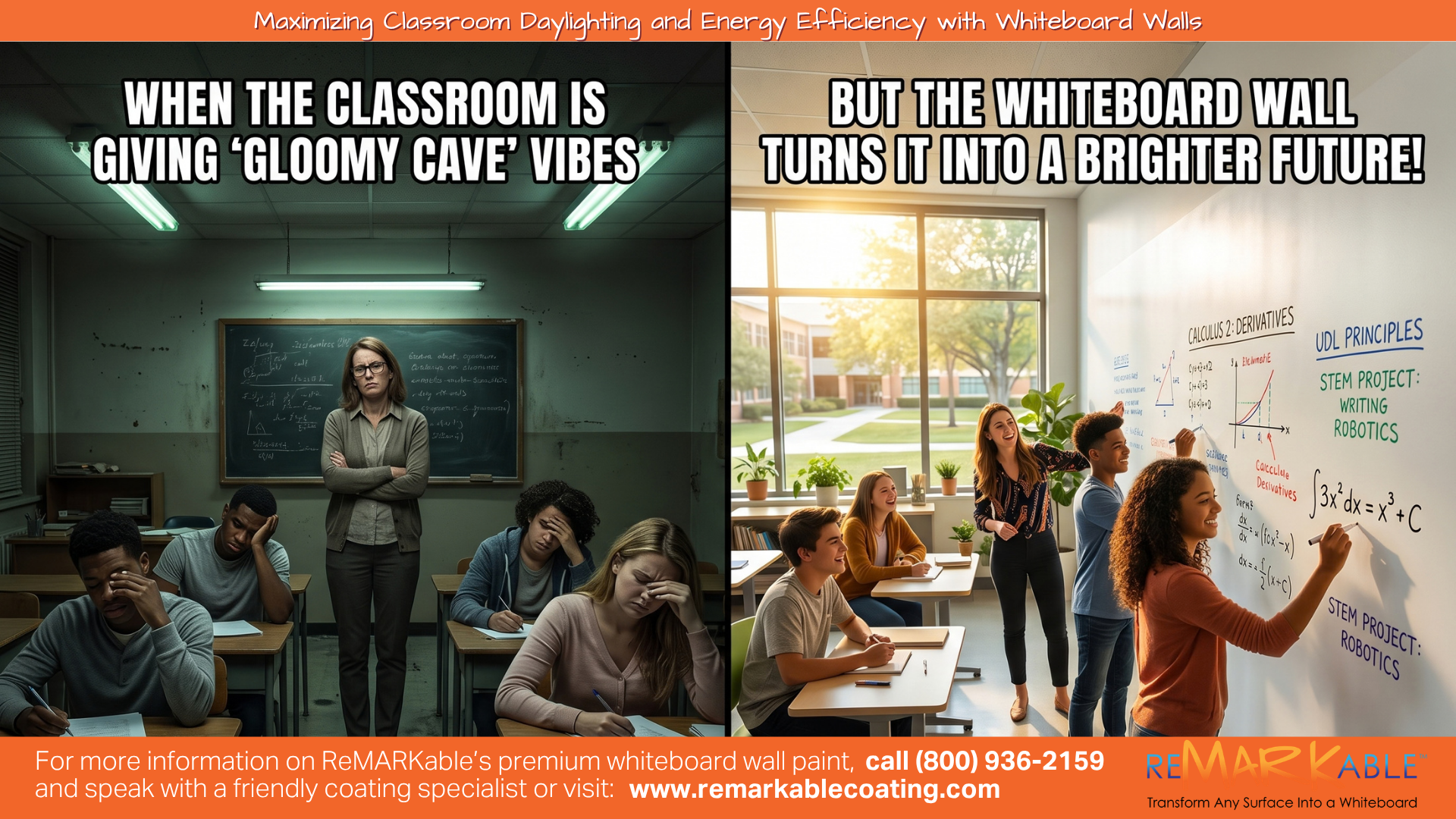
As school districts prioritize sustainable infrastructure and energy-efficient building designs for the upcoming academic year, installing whiteboard walls is emerging as a critical architectural strategy for maximizing natural daylight in learning spaces. Modern educational facility design goes far beyond selecting durable furniture; architects and facility directors are now tasked with engineering environments that actively improve student cognitive performance while lowering the building’s carbon footprint. Traditional classrooms, burdened by light-absorbing materials and dark, cluttered surfaces, actively work against these modern sustainability goals. By replacing outdated materials with expansive, high-gloss writable surfaces, schools can drastically improve indoor environmental quality, harness the proven academic benefits of natural daylight, and reduce their reliance on expensive artificial lighting grids.
1. The Proven Science of Daylighting and Academic Performance
The push for increased natural light in classrooms is not merely an aesthetic preference; it is grounded in rigorous scientific data. According to the landmark daylighting study conducted by the Heschong Mahone Group—a study widely cited by the U.S. Department of Energy and architectural boards—students in classrooms with the highest levels of natural daylight progressed 20% faster on math tests and 26% faster on reading tests over one year than students in environments with the least daylight.
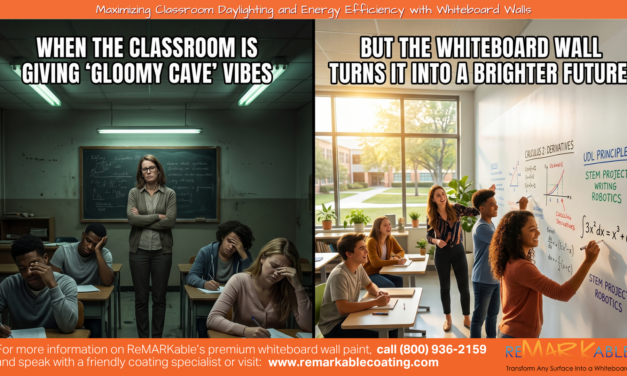
However, bringing natural light into a room through windows or skylights is only half of the architectural equation. How that light behaves once it enters the room depends entirely on the surface materials it hits. Traditional classroom materials—such as dark chalkboards, navy blue bulletin boards, and standard matte painted drywall—absorb incoming sunlight. Even a standard, small framed melamine board limits how light travels. This absorption creates dark corners and uneven lighting, forcing teachers to close the blinds and turn on harsh, flickering fluorescent overhead lights to balance the room, completely negating the cognitive benefits of the sun.
2. Harnessing Light Reflectance Value (LRV) with Dry Erase Walls
To successfully push natural sunlight deeper into a classroom’s floor plate, facility managers must evaluate a metric known in the architectural industry as Light Reflectance Value (LRV). LRV measures the percentage of light a paint color or surface reflects on a scale from 0 (absolute black, absorbing all light) to 100 (pure white, reflecting all light).
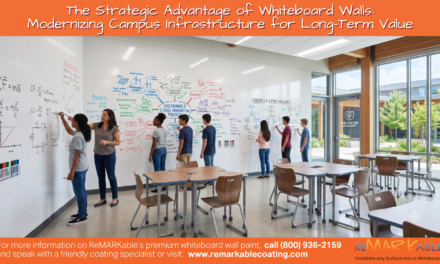
Standard classroom walls generally have an LRV between 40 and 60, meaning they absorb nearly half of the light that hits them. By coating the room’s perimeter with premium whiteboard paint, facility directors instantly upgrade the walls to an LRV of 85 or higher. Because the surface is highly reflective and glossy, sunlight from a single window is caught and bounced across the room. These expansive dry erase walls act as passive lighting amplifiers. They wash the room in a bright, even, natural glow, eliminating dark shadows and reducing the eye strain students often experience under harsh artificial bulbs.
3. Aligning with LEED Certification and Energy Reduction Goals
For school districts pursuing modern sustainability benchmarks, such as the U.S. Green Building Council’s (USGBC) LEED for Schools certification, optimizing daylight is a heavily weighted scoring category. To earn points for Indoor Environmental Quality (IEQ), you must prove that a high percentage of the classroom receives adequate natural light.
Applying continuous whiteboard wall paint helps architects meet these stringent daylighting requirements without the massive expense of cutting new exterior windows or installing structural skylights. Furthermore, maximizing daylight directly impacts the district’s operational budget. Lighting accounts for a massive percentage of a school building’s total electricity consumption. By amplifying natural light with reflective surfaces, schools can use automated daylight harvesting systems to dim overhead lights for most of the school day. This not only slashes the electrical bill but also lowers the HVAC cooling load, since artificial lights generate excess heat.
4. Eliminating Visual Clutter and Landfill Waste
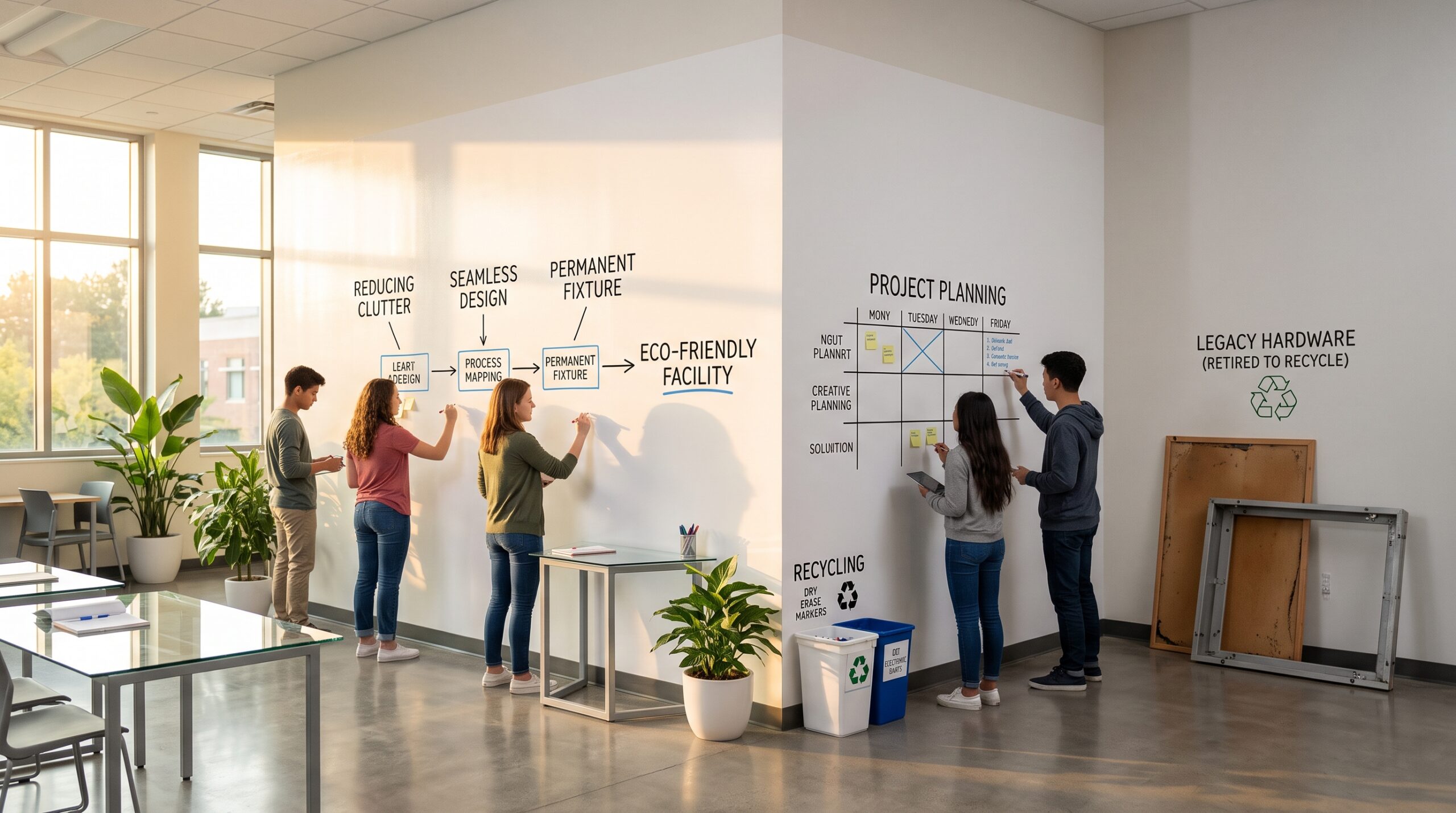
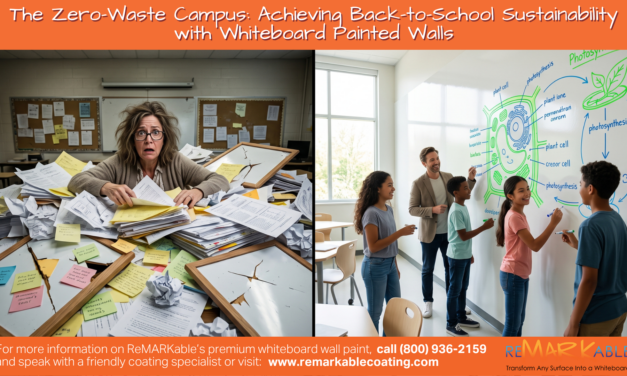
Beyond the physics of light, creating a bright, sustainable classroom also requires eliminating physical and visual waste. A hallmark of eco-friendly facility management is reducing the sheer volume of consumable materials and bulky hardware cycling through the building. Traditional boards warp, stain, and end up in dumpsters, forcing schools to pay heavy disposal fees continually.
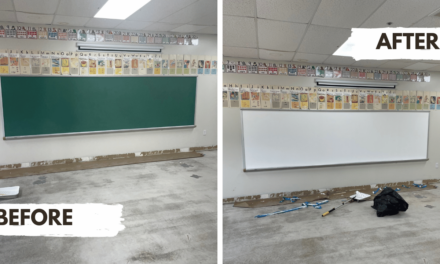
By transitioning to seamless dry erase paint, schools create a permanent architectural fixture. No corkboards to replace, no butcher paper rolls to buy, and no metal frames to throw away. The room transitions from a visually chaotic, cluttered space into a clean, minimalist environment. Teachers can still set up dynamic collaborative stations along the perimeter, but the underlying aesthetic remains bright, uniform, and inherently sustainable.
A Brighter Future for Facility Infrastructure
As educational institutions plan facility upgrades for the new school year, the focus must remain on investments that deliver both academic and operational returns. Upgrading classroom architecture to maximize natural light is one of the most effective ways to boost student performance while driving down energy costs. By moving away from dark, light-absorbing materials and embracing continuous, high-LRV writable coatings, districts can engineer spaces that are brilliant in every sense of the word. This academic year, empower your educators, protect your operational budget, and transform your campus into a beacon of sustainable innovation with whiteboard walls.



![Giant Leaps Forward Require Big Spaces. [Leap Year Sale Event!]](https://www.remarkablecoating.com/wp-content/uploads/2016/02/Giant-Leaps-ForwardRequire-Big-Spaces-440x264.jpg)



![30% Off St Patrick’s Day Sale! [Details Inside]](https://www.remarkablecoating.com/wp-content/uploads/2016/03/Glorious-1-440x264.png)

![Drive Your Organization Into Openness and Watch it Expand [20% Off Whiteboard Paint]](https://www.remarkablecoating.com/wp-content/uploads/2016/04/Drive-Your-Organization-Into-Openness-and-Watch-It-Expand.-1-440x264.jpg)

















![ReMARKable’s Winter Sale is Here! [25% Off + Free Shipping]](https://www.remarkablecoating.com/wp-content/uploads/2018/01/Red-Tag-Winter-Fashion-Facebook-Post-1-440x264.png)



![ReMARKable Summer Sale 2018 [28% Off Whiteboard Paint]](https://www.remarkablecoating.com/wp-content/uploads/2018/06/Blue-Simple-Line-Beach-Facebook-Post-1-440x264.png)





































































































































































































0 Comments