
Integrating Universal Design in Back-to-School Facilities with Whiteboard Paint
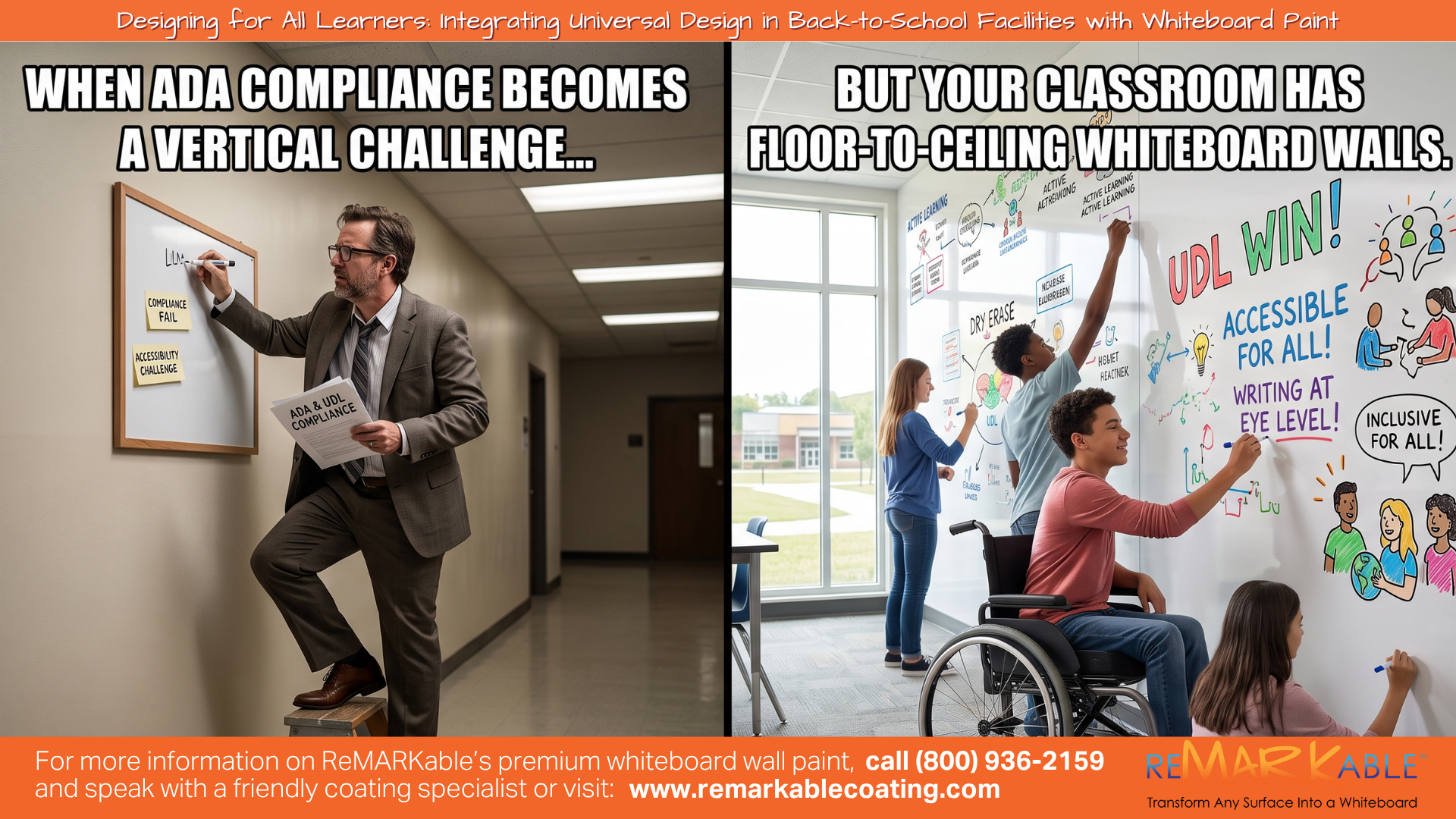
As school districts finalize their facility preparations for the academic year using whiteboard paint, campus administrators and facility directors face a complex regulatory and pedagogical landscape. Modern classrooms are more diverse than ever, housing students with a wide spectrum of learning styles, neurodivergent needs, and physical accessibility requirements. To meet these demands, the U.S. Department of Education and international accessibility frameworks increasingly emphasize Universal Design for Learning (UDL)—a structural educational model originally established by the Center for Applied Special Technology (CAST) to give all students equal opportunities to learn. However, traditional classrooms often fail UDL mandates because they rely on rigid, one-size-fits-all physical layouts, such as fixed desks and tiny, high-mounted writing boards that are physically inaccessible to many students. To truly future-proof school facilities and foster complete equity from the first day of the academic year, educational institutions must modernize their physical infrastructure. By applying high-performance coatings directly to classroom walls, facility planners can create continuous, multi-level writing surfaces that seamlessly accommodate every student, ensuring that physical architecture actively supports inclusive, barrier-free education.
1. The Regulatory and Pedagogical Shift Toward UDL Frameworks
Universal Design for Learning is not merely an educational preference; it is a scientifically grounded framework designed to improve and optimize teaching and learning for all people. As outlined in federal educational technology plans and civil rights guidelines under the Every Student Succeeds Act (ESSA), learning environments must provide multiple means of engagement, expression, and representation. In practice, this means a classroom cannot rely solely on traditional lecturing or digital screens; it must offer diverse ways for students to interact with information physically and visually.
Unfortunately, legacy classroom architecture often works directly against UDL principles. Standard institutional classrooms feature a single, high-mounted whiteboard positioned rigidly at the front of the room, flanked by bulletin boards or fixed cabinetry. According to guidelines from the National Center on Universal Design for Learning, physical barriers in the classroom disproportionately hinder students with physical mobility challenges, wheelchair users, or younger learners with developing motor skills who cannot reach high-mounted writing surfaces. Furthermore, students with sensory processing differences or executive functioning hurdles often struggle to process information that is confined to a small, cluttered screen or a cramped paper notebook. Bridging the gap between federal inclusivity mandates and everyday classroom reality requires a fundamental reimagining of the room’s vertical real estate.
2. Breaking Down Physical Barriers with Continuous Whiteboard Walls
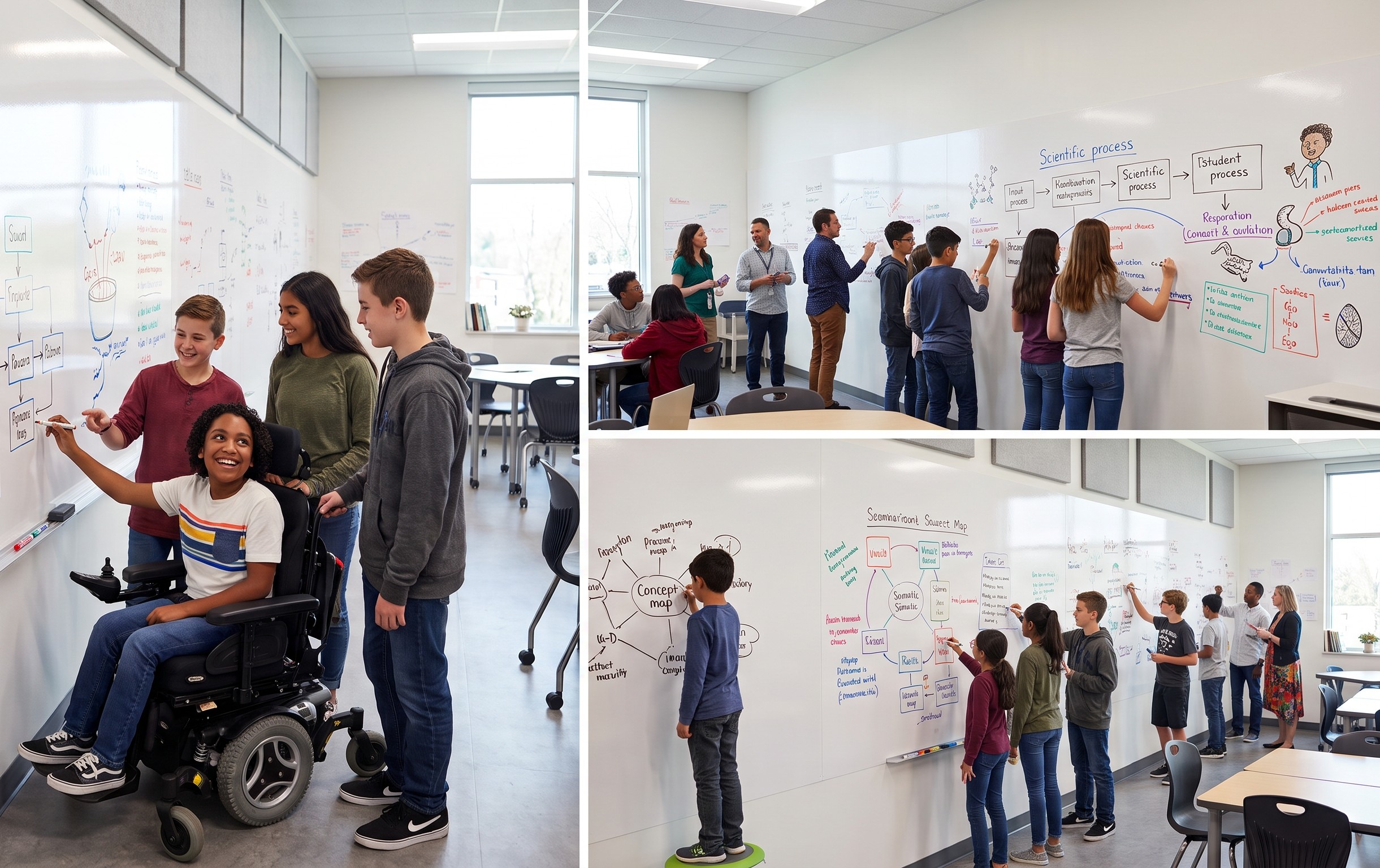
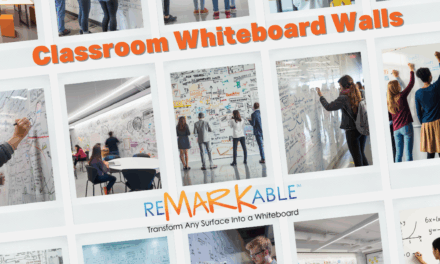
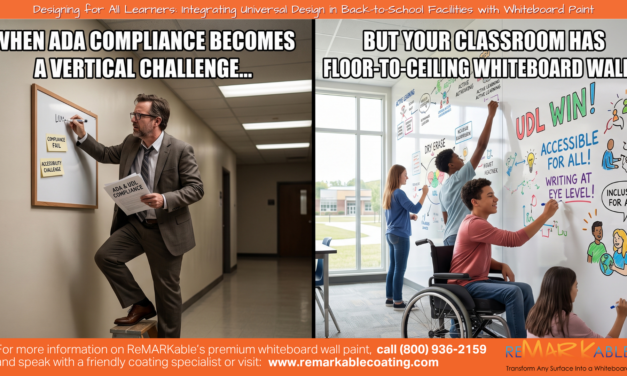
The most direct way to satisfy UDL accessibility requirements is to eliminate physical barriers altogether. When a facility applies premium whiteboard paint across the entire perimeter of a classroom, it shatters the traditional hierarchy of the “teacher’s board” at the front of the room.
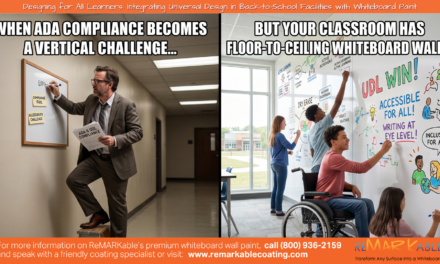
Because the writable surface extends continuously from wall to wall, the entire perimeter of the classroom becomes an accessible learning zone. A student in a wheelchair can pull up to any section of the room and engage in group problem-solving at eye level, fully aligning with the Americans with Disabilities Act (ADA) accessibility guidelines for reach ranges. Younger elementary or middle school students who experience fatigue from working exclusively at seated desks can stand comfortably and map out concepts on vertical planes. By removing the frame, the ledge, and the height restrictions of legacy boards, continuous whiteboard walls ensure that every student—regardless of physical stature or mobility—has equal, unhindered access to the primary visual medium of the classroom.
3. Supporting Neurodiversity and Cognitive Processing
Beyond physical accessibility, modern school facilities must account for the staggering rise in neurodivergent student populations, including learners on the autism spectrum, students with ADHD, and those with specific processing differences. According to surveillance data published by the Centers for Disease Control and Prevention (CDC), approximately 1 in 36 children is identified with autism spectrum disorder (ASD), and a vast majority of school-aged children navigate neurodevelopmental or learning differences that benefit significantly from visual, low-distraction environmental structures.
Traditional digital smartboards and cluttered bulletin boards can often induce cognitive fatigue or sensory overload due to glaring lights, flashing notifications, and high visual noise. In contrast, matte-finish or low-glare commercial dry erase walls provide a calm, neutral, and expansive canvas where information can be organized cleanly and logically. Teachers can color-code complex multi-step instructions using non-toxic dry-erase markers, breaking down overwhelming assignments into digestible, highly visible visual chunks. This spatial organization helps neurodivergent learners track multi-step projects independently, reducing anxiety and fostering a profound sense of self-regulation during independent and collaborative work.
4. Architectural Flexibility: Adapting to Diverse Group Modalities
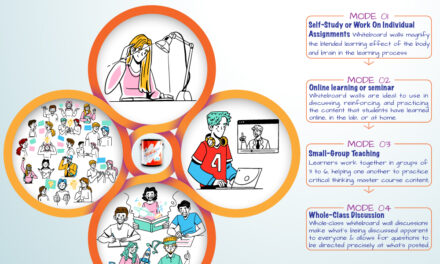
A core tenet of inclusive facility management is spatial adaptability. On any given school day, a classroom might transition rapidly from an individual quiet-work period to a noisy, collaborative Socratic seminar, followed by small-group intervention sessions. Traditional classroom furniture—such as heavy wooden desks and bolted-down marker boards—makes these rapid transitions cumbersome and physically taxing for educators.
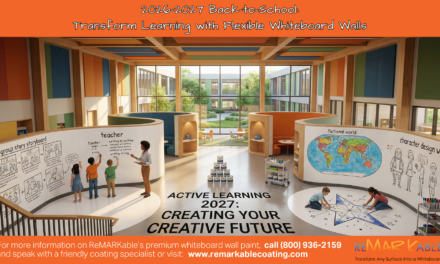
By integrating seamless dry erase wall paint into the foundational drywall of the building, schools create an agile, multi-zone learning ecosystem. Teachers can divide the room into functional stations simply by utilizing different sections of the perimeter. One corner can be designated as a low-stimulation independent writing zone, while another expansive wall acts as a high-energy collaborative hub for group brainstorming. Because the writable surface requires zero floor space, students can move freely around the room, utilizing the walls as interactive notebooks without creating physical bottlenecks or safety hazards. This architectural flexibility allows educators to dynamically alter their room layout to suit specialized instruction without ever needing to purchase expensive, temporary room dividers.
5. The Long-Term Fiscal and Operational ROI for Districts
For school superintendents, district facility directors, and school boards, implementing institutional changes must always align with responsible fiscal stewardship. Upgrading a school building to meet modern accessibility and UDL standards can often carry a daunting price tag if approached through traditional architectural renovation, such as building new interior partition walls or installing specialized mechanical lifts.
Investing in commercial-grade writable coatings offers a highly cost-effective, high-impact alternative. Instead of spending thousands of dollars on specialized, adjustable-height mechanical whiteboards that frequently break down and require costly maintenance, districts can coat entire walls at a fraction of the cost. Furthermore, high-performance whiteboard painted walls are engineered to withstand decades of rigorous daily use without ghosting, staining, or degrading. They eliminate the recurring budget drain of purchasing replacement boards and dramatically reduce consumable paper waste, supporting municipal solid waste reduction goals outlined by the Environmental Protection Agency (EPA). By investing in permanent architectural inclusivity, districts fulfill their accessibility mandates while protecting their operational budgets for years to come.
Building a Truly Inclusive Campus This Academic Year
As educational facilities prepare to welcome students for the new school year, the standard for institutional excellence has risen. True academic success requires environments that honor the diverse needs of every single learner who walks through the door. By moving past rigid, exclusionary layouts and embracing the limitless potential of accessible architectural design, schools can create classrooms where equity is built directly into the walls. Whether you are aiming to satisfy rigorous UDL compliance, support neuro-inclusive learning environments, or maximize your district’s facility budget, upgrading your vertical real estate is the definitive step forward. Transform your campus this back-to-school season by investing in the barrier-free power of whiteboard painted walls.



![Giant Leaps Forward Require Big Spaces. [Leap Year Sale Event!]](https://www.remarkablecoating.com/wp-content/uploads/2016/02/Giant-Leaps-ForwardRequire-Big-Spaces-440x264.jpg)



![30% Off St Patrick’s Day Sale! [Details Inside]](https://www.remarkablecoating.com/wp-content/uploads/2016/03/Glorious-1-440x264.png)

![Drive Your Organization Into Openness and Watch it Expand [20% Off Whiteboard Paint]](https://www.remarkablecoating.com/wp-content/uploads/2016/04/Drive-Your-Organization-Into-Openness-and-Watch-It-Expand.-1-440x264.jpg)
















![ReMARKable’s Winter Sale is Here! [25% Off + Free Shipping]](https://www.remarkablecoating.com/wp-content/uploads/2018/01/Red-Tag-Winter-Fashion-Facebook-Post-1-440x264.png)




![ReMARKable Summer Sale 2018 [28% Off Whiteboard Paint]](https://www.remarkablecoating.com/wp-content/uploads/2018/06/Blue-Simple-Line-Beach-Facebook-Post-1-440x264.png)























































































































































































0 Comments