

Achieving Back-to-School Sustainability with Whiteboard Painted Walls
As the back-to-school season approaches for the 2026-2027 academic year, campus administrators, facility directors, and district superintendents are facing a rapidly evolving set of institutional priorities. While academic excellence and student safety remain paramount, a third pillar has emerged at the forefront of educational planning: environmental sustainability. Across the country, institutions are actively pursuing recognition through programs such as the U.S. Department of Education’s Green Ribbon Schools initiative and striving for LEED (Leadership in Energy and Environmental Design) building certifications. However, true sustainability requires more than just installing solar panels or setting up cafeteria recycling bins; it demands a fundamental reevaluation of the materials used daily in the classroom.
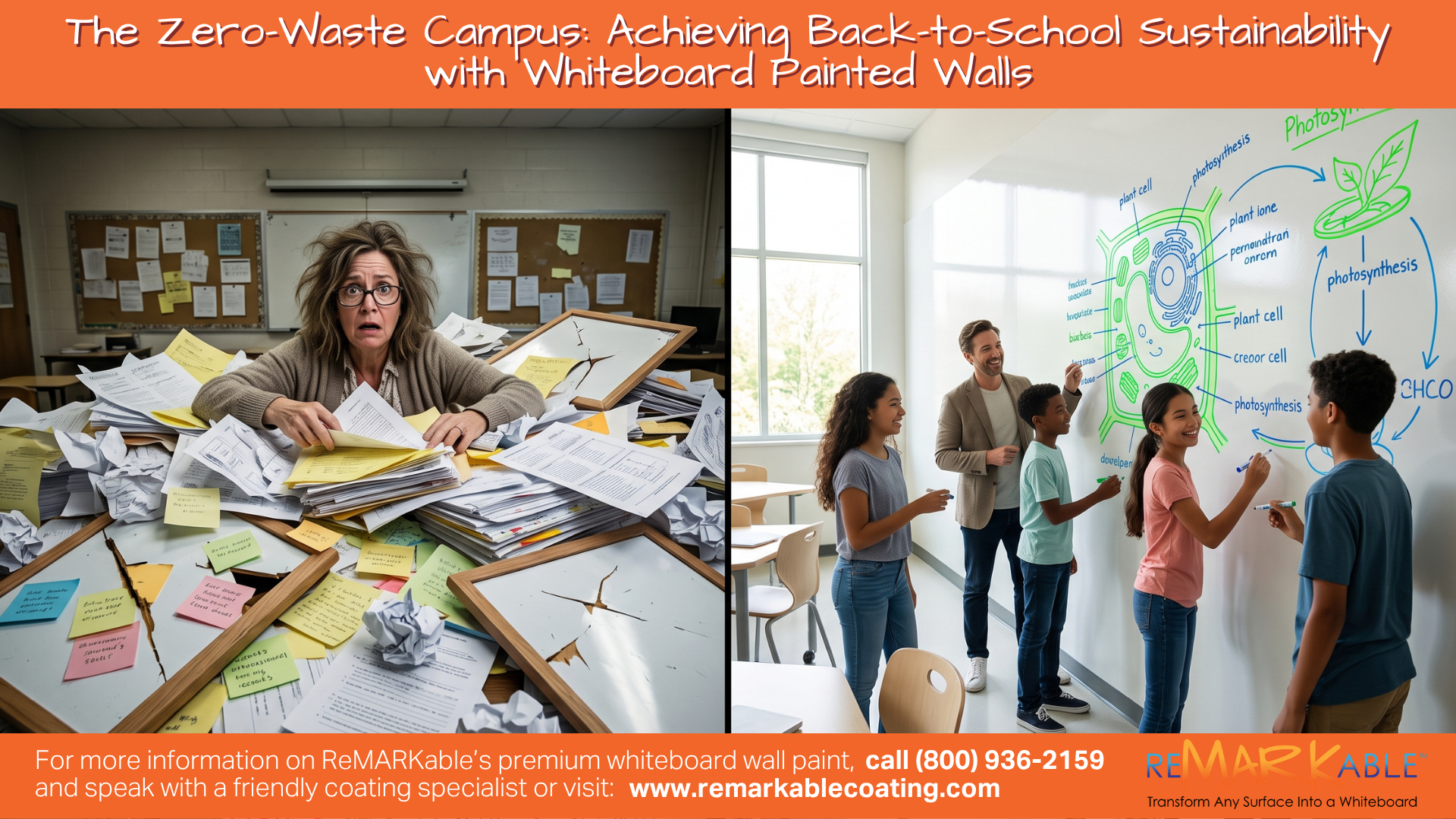
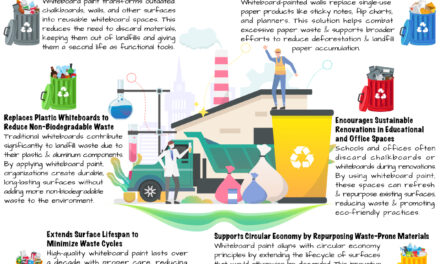
Every August and September, schools generate a massive influx of environmental waste. From thousands of reams of single-use paper to the disposal of shattered, ghosted, and obsolete classroom hardware, the traditional educational model carries a heavy ecological footprint. To combat this, forward-thinking districts are upgrading their architectural infrastructure. By transforming standard classroom drywall into expansive, commercial-grade whiteboard painted walls, schools are actively eliminating the need for short-lived, wasteful materials. This back-to-school season, modernizing your campus is not just about aesthetics—it is about making a permanent, zero-waste infrastructure investment that protects the environment while dramatically enhancing collaborative student learning.
1. The Hidden Environmental Cost of the Traditional Classroom
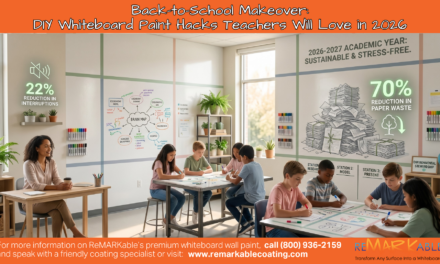
To understand the urgent need for a zero-waste initiative, educators must first confront the sheer volume of consumable waste generated during a standard school year. According to estimates based on Environmental Protection Agency (EPA) data on municipal solid waste, paper and paperboard products account for over 25% of all landfill waste in the United States. Schools are massive contributors to this statistic.
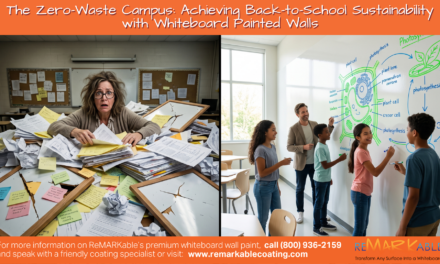
Consider the traditional back-to-school classroom ecosystem. Teachers rely heavily on printed syllabi, daily worksheets, flashcards, and single-use exit tickets. When it comes to collaborative group work, educators frequently burn through expensive rolls of oversized butcher paper, giant adhesive easel pads, and thousands of sticky notes. These materials are used for a single 45-minute class period, crumpled up, and thrown directly into the recycling bin—or worse, the trash can. Even when paper is recycled, the continuous cycle of purchasing, shipping, consuming, and processing paper products requires immense amounts of energy and funding. For a campus with two thousand students, this daily consumption scales into a massive, expensive, and ecologically damaging logistical operation. The modern classroom requires a structural intervention that breaks this cycle of continuous consumption.
2. Reducing Paper Dependency with Whiteboard Paint
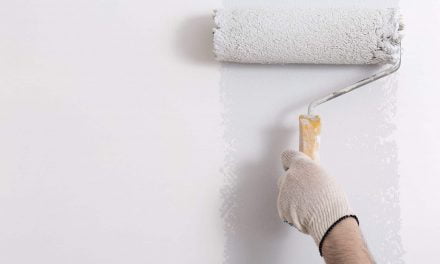
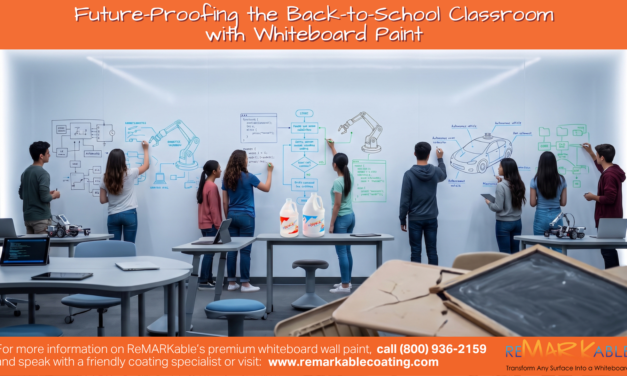
The most effective way to eliminate waste is to prevent it from entering the classroom in the first place. By applying premium whiteboard paint directly to the classroom walls, facility directors provide teachers with a limitless, reusable canvas that instantly replaces the need for single-use paper products.
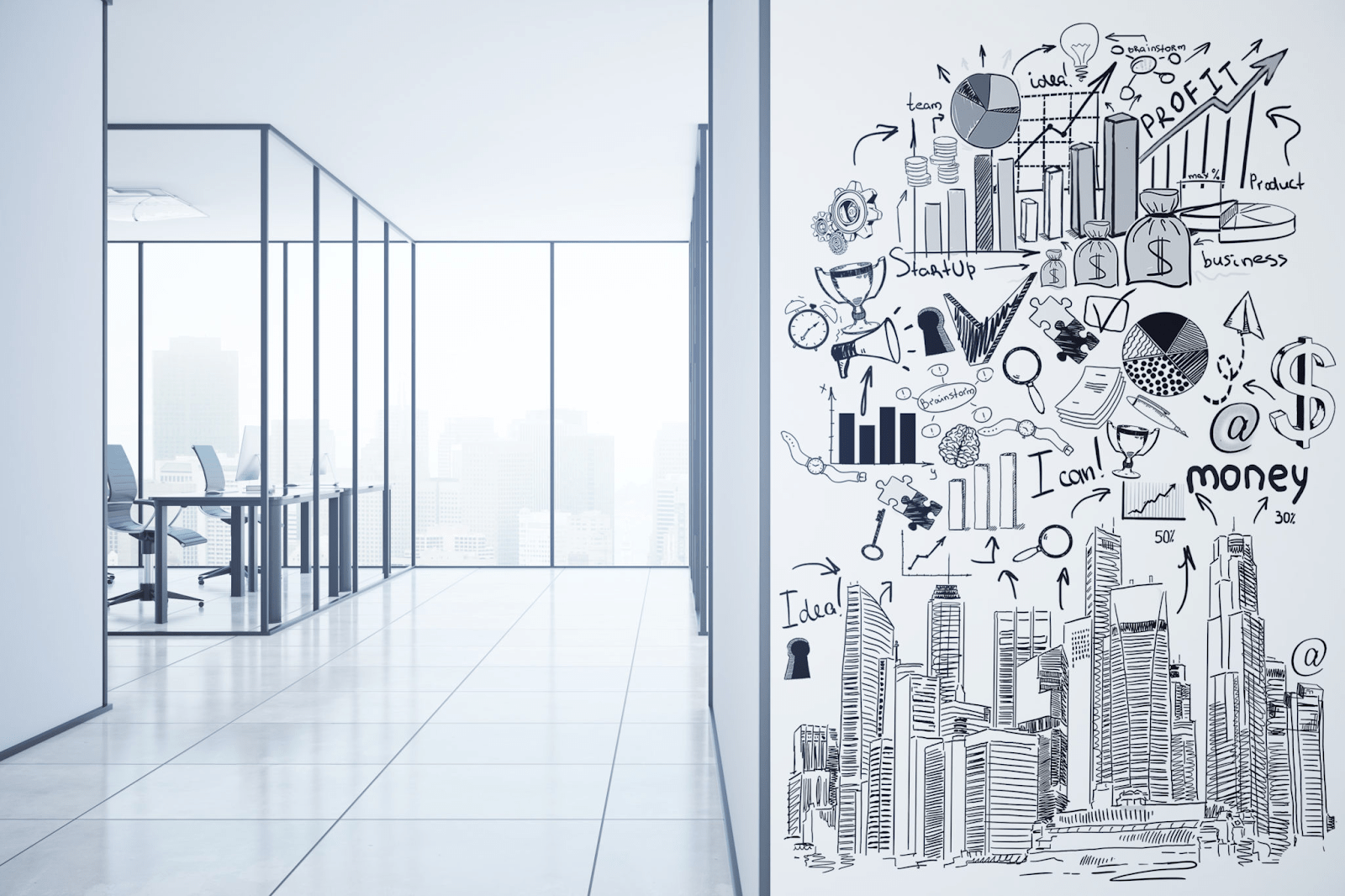
Imagine a high school biology class engaging in a collaborative back-to-school project on cellular structures. In a traditional setting, the teacher would distribute massive sheets of chart paper and sticky notes to five different student groups. At the end of the week, those materials are discarded. However, in a modernized classroom, the teacher directs the students to the perimeter of the room. Because the walls have been coated with an advanced writable surface, each group has a massive, dedicated vertical space to draw diagrams, map out biological processes, and brainstorm ideas using erasable markers.
When the project is over, a single wipe of a microfiber cloth resets the room entirely. Zero paper was consumed, zero waste was generated, and the school’s consumable budget was entirely preserved. By integrating whiteboard paint into the foundational architecture of the building, administrators seamlessly shift the campus culture away from disposable consumption and toward sustainable, infinite reuse.
3. The Landfill Reality of Framed Whiteboard Walls
Paper is not the only environmental offender in the back-to-school ecosystem; the hardware used to teach is equally problematic. Over the past few decades, the standard writing surface in educational facilities has been the melamine- or low-grade porcelain-framed whiteboard. While these tools are ubiquitous, they are an environmental liability.
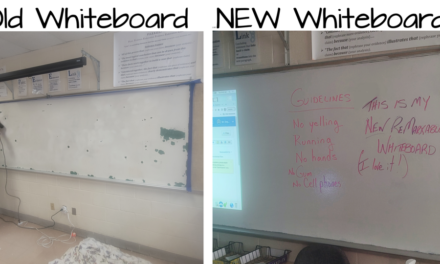
Melamine is a synthetic resin applied over a heavy particleboard core. In a high-traffic classroom environment, this thin resin layer quickly degrades. Within just three to five years, the surface becomes heavily “ghosted”—permanently stained with marker ink that no chemical solvent can remove. When these traditional whiteboard walls inevitably fail, they cannot be easily recycled. The mixture of chemical resins, particleboard, aluminum framing, and plastic trays means the entire unit is ultimately destined for a local landfill.
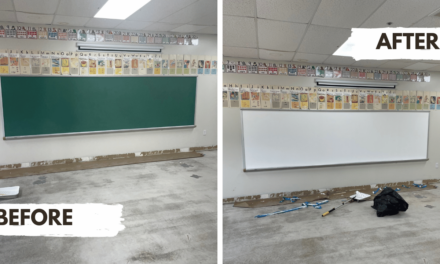
As facility directors conduct their back-to-school maintenance audits, they are often forced to unbolt these massive, nonrecyclable slabs from the drywall and throw them into campus dumpsters, only to purchase and install the exact same flawed product for the new year. This cycle is not only financially draining but represents a significant failure in sustainable facility management. To achieve a zero-waste campus, schools must stop purchasing disposable furniture and start investing in permanent architectural solutions.
4. Building Permanent Infrastructure with Dry Erase Walls
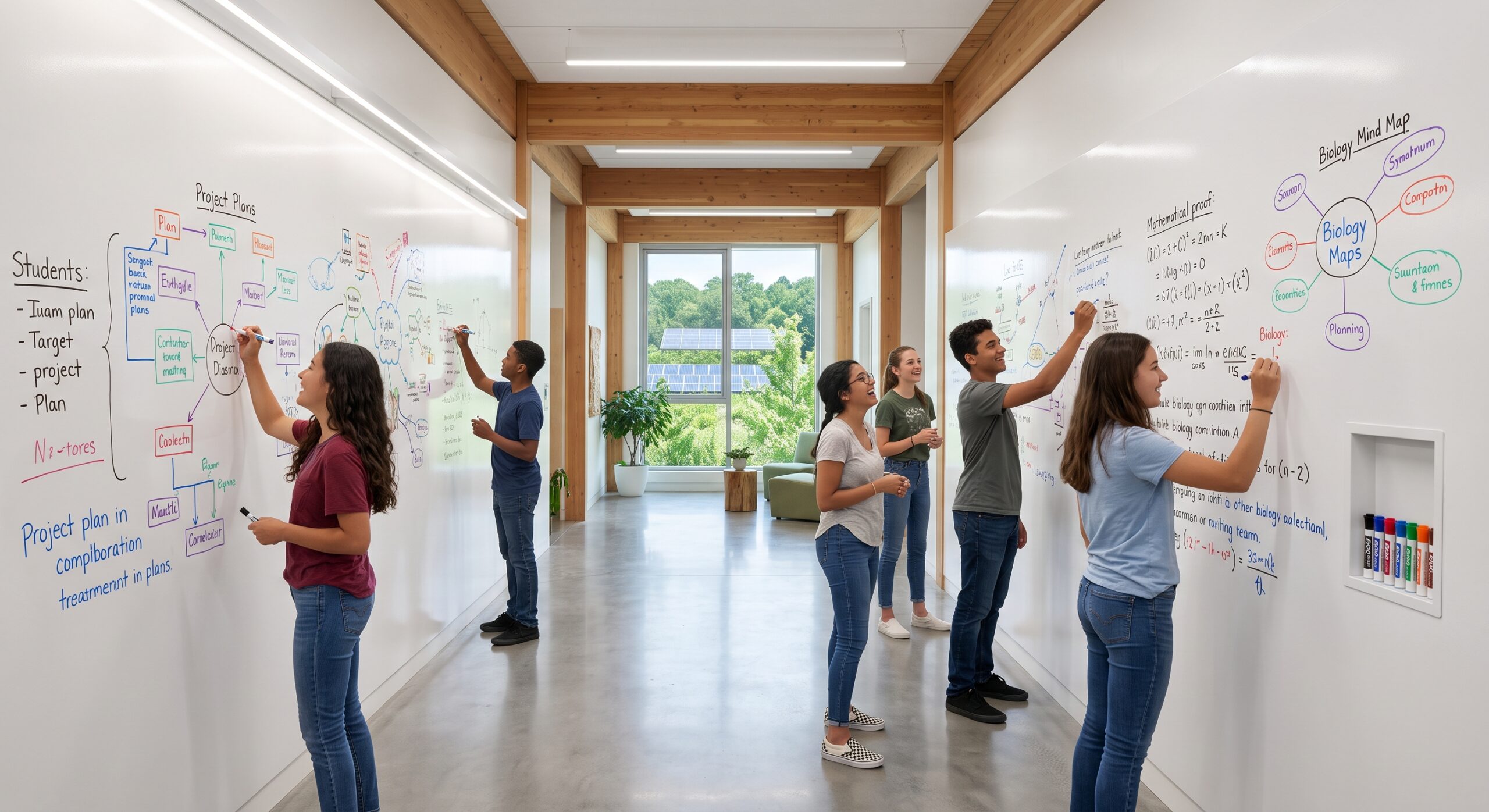
The architectural philosophy behind the zero-waste campus is rooted in the concept of “invisible infrastructure”—creating utility that is built directly into the building itself, rather than bolted onto it. When schools upgrade to seamless dry erase walls, they break the cycle of hardware disposal entirely.
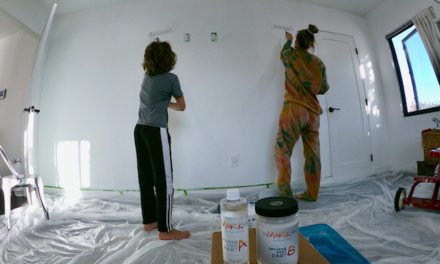
Commercial-grade writable coatings are applied directly over properly prepared drywall, effectively transforming the building’s existing structure into a permanent educational tool. Because there are no aluminum frames to bend, no plastic chalk trays to snap, and no heavy particleboard cores to degrade, there is absolutely nothing to throw away at the end of the school year. Furthermore, high-quality writable coatings do not ghost like cheap melamine. They are designed to withstand decades of rigorous daily use by thousands of students.
From an environmental design perspective, this is a massive victory. It perfectly aligns with the principles of LEED certification, which strongly rewards institutions for reducing material consumption, minimizing waste, and utilizing a building’s existing structural shell. By choosing seamless dry erase walls, district planners ensure that their classrooms will never again contribute bulky, toxic hardware to municipal landfills.
5. Eco-Friendly Collaboration: A New Standard for Student Engagement
Transitioning to a zero-waste infrastructure does not mean sacrificing the quality of education; in fact, it dramatically enhances the room’s pedagogical power. Today’s students—particularly Generation Z and Generation Alpha—are deeply invested in environmental causes. They are acutely aware of climate change and sustainability. When a school physically embodies these values through its architecture, it fosters a profound sense of institutional pride and student buy-in.
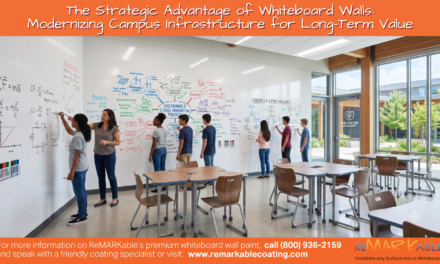
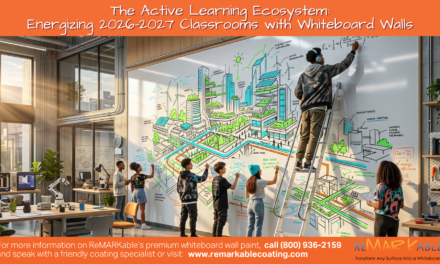
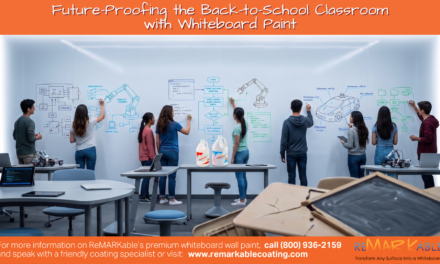
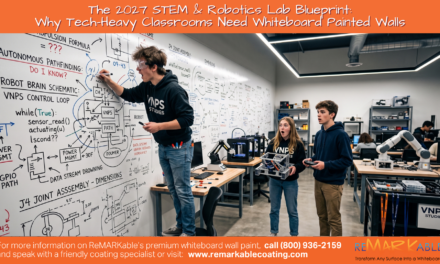
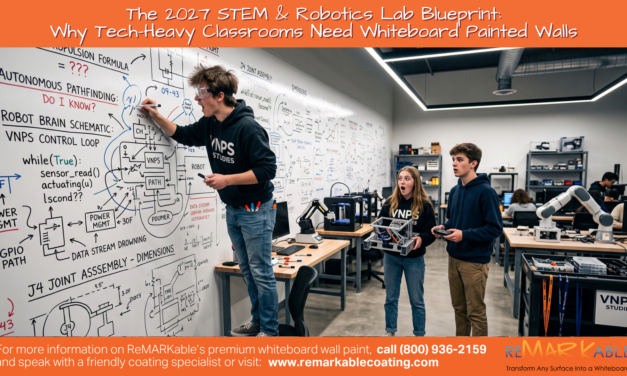
By utilizing high-performance whiteboard wall paint, teachers can completely redesign how collaboration happens in the classroom. Instead of sitting passively at individual desks filling out printed worksheets, students are encouraged to stand up, move, and work together on expansive vertical surfaces. Educational researchers have consistently proven that “Vertical Non-Permanent Surfaces” (VNPS) actively lower the barrier to entry for complex problem-solving. Because the medium is non-permanent, students are not afraid to make mistakes, test hypotheses, and wipe away their errors.
This kinesthetic, highly active learning model thrives in a room wrapped in whiteboard wall paint. It allows teachers to facilitate massive brainstorming sessions, Socratic seminars, and complex math modeling without ever touching the copy machine. The classroom becomes a dynamic, buzzing hub of peer-to-peer instruction, proving that the most sustainable, eco-friendly teaching methods are also the most neurologically engaging.
6. The Financial ROI of a Sustainable Back-to-School Season
For superintendents and school boards, every facility upgrade must be justified by a strong Return on Investment (ROI). The brilliant reality of the zero-waste campus model is that environmental sustainability and financial conservatism are inextricably linked.
When an institution invests in architectural writable surfaces, it initiates a cascade of budgetary savings—first, the annual budget for consumable paper, oversized chart pads, and sticky notes plummets. Second, the heavy capital expenditure dedicated to replacing, shipping, and installing new melamine boards every three years is eliminated. Finally, the campus saves significant capital on waste disposal fees, as the volume of trash generated by the classrooms drops drastically.
The initial investment in premium writable coatings pays for itself rapidly by protecting the school’s operational budget year after year. As funding for public education continues to face intense scrutiny, eliminating the wasteful cycle of disposable supplies is one of the most fiscally responsible decisions a campus leadership team can make heading into the new academic year.
Step Into a Greener School Year
As the doors open for the 2026-2027 school year, educational leaders have a profound opportunity to redefine how their facilities operate. The traditional classroom, with its endless consumption of single-use paper and its reliance on disposable, landfill-bound hardware, is no longer compatible with the goals of modern, environmentally conscious education. By making the strategic, architectural shift toward a zero-waste infrastructure, schools can radically reduce their ecological footprint while simultaneously protecting their annual operating budgets.
Transforming your campus does not require tearing down buildings; it simply requires reimagining the surfaces you already possess. By stripping away clunky, unrecyclable metal frames and replacing wasteful paper charts with seamless, floor-to-ceiling whiteboard painted walls, administrators empower their teachers to deliver highly engaging, kinesthetic lessons that leave absolutely no waste behind. Whether you are aiming for prestigious Green Ribbon recognition, pursuing LEED certification for a new campus wing, or simply trying to drastically cut your department’s paper budget, upgrading your visual real estate is the definitive answer. This back-to-school season, make a permanent, responsible commitment to your students’ future and the environment by transforming your institution with the limitless, sustainable power of whiteboard walls.



![Giant Leaps Forward Require Big Spaces. [Leap Year Sale Event!]](https://www.remarkablecoating.com/wp-content/uploads/2016/02/Giant-Leaps-ForwardRequire-Big-Spaces-440x264.jpg)



![30% Off St Patrick’s Day Sale! [Details Inside]](https://www.remarkablecoating.com/wp-content/uploads/2016/03/Glorious-1-440x264.png)

![Drive Your Organization Into Openness and Watch it Expand [20% Off Whiteboard Paint]](https://www.remarkablecoating.com/wp-content/uploads/2016/04/Drive-Your-Organization-Into-Openness-and-Watch-It-Expand.-1-440x264.jpg)
















![ReMARKable’s Winter Sale is Here! [25% Off + Free Shipping]](https://www.remarkablecoating.com/wp-content/uploads/2018/01/Red-Tag-Winter-Fashion-Facebook-Post-1-440x264.png)



![ReMARKable Summer Sale 2018 [28% Off Whiteboard Paint]](https://www.remarkablecoating.com/wp-content/uploads/2018/06/Blue-Simple-Line-Beach-Facebook-Post-1-440x264.png)
































































































































0 Comments