


Improving Indoor Air Quality in Schools with Dry Erase Paint
As school facility directors plan extensive campus renovations for the upcoming academic year, choosing a safe, low-VOC dry erase paint is one of the most critical decisions they can make to protect indoor air quality and student health. While modernizing classrooms with collaborative writing surfaces is essential for 21st-century learning, many administrators unknowingly introduce harmful chemicals into the learning environment by selecting outdated, toxic epoxy coatings. According to the U.S. Environmental Protection Agency (EPA), poor Indoor Air Quality (IAQ) in schools directly impacts student attendance, cognitive performance, and educator well-being. By prioritizing advanced, water-based architectural coatings, school districts can create expansive, floor-to-ceiling interactive learning spaces without compromising the respiratory health of their students or staff.
1. The Hidden Crisis of Indoor Air Quality in K-12 Facilities
The quality of the air inside a classroom has a profound and scientifically documented impact on academic success. The EPA reports that nearly one in thirteen school-aged children has asthma, making it the leading cause of school absenteeism due to chronic illness. Asthma triggers and respiratory irritants are frequently found in standard building materials, including cheap industrial paints, heavy adhesives used for bulletin boards, and toxic chemical solvents.
When facility managers upgrade classrooms with traditional, heavy-duty epoxy whiteboard paint, they often introduce high levels of Volatile Organic Compounds (VOCs) into the building. VOCs are harmful gases emitted by certain liquid chemicals as they dry. In poorly ventilated classrooms, these trapped gases cause headaches, dizziness, eye irritation, and severe asthma exacerbations. To create a truly safe back-to-school environment, district planners must heavily scrutinize the chemical makeup of every architectural finish they apply to their walls.
2. The Danger of Outdated Epoxy Coatings
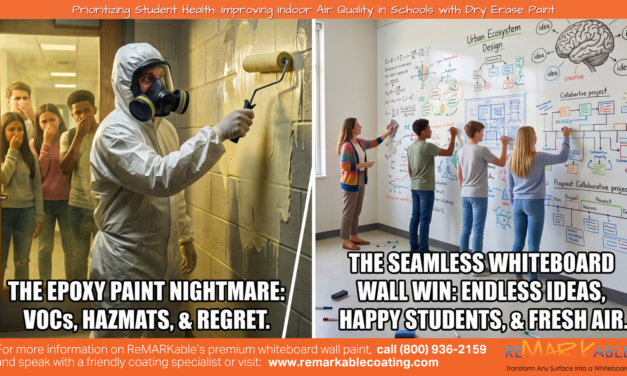
Historically, creating a writable surface on drywall required mixing highly toxic, two-part epoxy resins. These legacy industrial coatings are notorious for their noxious fumes, requiring painters to wear heavy respirators and forcing schools to completely shut down entire wings of a building for weeks just to let the chemical smell dissipate.
Beyond the dangerous off-gassing, traditional epoxy formulas yellow, crack, and ghost over time. They require multiple base coats, complex mixing ratios, and long periods of downtime that disrupt the school calendar. Modern educational facilities can no longer afford to rely on these hazardous, outdated materials. Instead, forward-thinking districts are transitioning to modern whiteboard walls that utilize safe, single-component, non-epoxy formulas designed specifically with student health in mind.
3. The Water-Based, Low-VOC Solution for Campus Wellness
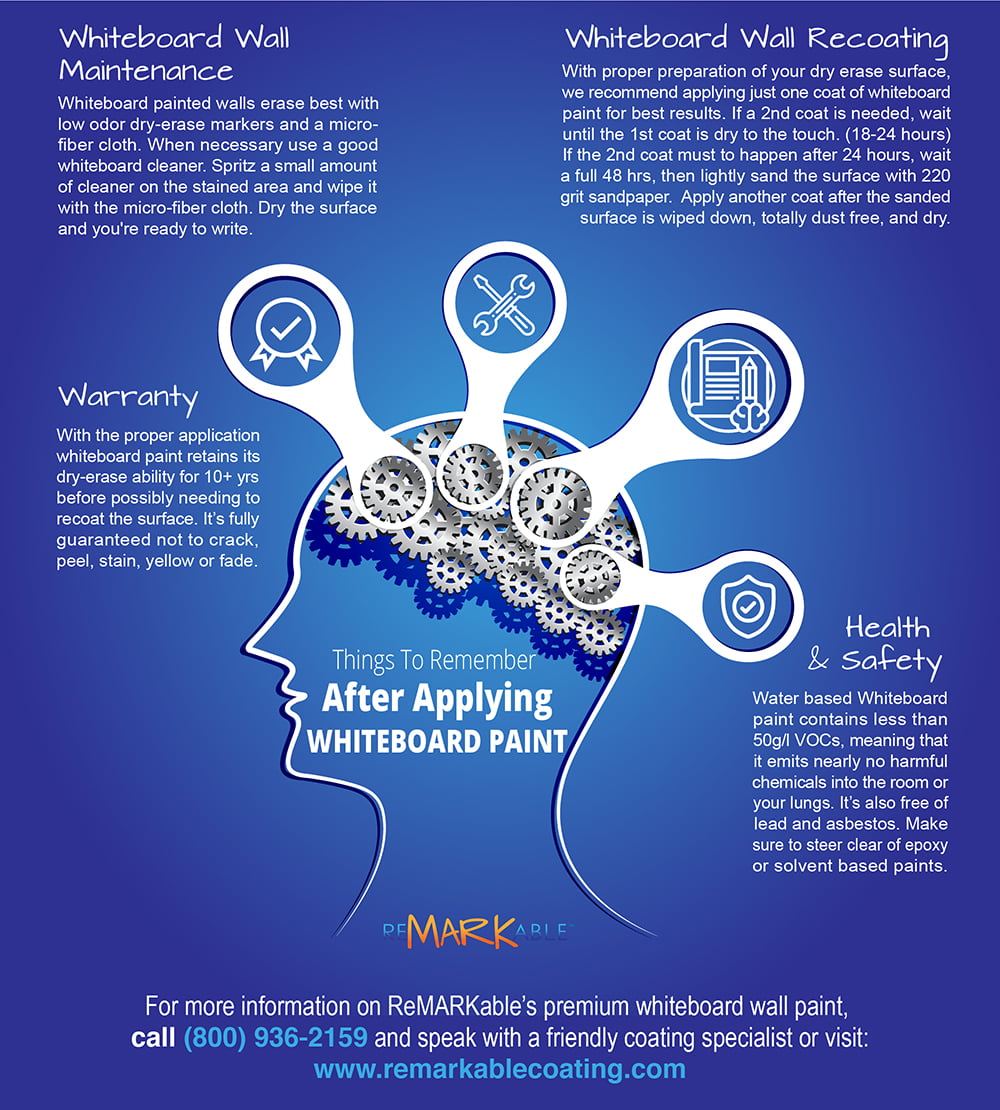
To align with modern EPA health guidelines and green building standards, schools must utilize advanced water-based coatings. High-performance, commercial-grade dry erase walls can now be achieved using non-epoxy formulas that are virtually odorless and boast incredibly low VOC levels.
Because these modern coatings are water-based, they do not release the harsh, toxic fumes associated with traditional industrial paints. Facility teams can confidently apply the product in enclosed classrooms without worrying about sickening educators or triggering student allergies when classes resume. By removing heavy chemical pollutants from the facility upgrade process, schools foster a clean, breathable atmosphere that supports deep cognitive focus and physical well-being.
4. Operational Efficiency: One-Coat Application and Fast Curing

Facility directors operate under incredibly tight schedules, especially during the narrow windows of summer, winter, or spring breaks. Prolonged renovation timelines are simply not feasible. Fortunately, modern water-based whiteboard wall paint is engineered for maximum operational efficiency.
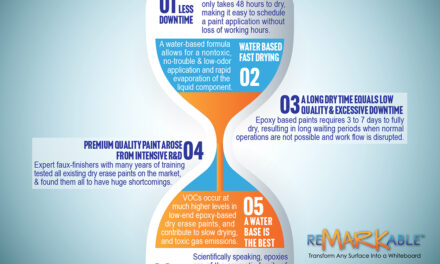
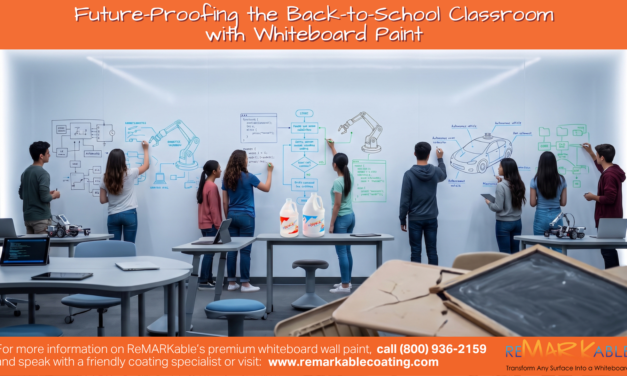
Unlike older multi-step epoxies that require complicated primers and long wait times, the most advanced writable coatings offer a seamless, one-coat application process. This drastically reduces the labor hours required by district maintenance teams. These non-epoxy formulas also cure in just 48 hours. Maintenance staff can paint a classroom on a Friday afternoon. By Monday morning, the room is completely odor-free, fully cured, and ready for students to start writing on a massive, frameless, corner-to-corner whiteboard wall. This rapid turnaround lets schools complete major facility upgrades without disrupting the academic calendar.
5. Cognitive Function: How VOCs Directly Impact Academic Performance
The impact of VOCs extends far beyond physical respiratory distress; it directly affects a student’s ability to think, process information, and perform on standardized tests. The landmark COGfx Study, conducted by researchers at the Harvard T.H. Chan School of Public Health, specifically measured the impact of indoor environmental quality on cognitive function.
The Harvard study found that individuals working and learning in “Green” building environments—defined as spaces with enhanced ventilation and significantly lower VOC levels—scored dramatically higher on cognitive function tests than those in conventional buildings with higher VOC concentrations. Specifically, scores for strategic thinking, crisis response, and information usage were significantly impaired when VOC levels were elevated. When schools apply toxic paints to large surface areas, the resulting off-gassing directly diminishes the cognitive capabilities of the students sitting in that room. By utilizing non-toxic architectural coatings, schools actively protect the neurological and cognitive bandwidth of their learners.
6. Combating “Sick Building Syndrome” in Legacy School Facilities
Many school districts operate within legacy buildings constructed decades ago. These aging infrastructures often struggle with poor HVAC ventilation and restricted airflow. The EPA officially recognizes “Sick Building Syndrome” (SBS) as a condition where building occupants experience acute health and comfort effects that appear to be linked directly to the time spent inside a specific building. The primary culprits of SBS are inadequate ventilation combined with chemical contaminants from indoor sources.
When renovating older classrooms, adding new chemical pollutants must be avoided at all costs. Traditional whiteboards made of cheap melamine are manufactured with formaldehyde-based resins that continuously off-gas over their lifespan. By replacing these outdated, toxic boards with a safe, water-based writable coating, facility directors eliminate a major source of indoor chemical pollution. Transforming the walls into a functional canvas should alleviate Sick Building Syndrome, not contribute to it.
7. Meeting Green Building Standards: LEED and CHPS Compliance
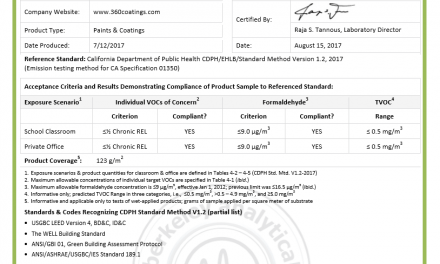
For districts pursuing prestigious architectural certifications, the materials placed on the walls matter just as much as the solar panels on the roof. The U.S. Green Building Council’s (USGBC) LEED v4 and v4.1 certifications include strict requirements under the Indoor Environmental Quality (EQ) credit category. To earn these credits, schools must use low-emitting materials, specifically paints and coatings that meet rigorous VOC emissions evaluation standards, such as the California Department of Public Health (CDPH) Standard Method.
Similarly, the Collaborative for High Performance Schools (CHPS) requires strict adherence to low-VOC architectural finishes to ensure classrooms are healthy enough for developing children. By specifying water-based, low-odor writable coatings, architects and facility planners can easily secure these crucial green building credits, showing their communities they are investing in sustainable, health-conscious infrastructure.
8. Safer Daily Maintenance: Reducing Chemical Cleaner Exposure
The conversation around indoor air quality often stops at installation, but daily maintenance introduces its own set of chemical hazards. Standard whiteboards and cheap epoxy walls rapidly degrade, leading to heavy “ghosting.” To clean these ruined boards, janitorial staff and teachers are forced to use harsh, toxic chemical spray cleaners daily. These aerosolized chemical cleaners introduce a constant stream of secondary VOCs and respiratory irritants into the classroom air while students are present.
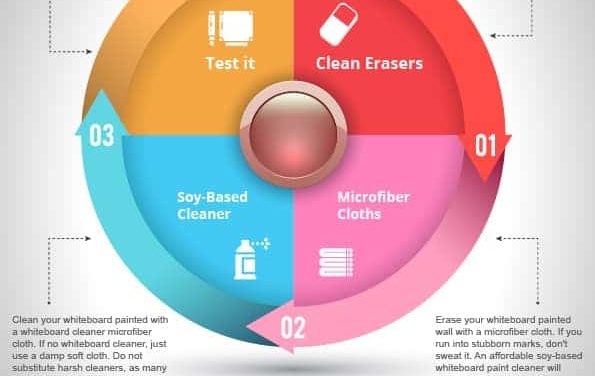
Premium, non-epoxy writable walls eliminate this daily chemical hazard. Because the advanced architectural coating creates a completely impermeable, high-gloss barrier, marker ink cannot penetrate the surface. Janitorial staff and teachers no longer need harsh chemical sprays; the wall wipes clean with a microfiber cloth and water. This drastic reduction in daily chemical cleaning agents plays a massive role in maintaining pristine, toxin-free air quality throughout the entire academic year.
Architecting a Safe, Collaborative Future
Creating a state-of-the-art collaborative classroom should never come at the expense of student safety. As educational standards push for more active, kinesthetic learning, school infrastructure must adapt responsibly. By rejecting toxic epoxies and eliminating outdated, space-consuming framed boards, schools can transform their vertical real estate into brilliant, edge-to-edge canvases. Investing in water-based, low-odor, and low-VOC dry erase paint ensures that your district provides a learning environment that is as healthy and breathable as it is innovative.



![Giant Leaps Forward Require Big Spaces. [Leap Year Sale Event!]](https://www.remarkablecoating.com/wp-content/uploads/2016/02/Giant-Leaps-ForwardRequire-Big-Spaces-440x264.jpg)


![30% Off St Patrick’s Day Sale! [Details Inside]](https://www.remarkablecoating.com/wp-content/uploads/2016/03/Glorious-1-440x264.png)

![Drive Your Organization Into Openness and Watch it Expand [20% Off Whiteboard Paint]](https://www.remarkablecoating.com/wp-content/uploads/2016/04/Drive-Your-Organization-Into-Openness-and-Watch-It-Expand.-1-440x264.jpg)

















![ReMARKable’s Winter Sale is Here! [25% Off + Free Shipping]](https://www.remarkablecoating.com/wp-content/uploads/2018/01/Red-Tag-Winter-Fashion-Facebook-Post-1-440x264.png)


![ReMARKable Summer Sale 2018 [28% Off Whiteboard Paint]](https://www.remarkablecoating.com/wp-content/uploads/2018/06/Blue-Simple-Line-Beach-Facebook-Post-1-440x264.png)
































































































































































































0 Comments