
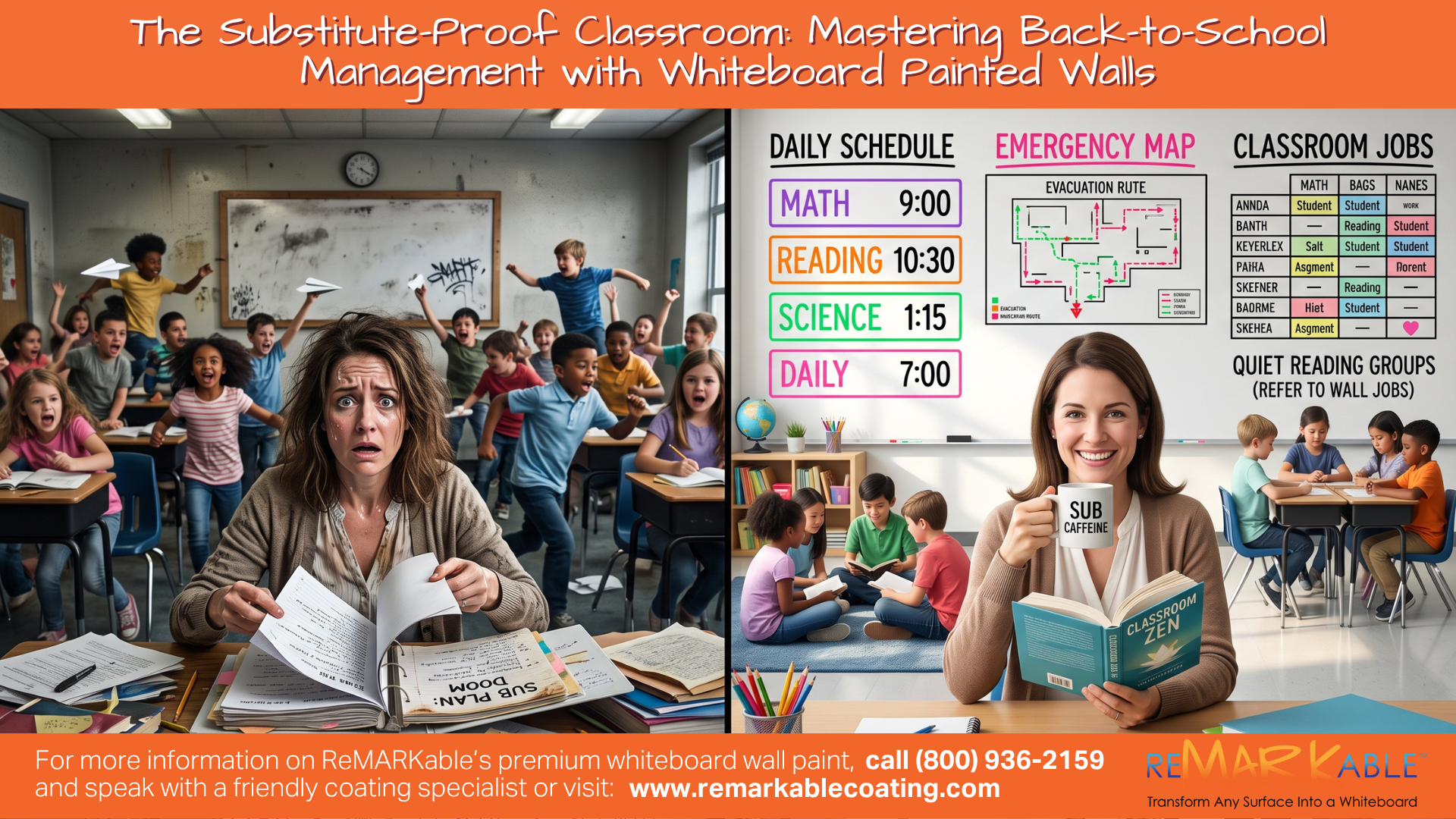
Mastering Back-to-School Management with Whiteboard Painted Walls
As educators gear up for the bustling back-to-school season, establishing self-sustaining classroom management systems that utilize seamless whiteboard painted walls has become the ultimate architectural strategy for a successful academic year. The holy grail of the teaching profession is a classroom that essentially runs itself—a highly organized environment where students know exactly what to do, where to go, and how to operate, even if the primary teacher is completely absent from the room. Every veteran educator knows that the first few weeks of school are not just about curriculum; they are about rigorously establishing routines that will carry the class through May. However, these vital procedures often break down the moment a substitute teacher steps through the door, leading to lost instructional time, behavioral issues, and massive anxiety for the absent educator. By modernizing the physical classroom layout and integrating expansive, writable surfaces into the building’s architecture, teachers can permanently display operational workflows to keep the classroom running smoothly. Transforming your teaching space is no longer just about aesthetics; it is about utilizing smart facility design to bulletproof your daily operations and protect student learning.
1. The Substitute Crisis: Why Traditional Infrastructure Fails
To understand the urgent need for self-sustaining classroom environments, administrators and educators must first look at the stark data surrounding teacher absenteeism and substitute coverage. According to educational research data, the average public school teacher misses approximately 10 to 11 days per academic year due to illness, mandated professional development, or personal emergencies. Compounding this reality is a severe nationwide shortage of substitute teachers. Many school districts struggle daily to fill substitute requests, meaning guest teachers are often spread incredibly thin, covering unfamiliar subjects, bouncing between grade levels, or combining classes at the absolute last minute.
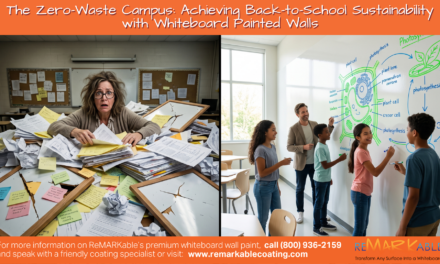
When a guest teacher enters a traditional classroom under these stressful conditions, they are severely disadvantaged by the physical infrastructure. Standard framed boards are simply too small to hold both the day’s academic lessons and the permanent classroom management information. Teachers are constantly forced to erase vital daily schedules, behavioral expectations, and seating charts just to make room for a science diagram or a math equation. Consequently, the substitute is left constantly repeating basic instructions, navigating student confusion, and struggling to maintain order. A classroom constrained by a single, tiny writing surface is inherently fragile; it relies entirely on the primary teacher’s verbal directions to function smoothly.
2. Building a Permanent Command Hub with Whiteboard Paint
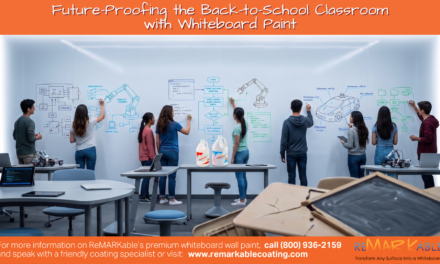
The fundamental solution to this operational fragility is dramatically expanding the usable visual real estate of the room. When educational facilities apply premium whiteboard paint to large sections of the classroom perimeter, they give teachers the spatial freedom to create permanent, unerasable “Command Hubs.”
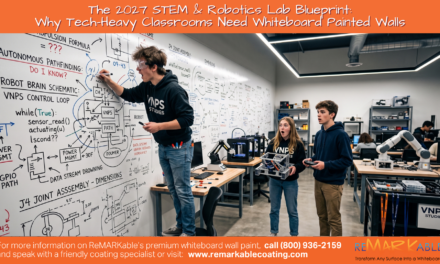
In a modernized 2026-2027 classroom setting, a teacher can dedicate an entire wall near the entrance exclusively to classroom operations, entirely separate from the main academic instruction board at the front of the room. Using semi-permanent wet-erase markers or specialized charting tape on the glossy surface, the teacher can map out the master daily schedule, the exact locations of emergency supplies, bathroom-pass procedures, and technology checkout rules. Because the wall offers massive, floor-to-ceiling utility, this critical information never has to be erased to make room for a history lecture.
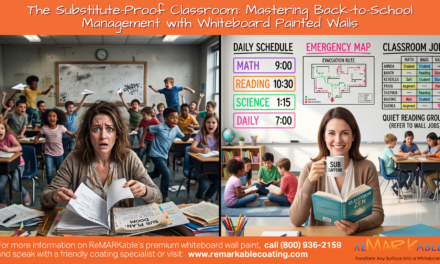
When a substitute walks into this environment, they do not have to dig frantically through a confusing, twenty-page paper binder left on a cluttered teacher’s desk. The entire classroom operations manual is visually mapped out on the wall in bright, clear, undeniable text. This massive visual hierarchy instantly grounds the guest teacher, giving them the immediate authority and contextual awareness needed to run the room seamlessly from the very first bell.
3. Visualizing Routines: How Dry Erase Walls Foster Student Regulation
Effective classroom management is deeply rooted in environmental predictability. Educational psychology demonstrates that students—particularly those dealing with neurodivergence, ADHD, or trauma—rely heavily on environmental consistency to maintain emotional regulation. When a teacher is unexpectedly absent, that predictability is shattered, which frequently triggers spikes in anxiety, confusion, and disruptive behavior.
Expansive dry-erase walls serve as a critical emotional anchor during these transitions. When the rules, daily objectives, and transition times are permanently written on a massive scale, the physical environment itself becomes the authority, rather than the unfamiliar adult standing nervously at the front of the room. The most successful classrooms are heavily procedure-driven, and architectural writing surfaces make those procedures highly visible.
With frameless writable surfaces, these procedures are unavoidable and omnipresent. If a substitute forgets to tell the class what to do when they finish their assignment early, the students don’t need to ask or act out; they simply look to the “Early Finisher” matrix permanently charted on the side wall. By embedding these visual cues directly into the architecture of the room, teachers transfer the heavy responsibility of behavioral regulation from the guest adult to the physical environment, ensuring that the classroom remains a calm, productive sanctuary regardless of who is taking attendance.
4. Delegating Authority: Student-Led Operations on Whiteboard Walls
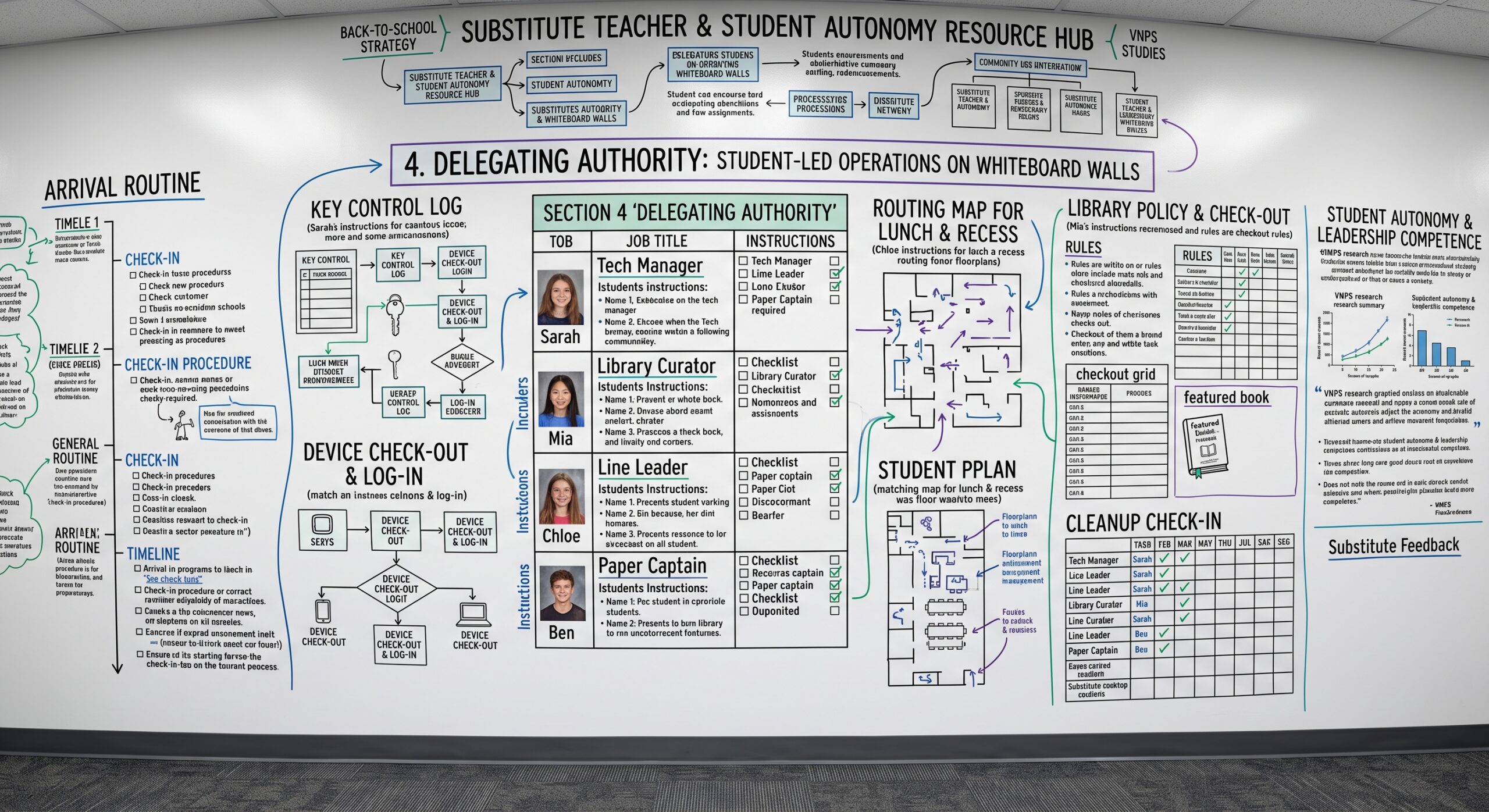
A truly substitute-proof classroom empowers the students to take ownership of their physical space. One of the most effective back-to-school strategies is establishing a robust “Classroom Jobs” system, where students are responsible for everything from distributing laptops to managing the classroom library. However, managing this complex system on small bulletin boards or tiny laminated cards often leads to students forgetting their roles, losing the cards, or arguing over responsibilities.
By utilizing vast whiteboard walls, teachers can elevate the classroom job system into a highly visible, macro-scale organizational chart. Because the writable surface spans the entire wall, the teacher can create a dynamic, easily updated matrix of student leaders. Next to each job title, the teacher can write specific, step-by-step instructions for exactly how that job is executed.
When a guest teacher arrives, they don’t have to guess who is in charge of collecting the homework, turning on the projector, or leading the line to the cafeteria. The substitute looks at the wall, identifies the designated “Tech Manager” or “Paper Captain,” and allows the students to run the logistics. This not only relieves the substitute of massive administrative burden but also builds profound leadership skills and accountability within the student body. The students take immense pride in demonstrating their competence and independence to the guest teacher, transforming a potentially chaotic day into an impressive display of student autonomy.
5. Emergency Preparedness and Logistics using Whiteboard Wall Paint
Beyond daily academic routines, the back-to-school season is a critical time for establishing rigorous emergency procedures. Fire drills, severe weather protocols, and campus lockdown procedures must be executed flawlessly to ensure student safety. For a substitute teacher who is completely unfamiliar with the campus layout, navigating an emergency can be incredibly dangerous and terrifying.
Standard emergency maps are typically tiny, 8×11 pieces of paper tucked into a plastic sleeve near the door—difficult to read in a high-stress situation and easily ignored by students. By applying whiteboard wall paint near the primary exit of the classroom, teachers can create a bold, highly visible “Logistics and Safety” zone.
On this surface, educators can draw large-scale, color-coded maps of evacuation routes, explicitly list the names of students with severe medical allergies (in compliance with privacy guidelines), and outline the exact step-by-step lockdown protocol. During a chaotic fire drill, a substitute doesn’t have to squint at a tiny piece of paper; the massive, bright red arrows drawn on the wall guide them instantly. Furthermore, because the surface is dry-erase, the teacher can quickly update the board on a daily basis with the exact headcount of absent students, ensuring that emergency responders or campus security have completely accurate, real-time data if an incident occurs.
6. The Administrative ROI: Preserving Instructional Time
For campus principals, district superintendents, and facility directors, the back-to-school season involves evaluating how every single dollar of the school budget is spent. Upgrading traditional classrooms with architectural writable surfaces may initially seem like a purely aesthetic choice. Still, it delivers a substantial, measurable Return on Investment (ROI) in preserving instructional time.
Consider the hidden costs of an unorganized substitute day:
|
Metric
|
Traditional Classroom Setup
|
The Substitute-Proof Classroom
|
|
Instructional Time
|
30-45 minutes lost to explaining routines and finding materials. | Routines are visually mapped; instruction begins within 5 minutes. |
|
Behavioral Issues
|
High probability of disruptions due to lack of visible structure. | Low probability; environment dictates the rules and student jobs. |
|
Financial Waste
|
District pays for a substitute, but no actual learning occurs. | District investment is protected; lesson plans are successfully executed. |
When a teacher is absent, the school pays twice: the salary of the absent educator and the substitute’s daily rate. If that day is lost to behavioral chaos and uncompleted lesson plans, the district essentially burns that financial investment. Over the course of a school year, a single classroom might experience 10 to 15 substitute days. Multiply that by thirty classrooms in a building, and a school is looking at hundreds of days of potential academic stagnation.
By investing in seamless, frameless writing surfaces, administrators are providing their staff with the physical infrastructure required to prevent this massive loss of learning. When a classroom is perfectly organized, visually managed, and procedurally anchored by its walls, guest teachers can actually execute the curriculum rather than just babysitting. The academic momentum of the year is preserved, standardized test pacing remains on schedule, and the heavy financial investment in substitute coverage actually yields positive instructional results.
Empower Your Classroom This Back-to-School Season
As we look toward the promises and challenges of the 2026-2027 academic year, it is vital to recognize that the most effective teachers do not just plan great lessons; they architect resilient environments. A classroom that falls apart the moment the primary educator steps out of the room is not truly serving its students or protecting its instructional goals. By shifting our perspective and treating the physical walls of the classroom as active, permanent partners in daily operations, we can eliminate the anxiety of sick days and substitute shortages. Whether you are charting out daily emotional regulation routines, empowering student leaders with massive visual job boards, or ensuring flawless emergency protocols, upgrading your visual real estate is the key to mastering classroom management. This back-to-school season, take the vital step to future-proof your daily operations, protect your peace of mind, and safeguard your students’ academic momentum by investing in the limitless potential of whiteboard walls.



![Giant Leaps Forward Require Big Spaces. [Leap Year Sale Event!]](https://www.remarkablecoating.com/wp-content/uploads/2016/02/Giant-Leaps-ForwardRequire-Big-Spaces-440x264.jpg)



![30% Off St Patrick’s Day Sale! [Details Inside]](https://www.remarkablecoating.com/wp-content/uploads/2016/03/Glorious-1-440x264.png)

![Drive Your Organization Into Openness and Watch it Expand [20% Off Whiteboard Paint]](https://www.remarkablecoating.com/wp-content/uploads/2016/04/Drive-Your-Organization-Into-Openness-and-Watch-It-Expand.-1-440x264.jpg)

















![ReMARKable’s Winter Sale is Here! [25% Off + Free Shipping]](https://www.remarkablecoating.com/wp-content/uploads/2018/01/Red-Tag-Winter-Fashion-Facebook-Post-1-440x264.png)



![ReMARKable Summer Sale 2018 [28% Off Whiteboard Paint]](https://www.remarkablecoating.com/wp-content/uploads/2018/06/Blue-Simple-Line-Beach-Facebook-Post-1-440x264.png)




































































































































































































0 Comments